Top 7 EV Models with Lowest Depreciation Rates
Top 7 EV Models with Lowest Depreciation Rates
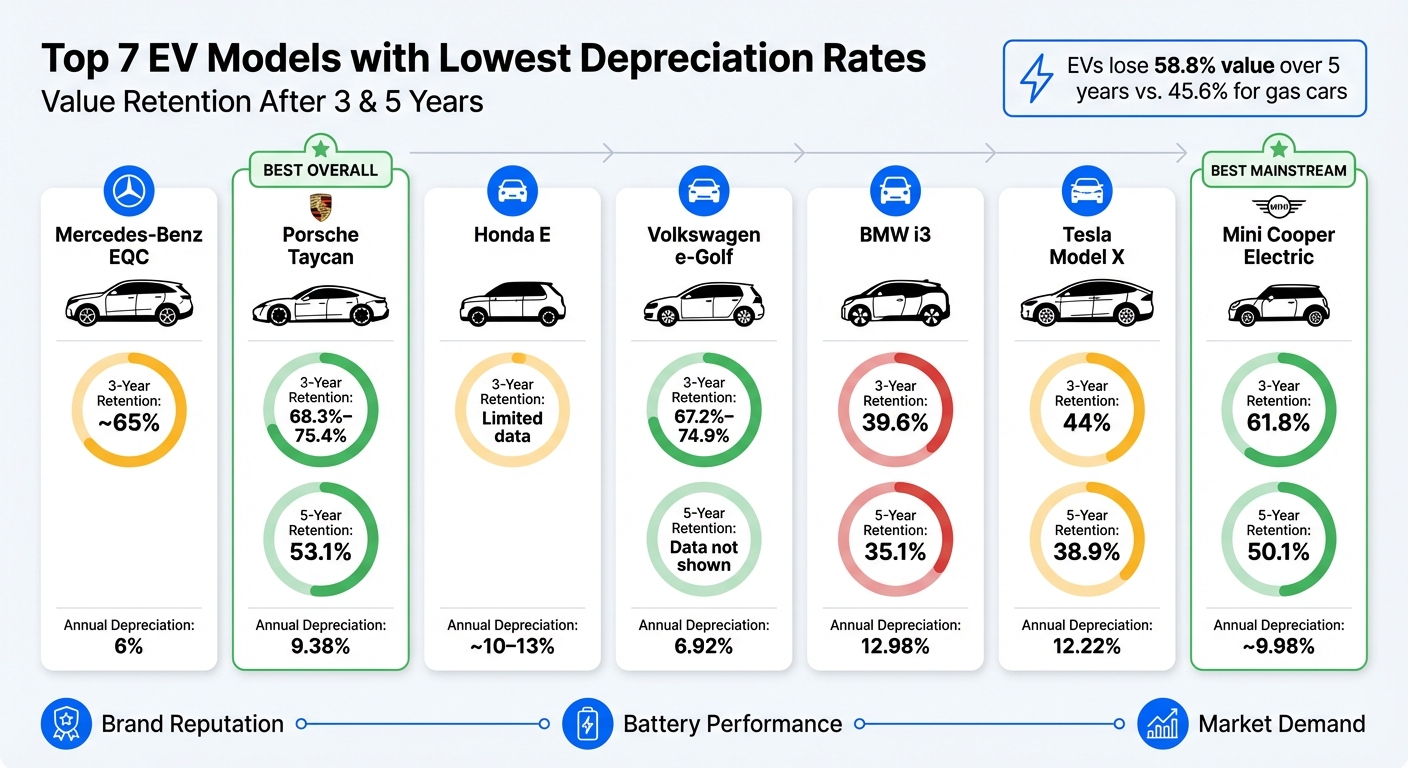
Electric vehicles (EVs) often depreciate faster than gas-powered cars, losing an average of 58.8% of their value over five years, compared to 45.6% for traditional vehicles. However, some EVs buck this trend, retaining value far better than others. Here's a quick look at 7 EV models with the lowest depreciation rates:
- Mercedes-Benz EQC: Retains 65% of its value after 3 years with an annual depreciation rate of about 6%.
- Porsche Taycan: Wagon variants retain 75.4% after 3 years, making it a leader in the luxury EV segment.
- Honda E: Benefits from Honda's reliability, showing strong retention in the compact EV category.
- Volkswagen e-Golf: Holds onto 67.2%–74.9% of its value after 3 years, outperforming many competitors.
- BMW i3: Depreciates faster but appeals to urban buyers seeking affordable luxury.
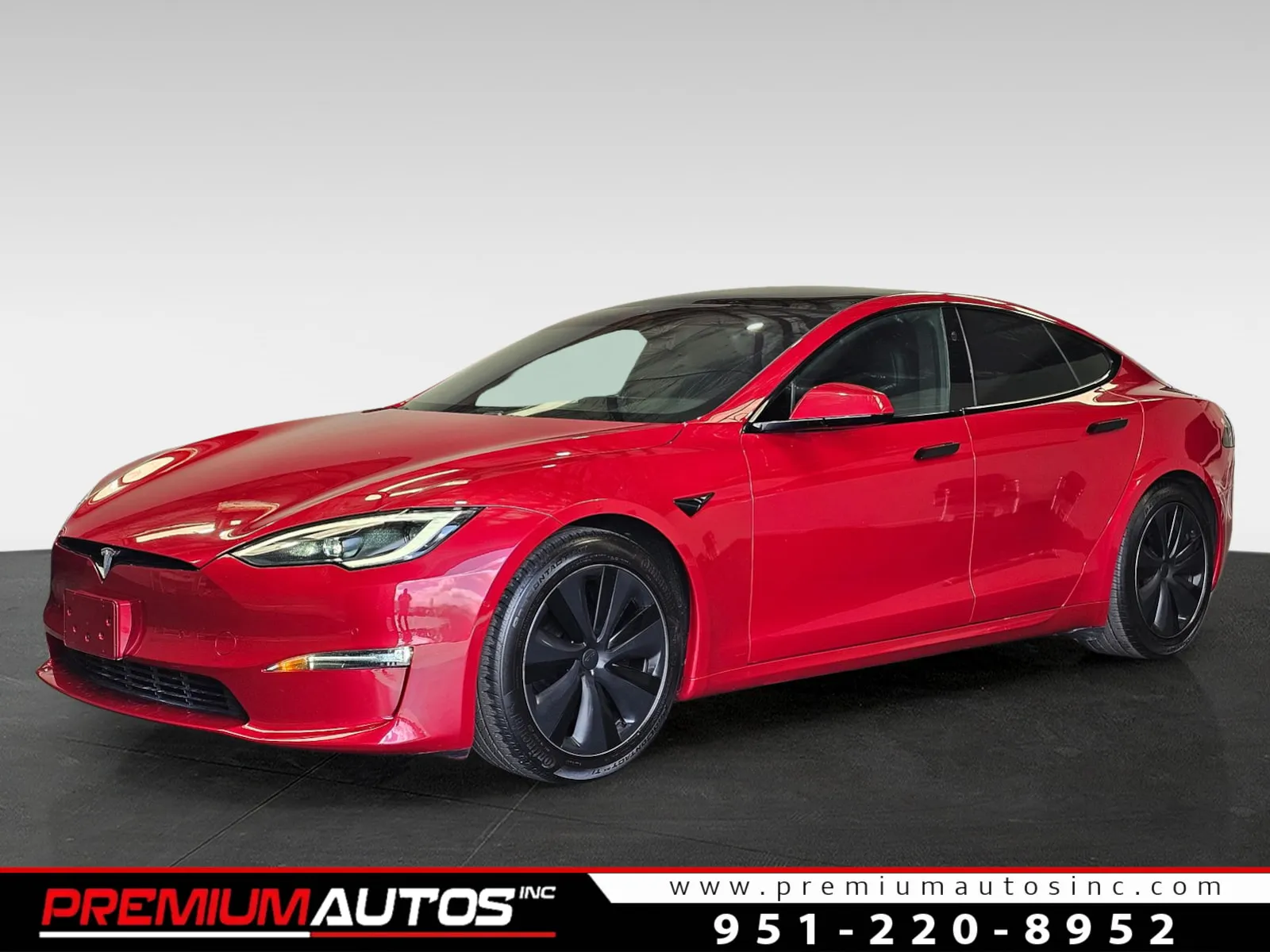
- Tesla Model X: Retains 44% of its value after 3 years, with demand driven by its performance and features.
- Mini Cooper Electric: Maintains 50.1% of its value after 5 years, excelling in the mainstream EV market.
Quick Comparison
| Model | 3-Year Retention % | 5-Year Retention % | Best Features |
|---|---|---|---|
| Mercedes-Benz EQC | ~65% | N/A | Luxury appeal, low annual depreciation (6%) |
| Porsche Taycan | 68.3%–75.4% | 53.1% | High-end performance, wagon variants excel |
| Honda E | Limited data | N/A | Compact design, strong brand reliability |
| Volkswagen e-Golf | 67.2%–74.9% | N/A | Dependable engineering, balanced depreciation |
| BMW i3 | 39.6% | 35.1% | Affordable entry into luxury EV ownership |
| Tesla Model X | 44% | 38.9% | Performance, three-row seating, Supercharger access |
| Mini Cooper Electric | 61.8% | 50.1% | Iconic design, low depreciation in mainstream EVs |
If you're buying a used EV, these models stand out for their ability to retain value. Key factors influencing depreciation include brand reputation, battery performance, and market demand. For buyers, understanding these trends can help make smarter purchasing decisions.
EV Depreciation Rates Comparison: Top 7 Models with Best Value Retention
1. Mercedes-Benz EQC
Annual Depreciation Rate
The Mercedes-Benz EQC boasts an annual depreciation rate of around 6%, which is significantly lower than the ~13% average for other electric vehicles. In fact, a UK study examining 68 EV models found the EQC had the lowest annual depreciation rate at just 5.99% per year. These numbers highlight the EQC's ability to hold its value better than most EVs over time.
3-Year Retention Percentage
When it comes to long-term value, the EQC continues to impress. After three years and approximately 36,000 miles, it retains about 65% of its original value - well above the industry average of 40%. For the 2025 model, projections estimate a retention rate between 60% and 70% after three years. This makes the EQC a standout option for those considering resale value. Understanding how tax credits impact resale value is also essential for maximizing your investment.
Market Demand and Appeal
The EQC's strong performance in depreciation and retention is further supported by its market appeal. Mercedes-Benz’s reputation for quality and luxury adds considerable value, potentially increasing the EQC’s worth by 10% to 15%. Its premium interior and status as a luxury electric SUV make it especially attractive in areas with well-developed charging networks and low-emission zones. To maintain its value, owners should keep detailed records of battery health and regular maintenance and software updates, as these factors are critical to the vehicle's overall resale price.
sbb-itb-66f4901
2. Porsche Taycan
Annual Depreciation Rate
The Porsche Taycan 4S sees an annual depreciation rate of about 16%. Interestingly, the wagon variants perform even better in retaining value. This highlights how the body style can play a big role in determining resale value within the luxury EV market.
3-Year Retention Percentage
After three years, the Taycan sedan holds onto 68.3% of its original value, while the wagon variants retain an impressive 75.4%. To put this into perspective, the broader luxury electric large car category typically loses about 51.8% of its value over the same time frame. For example, a 2024 Taycan 4S with an MSRP of $111,700 retains roughly 85% of its value after just one year. On the other hand, a 2020 Taycan that originally sold for $105,150 now averages around $44,208, which equates to a 42% retention after five years. These figures highlight the Taycan's strong appeal and ability to hold value over time.
Market Demand and Appeal
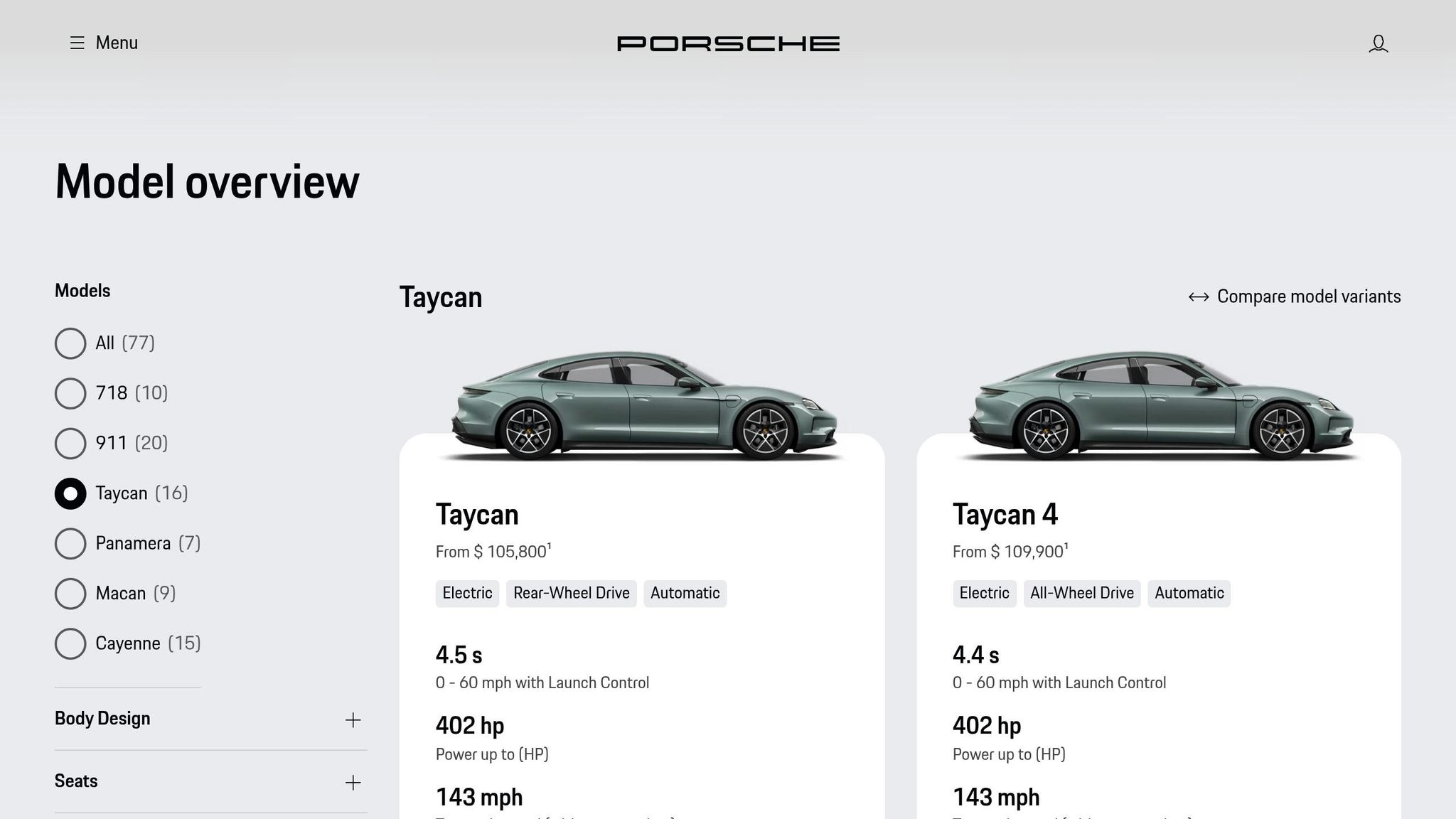
The Taycan's impressive resale value is rooted in its unique position as a luxury EV that combines cutting-edge electric performance with what enthusiasts call its "signature Porsche driving DNA". With the ability to accelerate from 0–60 mph in as little as 2.6 seconds, it competes with top-tier sports cars while offering electric efficiency. Among electric vehicles, the wagon variant stands out, retaining 53.1% of its value after five years - 14% higher than the average for EVs. This makes it an attractive choice for buyers mindful of long-term ownership costs.
Brand Reliability and Build Quality
Porsche’s reputation for engineering excellence and high-quality craftsmanship further solidifies the Taycan’s appeal in the pre-owned market. Even as advancements in battery technology and charging speeds evolve, Porsche’s legacy of performance and exclusivity helps the Taycan maintain its desirability. Limited production volumes add to its allure, driving demand and helping to moderate depreciation. The Taycan consistently ranks near the top in residual value, with a three-year depreciation rate of 31.7%, far outperforming the Tesla Model S, which loses about 65.2% of its value over the same period. This reliability and market strength make the Taycan a standout in the luxury EV segment.
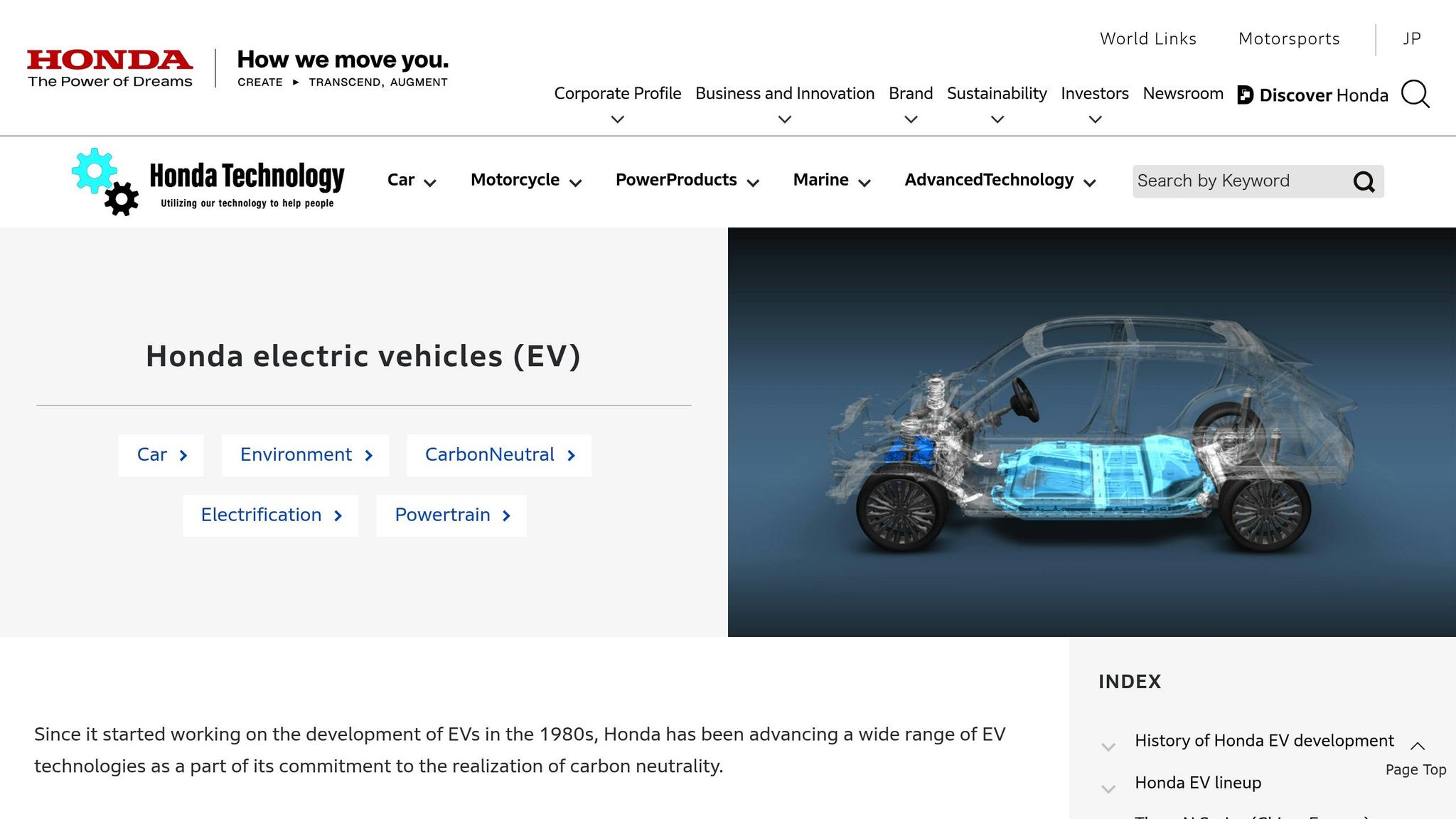
3. Honda E
Brand Reliability and Build Quality
Honda has earned a reputation for holding strong resale values, with models like the Civic and Accord consistently making the top 25 list for lowest depreciation rates. This legacy of reliability and quality gives Honda a solid footing in the competitive compact EV market.
Market Demand and Appeal
The Honda E stands out in the small EV segment thanks to its affordability and durability. While EVs generally experience depreciation rates between 49% and 58.8% over five years, smaller electric vehicles tend to retain value better than larger, high-end luxury EVs. Honda's well-established brand strength further bolsters the Honda E's appeal and performance in this market.
3-Year Retention Percentage
Although specific U.S. data for the Honda E is scarce, the model benefits from Honda's overarching reputation for reliability. This ensures steady demand in the used car market, making the Honda E a strong contender for value retention among EVs in its class.
EV Depreciation Is Real (But It's NOT What They Tell You)
4. Volkswagen e-Golf

The Volkswagen e-Golf continues to stand out in the EV market for its steady value retention. With dependable engineering and balanced depreciation, it’s a strong contender for buyers considering the true cost of owning a used electric vehicle.
Annual Depreciation Rate
The e-Golf has an annual depreciation rate of just 6.92%, which is significantly lower than the average EV's depreciation of about 13% per year. Over three years, this model loses only 25.1% of its value. Used e-Golfs are typically priced around $29,000, showcasing its steady appeal compared to other EVs.
"The VW electric version of the Golf was ranked the top EV with the lowest depreciation of £7,778 (25.1%), with used models selling for an average price of £23,248 – three quarters of its new price three years ago."
– Jessica Maguire, Web Producer, AM-Online
3-Year Retention Percentage
After three years, the e-Golf holds onto 67.2% to 74.9% of its original value [27, 28]. This retention rate places it among the top-performing compact EVs. For example, while the Tesla Model S 75 retains 73.3%, the e-Golf outpaces competitors like the Nissan Leaf (64.5%), Hyundai Ioniq Electric (61.7%), and Renault Zoe (53.1%) [27, 28].
Brand Reliability and Build Quality
As part of the trusted Golf lineup, the e-Golf benefits from Volkswagen's reputation for reliability. It scores a solid 9.0 in reliability and comes with an 8-year/100,000-mile battery warranty, guaranteeing at least 70% battery capacity [29, 30]. Its value retention score of 8.1 further boosts buyer confidence. Owners also highlight the premium materials and sturdy construction, which add to its appeal in the used market.
Market Demand and Appeal
The e-Golf’s subtle design makes it a favorite for buyers who prefer an EV without a flashy appearance. With a community satisfaction score of 4.6 out of 5, it strikes a balance between affordability and enjoyable driving dynamics. Used models are priced between $14,000 and $24,000. Since its discontinuation after 2019 as Volkswagen pivots to the ID series, the e-Golf remains a popular choice for those seeking a reliable, well-built EV in the secondhand market.
5. BMW i3
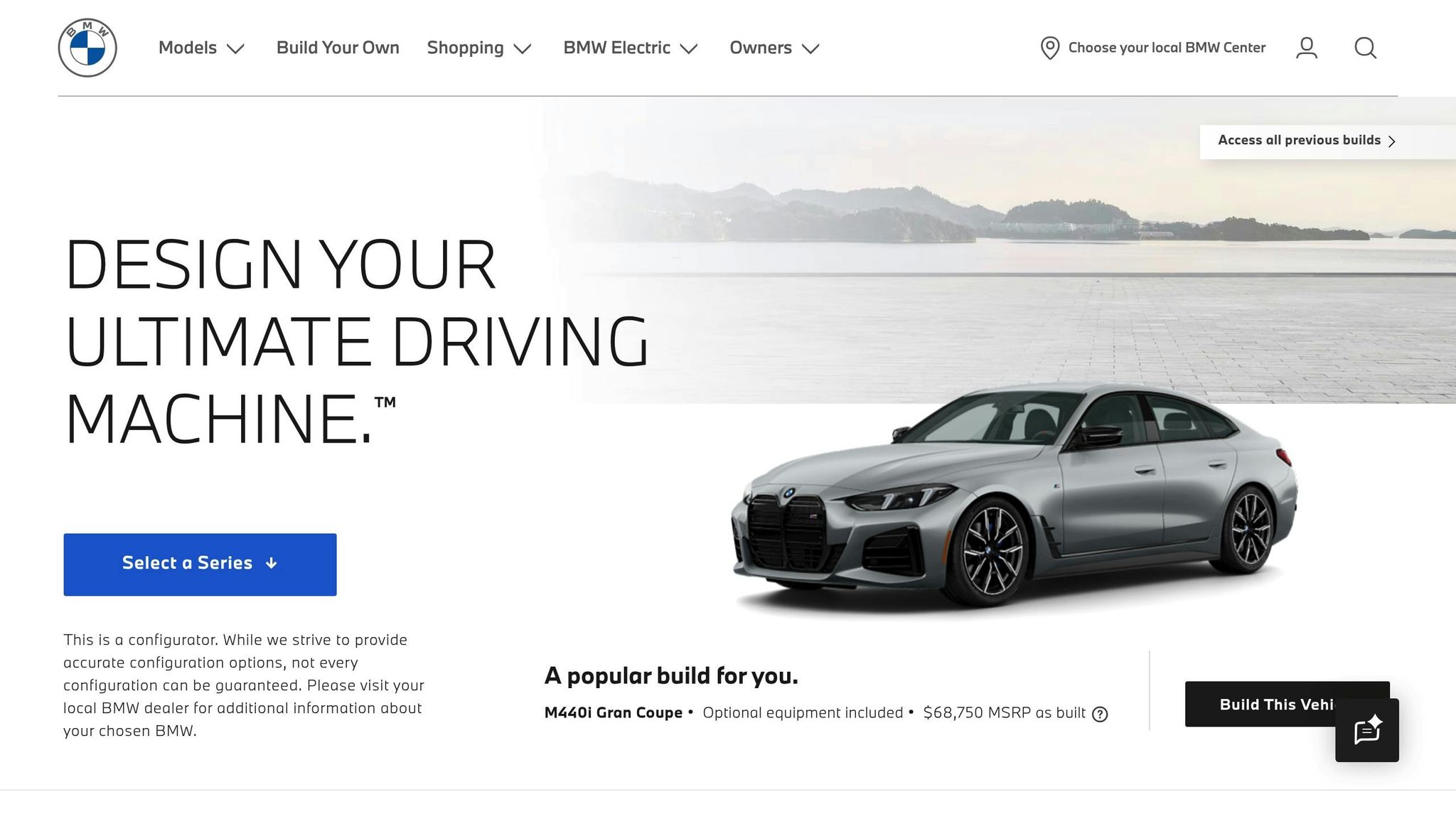
The BMW i3 is known for its sharp depreciation curve. Despite being backed by BMW's premium reputation and designed with urban drivers in mind, it tends to lose its value faster than many other electric vehicles on this list.
Annual Depreciation Rate
On average, the i3 depreciates about 60.4% over its first three years, equating to roughly 20% per year. This steep decline is primarily due to rapid advancements in battery technology and concerns over battery replacement costs, which can range from $5,000 to $20,000. In the used market, i3 models are typically priced between $16,879 and $26,329, with five-year-old examples averaging around $22,859.
3-Year Retention Percentage
After three years, the i3 retains only 39.6% of its original value. While this is slightly lower than the Nissan LEAF (39.8%) and Kia Soul EV (41.3%), it lags significantly behind competitors like the Chevrolet Bolt and Hyundai Ioniq Electric, which hold onto about 52%. Over five years, the i3's retention rate drops to 35.1%, though it still outperforms larger BMW EVs like the i5 (30%) and i7 (26.4%).
Brand Reliability and Build Quality
Even with its depreciation challenges, the i3 benefits from BMW's reputation for delivering engaging driving experiences and high-quality materials. It scores 6.5 out of 10 for value retention according to iSeeCars and ranks #24 among electric cars for best resale value in 2026. Its compact, luxurious design makes it appealing to urban drivers who want a premium feel in a smaller package. With an electric range of 153 miles and 15.1 cubic feet of cargo space, the i3 remains a practical choice for city dwellers.
Market Demand and Appeal
The i3's used market appeal lies in its affordability as an entry point into luxury EV ownership. Originally priced between $44,450 and $47,650, it offers a distinctive design and compact size that cater to urban buyers looking for a premium German EV experience. For buyers at dealerships like Premium Autos Inc in Norco and El Monte, CA, the i3 provides a budget-friendly way to step into the luxury EV segment. While its depreciation is steep, its urban-friendly features and lower price point make it an attractive option for cost-conscious luxury seekers.
6. Tesla Model X
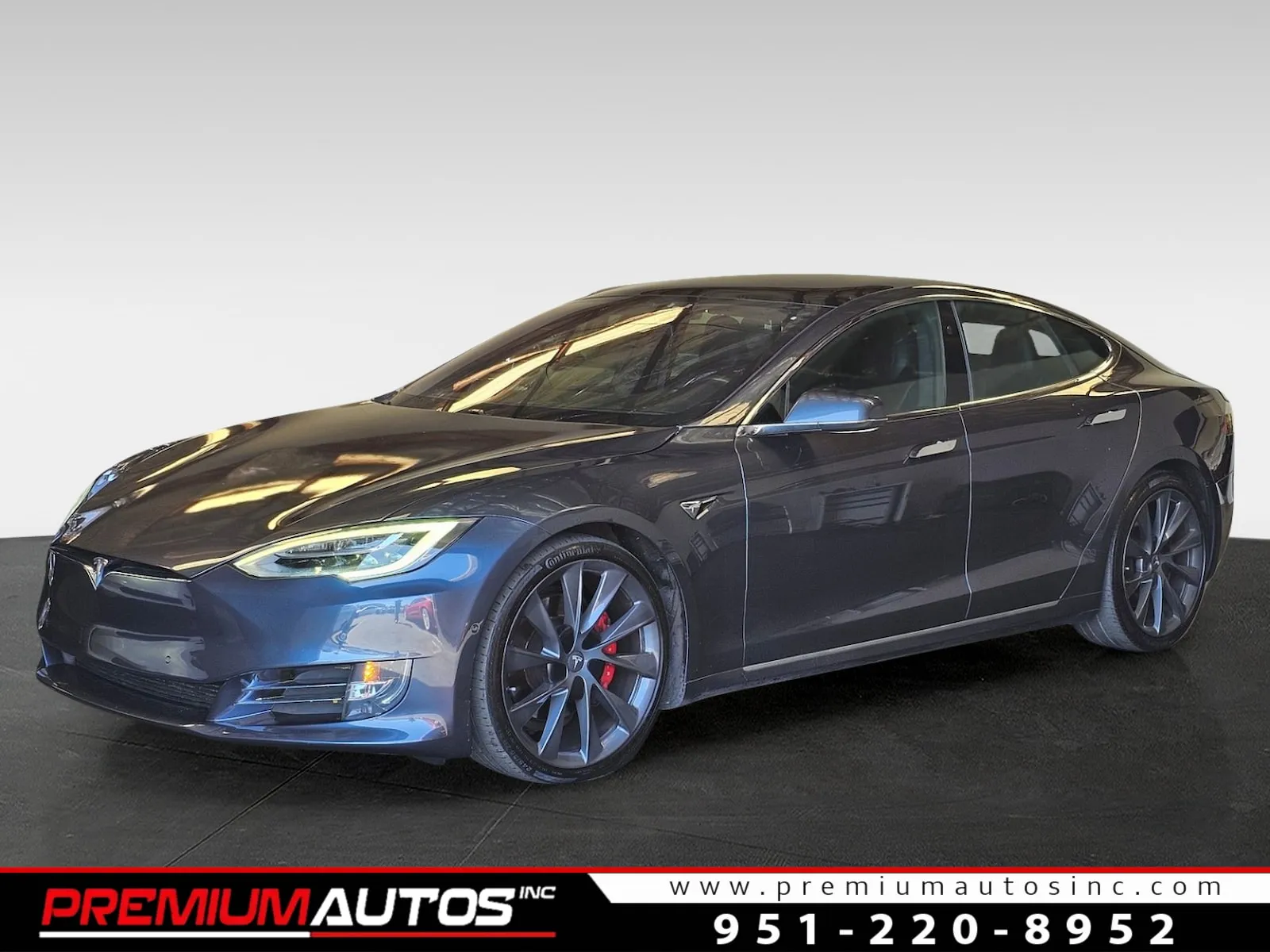
The Tesla Model X starts with a relatively low first-year depreciation of just 6.9%. However, over five years, it depreciates by about 63.4%, translating to an average loss of roughly $53,846 in value. While this depreciation rate is higher than the overall vehicle market average of 45.6%, it aligns with the typical range for luxury electric SUVs, which usually see a 61–63% drop over the same period.
Annual Depreciation Rate
After the modest first-year decline, depreciation picks up speed. By the third year, the Model X sheds about 56% of its original value. On average, this works out to around 12.7% per year over five years, though the steepest losses occur during the middle years.
Tesla's pricing strategy has played a role in this trend. Significant price cuts - up to $41,000 since early 2023 - have put pressure on resale values. Karl Brauer, Executive Analyst at iSeeCars, explained:
"Elon's desire to maintain new Tesla sales through price cuts had a very destructive impact on the brand's residual values."
These pricing adjustments have shaped the Model X's mid-term value retention patterns.
3-Year Retention Percentage
After three years, the Model X retains about 44% of its original value. While this retention rate is lower than many traditional luxury SUVs, it remains competitive within the electric vehicle market, where rapid advancements in technology often lead to faster depreciation.
Market Demand and Appeal
Despite its depreciation figures, the Model X remains a sought-after option in the used market. Tesla's expansive Supercharger network is a significant advantage for buyers, and the three-row seating - accommodating up to seven passengers - fills a specific need in the electric SUV segment. Performance enthusiasts are drawn to the Plaid trim, which boasts 1,020 horsepower and rockets from 0–60 mph in just 2.5 seconds. The falcon-wing doors, while occasionally temperamental, add a distinctive touch, and over-the-air software updates ensure older models stay relevant.
For those considering pre-owned options, dealerships like Premium Autos Inc in Norco and El Monte, CA, offer five-year-old Model X vehicles at an average price of $35,997. This is a considerable savings compared to the $77,990 MSRP for a new Dual-Motor variant.
Brand Reliability and Build Quality
Tesla’s reputation is bolstered by its 8-year/150,000-mile warranty. While the Model X ranked 9th worst for overall value retention in 2025, its low maintenance costs and competitive features - like a 100 kWh battery with an EPA-estimated 348-mile range - keep it appealing for used buyers seeking a luxury electric SUV experience.
7. Mini Cooper Electric

The Mini Cooper SE (Electric) stands out with depreciation rates that are much lower than what you’d typically see in the EV market. For example, the 2021 model depreciates at just 6.33% annually, while the 2020 model comes in at 9.00%. This is impressive when you consider that most EVs lose between 50–60% of their value within just three years.
Annual Depreciation Rate
The 2022 Mini Cooper SE held nearly 100% of its value during its early ownership period. In comparison, the 2019 model had an annual depreciation rate of 12.25%. For context, most EVs shed 50–60% of their value in three years, while many gas-powered vehicles lose about 40% over the same timeframe. These figures highlight the Mini’s ability to retain its value over time, making it a standout option in the EV market.
3-Year Retention Percentage
After three years (or 36,000 miles), the Mini Cooper SE retains about 61.8% of its original value. This is significantly better than competitors like the Chevrolet Bolt EV, which retains 45.2%, and the Nissan Leaf, which holds onto 54.9%. Over five years, the Mini maintains 50.1% of its value, exceeding the average for electric vehicles by 10.9%. With an MSRP of approximately $30,900, a five-year-old Mini Electric typically sells for around $18,685.
Market Demand and Appeal
The Mini Cooper SE’s low depreciation rate makes it a popular choice for buyers, further bolstered by its iconic design and engaging performance. Its go-kart-like handling, quick acceleration (215 horsepower), and sustainable features make it highly appealing. Special editions, thanks to their rarity, tend to retain even more value. Recent models address earlier concerns about range with a 49.2 kWh battery, capable of up to 250 miles on a single charge. For those in California, dealerships like Premium Autos Inc in Norco and El Monte offer a variety of pre-owned Mini Electric models as part of their EV inventory.
Brand Reliability and Build Quality
The Mini Cooper SE is known for its premium build quality and well-designed interior. It also offers lower maintenance and repair costs compared to traditional gas-powered cars, making it an attractive option for used car buyers. To preserve resale value, owners should keep detailed service records, limit DC fast charging to 10–20% of charging sessions, and maintain the battery charge between 20–80%. These steps can add a 5–10% premium to the car’s resale value. Additionally, over-the-air software updates ensure older models stay relevant. These factors contribute to the Mini’s reputation as an EV with exceptional value retention, a theme echoed throughout its market performance.
Depreciation Comparison Table
Here’s a quick look at how seven electric vehicles compare in terms of retaining their value over five years. The table below provides an overview of 5-year retention rates, annual depreciation percentages, and ideal model years, along with additional notes for context.
| Model | 5-Year Retention % | Annual Depreciation % | Best Model Years | Notes |
|---|---|---|---|---|
| Mercedes-Benz EQC | Market-dependent | ~12–15% | 2020–2021 | Limited U.S. availability impacts resale data |
| Porsche Taycan | 53.1% | 9.38% | 2021 | Top-performing luxury EV for value retention |
| Honda E | Data limited | ~10–13% | 2020–2021 | Only sold in Europe; U.S. data unavailable |
| Volkswagen e-Golf | Data varies | ~11–14% | 2017–2019 | Discontinued; recent resale data limited |
| BMW i3 | 35.1% | 12.98% | 2018–2020 | Cult following helps maintain resale value |
| Tesla Model X | 38.9% | 12.22% | 2022 | 2022 models retain 44% of their original price for 75% of their lifespan |
| Mini Cooper Electric | 50.1% | ~9.98% | 2021 | Solid depreciation performance among mainstream EVs |
The Porsche Taycan leads the pack with a 5-year retention rate of 53.1%, making it an excellent choice for luxury EV buyers. The Mini Cooper Electric also stands out with an impressive retention rate of 50.1%, offering strong value for mainstream EV enthusiasts. On the other hand, the Tesla Model X (2022 models) provides an appealing option on the used market, retaining 44% of its original price while covering most of its useful life.
These numbers highlight noticeable variations in depreciation across different EVs. It’s worth noting that these figures reflect market conditions as of early 2026. As the used EV market continues to develop, depreciation patterns may shift, offering new insights for buyers.
Use this information to determine which EV aligns best with your financial goals and long-term plans.
Conclusion
Insights from top EV models shed light on what drives long-term value in the used car market. Factors like brand reputation, battery performance, technical specifications, market demand, and software features play a big role in resale value. Brands like Tesla and Porsche stand out due to their loyal customer base and proven reliability, keeping demand high in the pre-owned market. Vehicles with high battery capacity, longer ranges, and fast-charging capabilities often fetch higher resale prices. Additionally, electric SUVs and performance models tend to hold their value better compared to compact cars or sedans. Over-the-air software updates are another game-changer, enabling older models to remain competitive by staying up-to-date with the latest technology.
Karl Brauer from iSeeCars highlights that depreciation is the most significant cost of owning a new vehicle. For buyers considering a pre-owned EV, this makes understanding these factors even more important.
When it comes to buying a used EV, working with a trusted dealer is essential. Premium Autos Inc ensures every vehicle undergoes rigorous inspections, including a detailed battery health assessment - critical for protecting your investment. With locations in Norco and El Monte, CA, they specialize in premium brands like Tesla and BMW, offering peace of mind and quality you can count on.
FAQs
Why do many EVs depreciate faster than gas cars?
Many electric vehicles (EVs) lose value quickly, and there are a few key reasons for this. First, rapid progress in battery and software technology can make older models feel outdated in no time. On top of that, generous purchase incentives often reduce the initial cost of new EVs, which can drag down their resale value once those incentives are no longer available.
Another factor is buyer hesitation. Concerns about battery degradation over time and the relatively new nature of EVs in the used car market make some people cautious. They might worry about future expenses, like replacing a battery or dealing with potential performance issues, which further impacts depreciation rates.
What should I check on a used EV to protect resale value?
To keep the resale value of a used EV in good shape, pay close attention to the battery health. The condition of the battery plays a huge role in determining the car's value, as any significant degradation can lead to costly repairs. Check the battery’s State of Health (SOH) to identify any capacity loss or wear. It's also smart to confirm whether the battery warranty can be transferred to a new owner. If possible, review any SOH reports or diagnostic data available. Keeping battery degradation to a minimum is key to preserving the car's resale value.
Which model year is best to buy for the lowest depreciation?
When it comes to minimizing depreciation, opting for a new or relatively recent model year is typically the smartest choice. Electric vehicles (EVs) often experience the steepest drop in value during their initial years. However, certain models, such as the Tesla Model 3 and Fiat 500e, are recognized for maintaining their value more effectively over a five-year span.