
Premium Autos blog
Used Tesla Battery Health Guide
By Premium Autos · · 6 min read
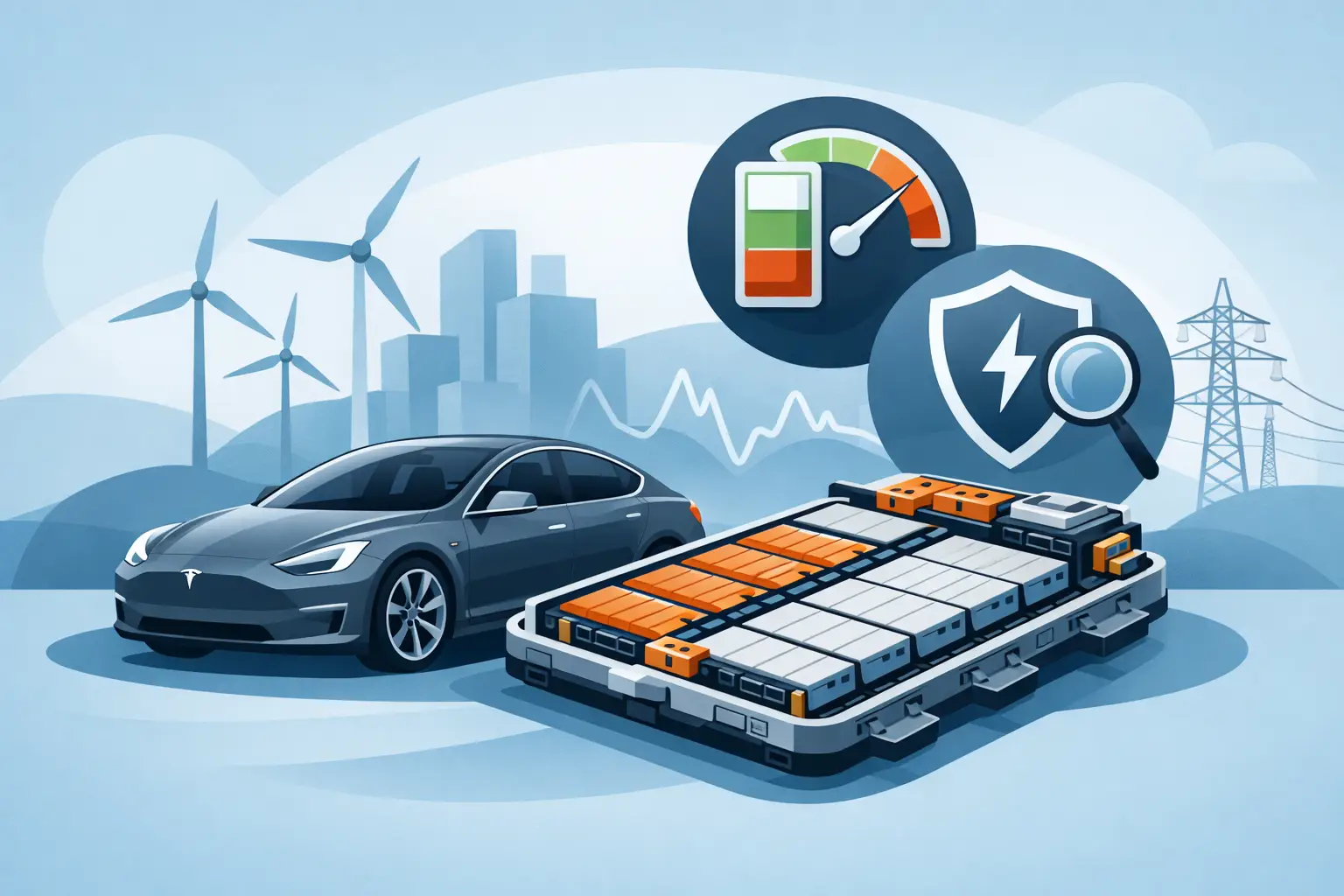
A used Tesla can look perfect on the screen, drive great on a test drive, and still leave one big question hanging in the air - how healthy is the battery really? That is why a solid used Tesla battery health guide matters. For most shoppers, battery condition is the difference between getting a great EV deal and buying a car that feels more worn than its mileage suggests.
The good news is that Tesla batteries usually hold up well. The catch is that not every used Tesla ages the same way. Charging habits, climate, mileage, software history, and plain old usage all affect long-term battery performance. If you are shopping for a Model 3, Model Y, Model S, or Model X, you want a practical way to separate normal battery aging from a real red flag.
What battery health really means on a used Tesla
Battery health is usually measured by degradation, which is the gradual loss of usable battery capacity over time. In plain English, it means the car may not go as far on a full charge as it did when it was new.
That sounds scary to first-time EV buyers, but some loss is completely normal. A used Tesla with moderate degradation can still be an excellent daily driver, especially for Southern California commuting. If your real-world needs are 30 to 60 miles a day, a vehicle that has lost some range may still have plenty of life left.
What you are trying to avoid is not normal aging. You are trying to spot signs of abnormal battery wear, inconsistent charging behavior, or an owner history that may have put extra stress on the pack.
Used Tesla battery health guide: what to check first
Start with the displayed range at a high state of charge, but do not treat that number as the whole story. Tesla’s rated range estimate can shift based on software updates, wheel size, temperature, and driving settings. It is useful, but it is not the final answer.
A smarter first step is to compare the car’s current estimated full-charge range to its original EPA rating when new. If the drop looks reasonable for the age and mileage, that is usually a healthy sign. If the drop seems steep, ask more questions.
As a rough rule, modest degradation over time is normal. A dramatic range drop on a relatively low-mile Tesla deserves closer attention. There is no magic number that fits every model and every year, but context matters. A higher-mileage Model 3 that has been driven consistently may age better than a lower-mileage car that sat for long stretches at very high or very low charge.
Ask how the car was charged
Charging history matters, but not in the oversimplified way many buyers think. Fast charging does not automatically mean a battery is damaged. Tesla batteries and software are designed to manage heat and charging speed. Still, a car that spent years doing constant Supercharging may show different wear patterns than one mostly charged at home on Level 2.
The better question is how the vehicle was typically used. Was it a commuter car charged overnight at home? Was it a rideshare vehicle fast-charged constantly? Was it parked for long periods at 100%? Those details tell you more than a single yes-or-no answer about Supercharging.
For many buyers, the ideal used Tesla is one with consistent use and routine charging habits, not one with an extreme pattern on either end.
Check the battery warranty before you get too deep
Tesla battery and drive unit warranties vary by model and trim, so this is one of the most important parts of any used Tesla battery health guide. A remaining battery warranty adds real peace of mind, especially if you are buying your first EV.
You should confirm the in-service date, the mileage, and the exact battery warranty coverage tied to that VIN. Do not assume every Model 3 or Model Y has the same terms. Different versions can have different coverage periods and mileage limits.
If a used Tesla still has battery warranty remaining, that is a major value point. If the battery warranty is expired, it does not mean the car is a bad buy. It just means price, condition, and inspection become even more important.
Use the energy screen on the test drive
A short drive can tell you more than many shoppers realize. During the test drive, pay attention to the energy usage data and how the battery percentage drops relative to the route and speed.
A quick freeway run, some city driving, and a few minutes of normal acceleration can reveal a lot. Does the car behave consistently? Is the projected consumption wildly off for no obvious reason? Are there warning messages, limited power notices, or unusual swings in estimated range?
One test drive will not produce a lab-grade battery report, but it can help you spot a vehicle that feels normal versus one that raises questions.
Look for warning signs beyond range loss
Battery health is not just about the number of miles shown at 100%. A few other clues matter. Repeated alerts, reduced charging speed, unexpected shutdown behavior, or major differences between claimed and actual driving range can point to deeper issues.
You should also pay attention to how the car charges during inspection if that is possible. A Tesla that accepts charge normally, shows no battery system alerts, and performs consistently under normal driving conditions is generally a better sign than one with unexplained quirks.
This is also where buying from a dealer that understands Teslas makes a difference. A general used-car lot may know the basics. A Tesla-focused store is more likely to understand what is normal for a certain model year and what is not.
Model differences matter more than people think
Not every used Tesla ages the same way. Battery chemistry, software calibration, vehicle weight, and original range all play a role. A Long Range Model 3 may present differently from a Standard Range version. An older Model S may have a different ownership pattern than a newer Model Y.
That means you should avoid comparing every Tesla against one generic battery standard. A healthy older Model X with expected degradation may still be a strong family SUV. A newer Model 3 with unusually high range loss may deserve more scrutiny even if it looks cleaner on paper.
This is where experience counts. Shoppers do best when they compare the specific year, trim, mileage, and warranty status instead of chasing a one-size-fits-all number.
Why clean-title history still matters in a battery discussion
Battery health does not exist in a vacuum. Title status and prior accident history matter too, especially on EVs. A clean-title Tesla gives you a clearer ownership story and typically reduces the chances of hidden structural or electrical issues tied to prior major damage.
That does not mean every non-clean-title EV is automatically bad. It means the risk profile changes. If you are focused on battery condition, it makes sense to also focus on vehicles with a cleaner, more transparent background.
For many shoppers, especially first-time EV buyers, that combination of clean title, clear history, and verified battery performance is what creates real confidence.
Used Tesla battery health guide for real-world buyers
If you are commuting across the Inland Empire, Los Angeles County, or Riverside County, your battery decision should be based on your actual routine. A shopper driving 20 miles a day can afford more degradation than someone doing 120-mile round trips five days a week.
That is why battery health should always be matched to use case. Some buyers want the longest possible range for weekend travel. Others just want a smart daily driver with lower fuel and maintenance costs. Both are valid, but they point to different buying decisions.
Price matters here too. A used Tesla with some expected battery degradation may still be the stronger value if the price reflects it properly. Paying a premium only makes sense when the condition, warranty, and total ownership picture support it.
The smartest way to shop
The best approach is simple. Verify the range relative to age and mileage. Ask about charging habits. Check remaining battery warranty. Review history. Drive the car long enough to watch how it behaves. Then weigh those facts against price.
If you are buying from a dealership that specializes in used Teslas, ask direct questions and expect direct answers. At Premium Autos Inc, that Tesla-specific shopping experience is a big part of the value, because buyers do not just need a car - they need confidence that the numbers and condition make sense.
A healthy used Tesla battery does not have to be perfect. It just has to be honest, predictable, and right for the way you drive.
Browse used Teslas for sale at our Norco and South El Monte stores.



