Tesla Depreciation vs Toyota Hybrids
Tesla Depreciation vs Toyota Hybrids
When it comes to car depreciation, Tesla electric vehicles (EVs) and Toyota hybrids show a stark difference. Tesla cars lose value faster, with an average 54.7% depreciation over five years, compared to Toyota hybrids, which depreciate only 30.7% in the same period. This means Toyota hybrids hold their value much better, making them a more cost-effective choice for long-term ownership.
Key Findings:
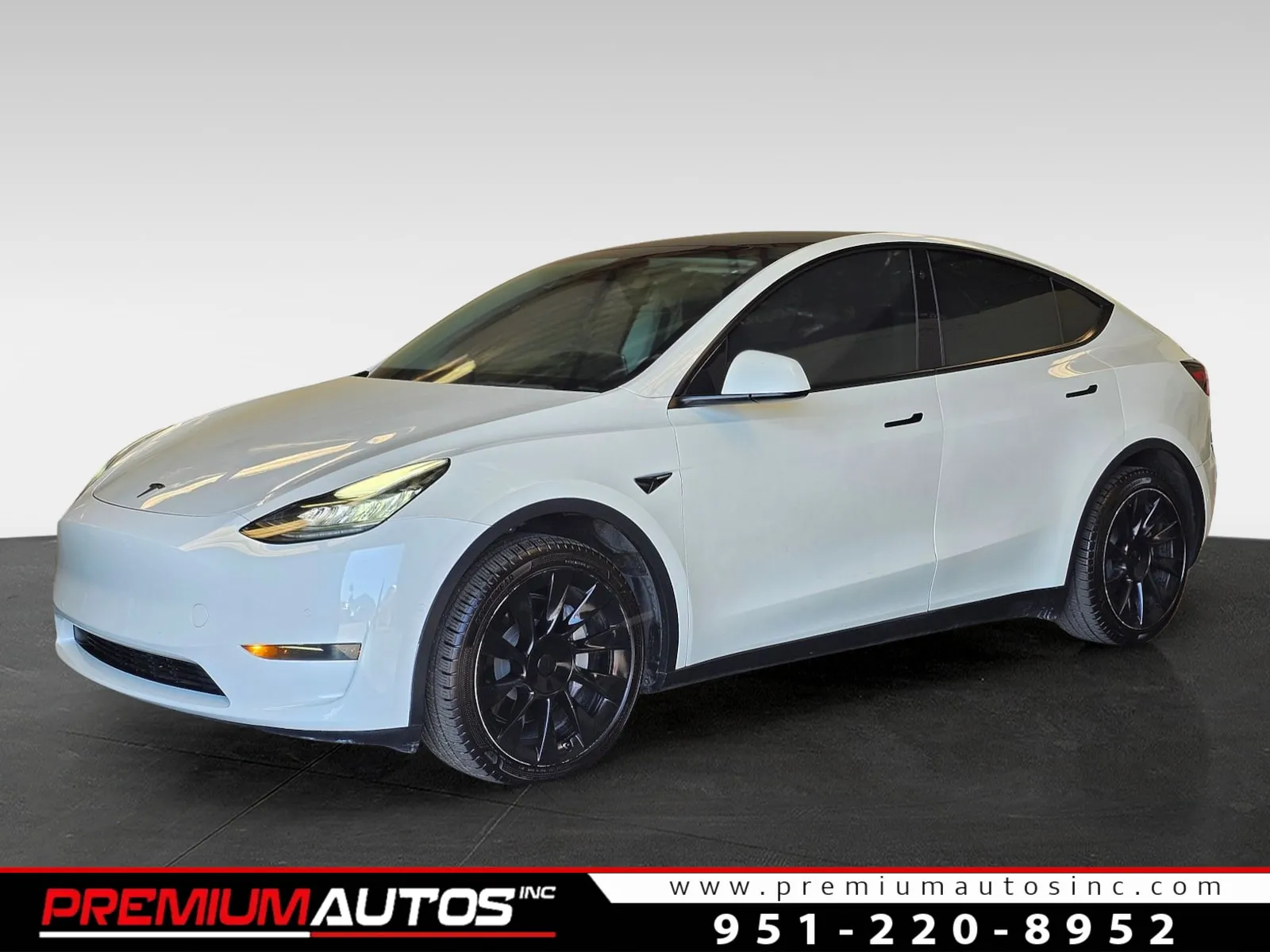
- Tesla EVs: High depreciation (e.g., Model Y loses 60.8% in five years) due to rapid tech updates and market shifts.
- Toyota Hybrids: Low depreciation (e.g., RAV4 Hybrid loses just 30.1%) thanks to reliability and strong demand.
- Ownership Costs: Tesla saves on fuel but has higher insurance and depreciation costs, while Toyota hybrids balance lower depreciation with manageable maintenance costs.
Quick Comparison Table:
| Vehicle Model | 5-Year Depreciation (%) | Dollar Value Lost | Resale Value |
|---|---|---|---|
| Tesla Model Y | 60.8% | $36,499 | $23,491 |
| Toyota RAV4 Hybrid | 30.1% | $9,714 | $22,586 |
| Toyota Prius | 34.9% | $9,908 | N/A |
For buyers prioritizing value retention, Toyota hybrids are the better choice. However, buying a used Tesla can offer advanced features at a lower price after steep initial depreciation.
Tesla vs Toyota Hybrid 5-Year Depreciation Comparison
5-Year Depreciation Rates: Tesla vs. Toyota
Depreciation by Percentage
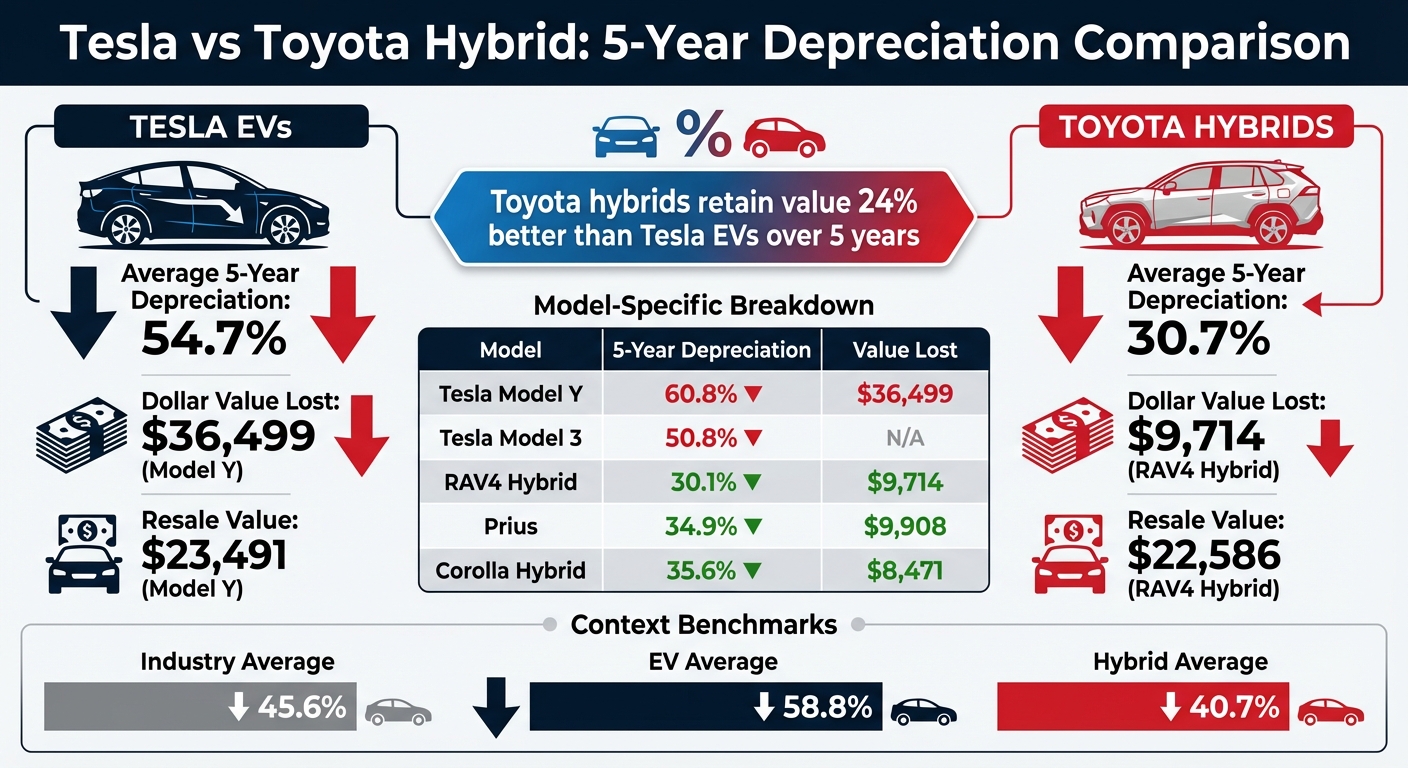
When it comes to holding their value, Tesla and Toyota vehicles show a stark contrast. Over five years, Tesla vehicles lose 54.7% of their value, compared to just 30.7% for Toyota vehicles. This means Tesla owners face a much steeper depreciation compared to those driving Toyota hybrids. For context, the industry average depreciation is 45.6% overall and 58.8% for electric vehicles (EVs). These numbers highlight how well Toyota hybrids maintain their value.
Looking at specific models, the Tesla Model Y depreciates 60.8% after five years. On the other hand, the Toyota RAV4 Hybrid holds up much better, losing only 30.1%. Other Toyota hybrids follow a similar trend: the Prius depreciates by 34.9%, the Corolla Hybrid by 35.6%, and the Camry Hybrid by 39.8%. These figures clearly demonstrate Toyota hybrids' strength in retaining value compared to Tesla's EVs. But how does this translate into actual dollars?
Dollar Value Lost Over Time
Let’s break these percentages into real-world dollar losses. The Tesla Model Y, for example, loses $36,499 in value over five years, dropping from its original price to a resale value of $23,491. That’s equivalent to about $20 per day in depreciation. By comparison, the Toyota RAV4 Hybrid loses just $9,714 in the same timeframe, holding a resale value of $22,586. Despite its higher initial price, the Model Y ends up with a lower resale value than the RAV4 Hybrid.
The trend continues across other models. The Toyota Prius loses $9,908 over five years, while the Corolla Hybrid sheds $8,471. Both of these losses are less than a third of the Model Y’s depreciation. Even larger Toyota hybrids, like the Highlander Hybrid, which depreciates by $18,432, still fare far better than Tesla’s offerings. These numbers highlight Toyota hybrids' ability to retain their value, making them a more cost-effective choice for buyers concerned about long-term ownership costs.
| Vehicle Model | 5-Year Depreciation (%) | Dollar Value Lost | Resale Value |
|---|---|---|---|
| Tesla Model Y | 60.8% | $36,499 | $23,491 |
| Tesla Model 3 | 50.8% | N/A | N/A |
| Toyota RAV4 Hybrid | 30.1% | $9,714 | $22,586 |
| Toyota Prius | 34.9% | $9,908 | N/A |
| Toyota Corolla Hybrid | 35.6% | $8,471 | N/A |
For buyers exploring the inventory at Premium Autos Inc in Norco and El Monte, CA, these insights offer a helpful guide for making informed decisions about long-term value and cost.
sbb-itb-66f4901
Purchase Price and Used Market Values
New Car Prices for Tesla and Toyota
When comparing Tesla and Toyota hybrids, the difference in starting prices is hard to ignore. The Tesla Model 3 starts at $42,490 and can go up to $54,990. Meanwhile, the Tesla Model Y, positioned as a premium SUV, begins at $59,990. On the other hand, the Toyota RAV4 Hybrid for the 2024 model year has an average starting price of $37,698. This makes Toyota hybrids a more budget-friendly option upfront.
These price differences carry over into the used car market as well.
Used Car Pricing Patterns
In the used market, the story is all about value retention. A three-year-old Tesla Model 3, for example, typically sells for around $21,800, reflecting a depreciation of 46%. Comparatively, a three-year-old Toyota RAV4 Hybrid holds its value better, selling for approximately $27,744.
Sean Tucker, Lead Editor at Kelley Blue Book and Autotrader, highlighted this trend, stating:
"Our industry has never seen anything like what's happened to Tesla over the last year."
He also emphasized Toyota's reputation:
"Toyota is known for its high-end, predictable quality. They just keep their value better."
The Toyota RAV4 Hybrid demonstrates remarkable stability in the used market. Between May 2024 and May 2025, its price declined by just 1.6% - a modest drop of $596 - leaving its used price at $37,102. In stark contrast, the 2023 Tesla Model Y Long Range saw its value plummet by 41.1% in only two years.
These trends highlight the strong value retention of Toyota hybrids, especially when compared to Tesla models.
Tesla Model Y vs RAV4 Hybrid: Lowest Cost of Ownership in 5 & 10 Years? + Cost Per Mile Comparison
What Affects Depreciation Rates
Breaking down the factors behind depreciation helps explain why Toyota hybrids tend to hold their value better than Teslas.
Reliability and Vehicle Lifespan
Toyota has built a reputation for reliability that directly impacts its hybrids' resale value. Known for their durability, Toyota vehicles consistently command higher trade-in prices. This dependability gives buyers confidence, which translates to better long-term value retention.
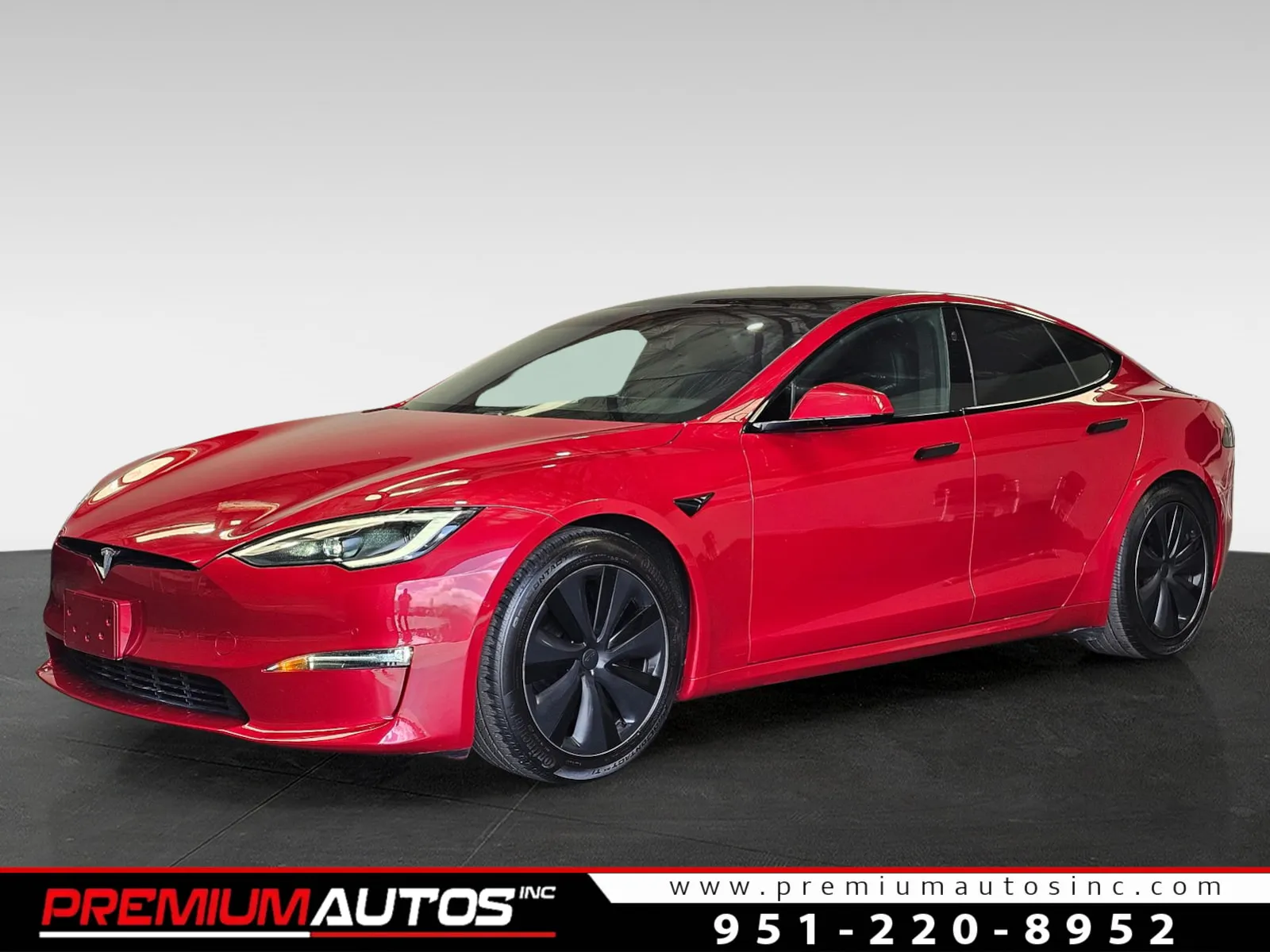
Tesla faces a different set of challenges. High repair costs and the rapid pace of technological advancements often make older Tesla models less appealing. For instance, the Tesla Model S is noted as the fastest-depreciating car, losing over half its value within just three years. These hurdles not only affect resale prices but also shape buyer perceptions about long-term ownership costs.
Buyer Demand and Brand Loyalty
Consumer preferences significantly influence how well a vehicle holds its value. Toyota hybrids benefit from strong demand, thanks to their excellent fuel efficiency and the absence of range anxiety. These factors keep resale values steady over time.
Tesla, however, struggles with issues that impact demand and loyalty. Controversial public statements by Tesla's CEO have affected the brand's reputation, alienating some potential buyers. This has contributed to Tesla vehicles depreciating by 54.7% after five years.
Technology Updates and Features
Tesla's frequent price adjustments for new models often hurt the value of its used cars. For example, when the price of a new Model 3 drops by thousands of dollars, current owners may see their trade-in values decline almost immediately. On top of that, the $7,500 federal EV tax credit further reduces the effective cost of new Teslas, putting additional pressure on used prices.
Battery range is another critical factor. According to J.D. Power, EVs with a range under 275 miles are penalized in resale value. Tesla's older models, which fall short of this benchmark, struggle to compete with newer models offering over 300 miles of range. Toyota hybrids sidestep this issue entirely, as they don't rely solely on battery performance.
| Brand/Segment | 5-Year Depreciation Rate |
|---|---|
| Toyota Brand Average | 30.7% |
| Hybrid Segment Average | 40.7% |
| Industry Average | 45.6% |
| Tesla Brand Average | 54.7% |
| Electric Vehicle Average | 58.8% |
Total Ownership Costs
Owning a vehicle involves more than just the initial purchase price. Beyond depreciation, ongoing costs like fuel or charging, maintenance, and insurance all contribute to the bigger picture. These expenses help shape the overall value of owning a Tesla versus a Toyota, complementing their respective depreciation trends.
Charging vs. Fuel Expenses
Tesla owners enjoy much lower energy costs compared to gas-powered vehicles. With the national average electricity rate at 15.9 cents per kilowatt hour, charging an EV is significantly cheaper than filling up at the pump. Over five years, Tesla drivers can save around $5,500 in fuel expenses compared to traditional gas-powered sedans.
Toyota hybrids, while not as cheap to fuel as EVs, still offer excellent fuel efficiency, keeping costs manageable. According to Greg Brannon, AAA's Director of Automotive Research:
"Hybrid vehicles are a reasonable, affordable option for those who want to try the benefits of electrification. Hybrids benefit from excellent fuel economy, low maintenance costs, depreciation, and insurance – making them an affordable option for car buyers".
To put this into perspective, a Tesla Model 3 costs about $2,700 in electricity over five years. In contrast, a Toyota Camry requires around $8,200 in gasoline during the same period. That’s a $5,500 savings in Tesla’s favor.
Maintenance and Repair Costs
Beyond depreciation, maintenance and repair costs are another key factor in total ownership expenses. A 2025 Consumer Reports study on 10-year maintenance costs ranked Toyota 3rd and Tesla 5th. Both brands outperform luxury competitors like Mercedes-Benz and BMW in this regard.
Tesla’s edge comes from its electric motor design, which is simpler and has fewer moving parts than a traditional gas engine. This design eliminates many routine services, reducing Tesla’s maintenance costs to about $300 over five years.
Toyota hybrids, on the other hand, still rely on internal combustion engines. They require regular upkeep like oil changes, tire rotations, and traditional engine maintenance. Over five years, a Toyota Camry averages about $1,700 in maintenance costs. However, Toyota hybrids often come with complimentary maintenance packages, which can help reduce early ownership expenses.
Insurance, however, tilts in Toyota’s favor. Tesla insurance is notably more expensive due to specialized repair needs and a limited network of approved body shops. Insuring a Tesla Model 3 costs about $9,000 over five years, compared to $6,000 for a Toyota Camry. That $3,000 difference offsets some of Tesla’s fuel and maintenance savings.
When all costs are considered, the five-year total ownership cost for a Tesla Model 3 is approximately $59,000, while a Toyota Camry comes in at $55,900. Tesla offers savings on fuel and maintenance, but higher depreciation and insurance costs make its overall ownership expense slightly higher.
Conclusion: Choosing the Best Value
When it comes to depreciation, resale values, and ownership costs, the "best value" really depends on what matters most to you. If you're looking for long-term savings and reliable resale value, Toyota hybrids are hard to beat. These vehicles consistently hold their value better than most, making them a smart pick for those who prize stability.
On the flip side, used Teslas offer cutting-edge technology at a fraction of their original price. For example, a 2022 Tesla Model 3 typically sells for just 44% of its initial cost while still retaining about 75% of its useful life. This makes used Teslas a great option for buyers seeking luxury and advanced technology without the hefty price tag.
For those who prioritize predictability and strong resale value, Toyota hybrids remain a top contender in the used car market. Whether you're eyeing a certified pre-owned Tesla that's already weathered its steepest depreciation or a Toyota hybrid with a reputation for holding its value, Premium Autos Inc can help. Visit their locations in Norco or El Monte, CA, to explore quality options tailored to your needs.
FAQs
Why do Tesla vehicles lose value faster than Toyota hybrids?
Tesla vehicles generally lose their value faster than Toyota hybrids, and there are a few reasons behind this. On average, Tesla cars see a 44.4% drop in value after 3 years and a 54.7% drop after 5 years. In comparison, Toyota hybrids only depreciate by about 23.9% after 3 years and 30.7% after 5 years. This stark difference comes down to factors like market demand, brand perception, and the influence of federal tax credits, which can reduce the resale value of electric vehicles over time.
Toyota hybrids, on the other hand, hold their value better thanks to their strong reputation for reliability and fuel efficiency. Meanwhile, the fast-paced advancements in electric vehicle technology can make older Tesla models feel outdated much sooner, further driving up their depreciation rates.
How do the fuel and maintenance costs of Teslas compare to Toyota hybrids?
Tesla vehicles tend to have lower fuel and maintenance costs compared to Toyota hybrids. Being fully electric, Teslas run on electricity rather than gasoline, which can often be cheaper - especially when charging at home. Maintenance is also less costly since Teslas have fewer moving parts, don’t require oil changes, and use regenerative braking, which helps reduce brake wear.
Toyota hybrids, in contrast, use a combination of a gasoline engine and electric motor. While their fuel costs are higher than Teslas, they’re still noticeably lower than those of traditional gas-powered cars. Maintenance costs for hybrids fall in the moderate range, as they require servicing for both the engine and the hybrid system. However, Toyota’s strong reputation for reliability adds peace of mind. In the end, how much you save with a Tesla or a Toyota hybrid often comes down to your driving habits and the energy or fuel prices in your area.
What makes Toyota hybrids hold their value so well?
Toyota hybrids, such as the Prius and RAV4 Hybrid, are well-known for holding their resale value, thanks to their reliability and long-lasting performance. These qualities make them a dependable choice for long-term ownership. On average, they depreciate by only about 35% after five years, which is far less than many other vehicles - making them a smart financial choice.
Several factors contribute to this strong resale value. First, their fuel efficiency and low maintenance costs make them practical and economical to own. Second, Toyota’s reputation for cutting-edge hybrid technology adds to their appeal. Finally, the steady demand for hybrids in the U.S. - driven by concerns about fuel costs and environmental impact - keeps these vehicles in high demand. Buyers trust Toyota’s focus on quality, ensuring these hybrids remain a top pick in the used car market.