How to Maximize Trade-In Value for Your Car
How to Maximize Trade-In Value for Your Car
When trading in your car, the goal is simple: get the best deal possible. Here’s how you can ensure you don’t leave money on the table:
- Research Your Car’s Value: Use tools like Kelley Blue Book or Edmunds to get an accurate estimate. Check local market trends to understand demand in your area.
- Prepare Your Car: Clean your car inside and out, fix minor issues (like scratches or worn tires), and organize maintenance records to show proper care.
- Time It Right: Trade in during high-demand seasons (spring and early summer) or when local inventory is low. End-of-month or end-of-quarter deals can also work in your favor.
- Get Multiple Offers: Compare quotes from online tools and in-person appraisals. Use competing offers to negotiate better terms.
- Separate Trade-In and Purchase Negotiations: Discuss your trade-in value independently to avoid bundled pricing tricks.
- Handle Negative Equity Wisely: If you owe more than your car’s value, consider paying the difference upfront, rolling it into a new loan cautiously, or waiting until your equity improves.
Best Way To Trade In Your Car & Get the Most [5 Easy Steps]
Research Your Car's Market Value
Before stepping into a dealership, arm yourself with knowledge about your car's worth. This way, you'll feel more confident during negotiations and avoid settling for a low trade-in offer.
Use Online Valuation Tools
Start with Kelley Blue Book, a well-known free online resource. By entering your car's VIN, you'll get an estimate tailored to your vehicle's specific features, options, and trim level.
Pay close attention to the condition rating when using Kelley Blue Book. Vehicles are typically categorized as Excellent, Very Good, Good, or Fair. Be honest about your car's condition - overestimating it could lead to unrealistic expectations and lower offers from dealers.
One of the advantages of Kelley Blue Book is that it adjusts its Fair Market Range and Fair Purchase Price based on local market trends in over 100 regions. This means the estimate you receive reflects what buyers in your area are actually paying, rather than just a national average.
To strengthen your position, compare estimates from multiple trusted valuation tools. This gives you a clearer picture of your car's value and how it aligns with local demand.
Check Local Market Trends
Your car’s value isn’t just about its make and model - it’s also shaped by local market conditions. Factors like dealer inventory, regional demand, and resale potential play a big role in determining trade-in offers.
Supply and demand can vary widely depending on where you live. For instance, areas with higher living costs often have higher car valuations, while regions with less demand might result in lower trade-in values. Seasonal trends and fuel prices also influence demand. Convertibles and sports cars tend to fetch higher prices in sunny climates, while all-wheel-drive SUVs are more desirable in snowy regions. When gas prices spike, fuel-efficient vehicles become hot commodities.
Scarcity is another key factor. If your car is rare in your local market, dealers may be willing to pay more, knowing it can sell quickly. To gauge scarcity, check local dealership websites and classified ads to see how many similar vehicles are listed. Fewer options often mean higher trade-in offers.
Timing can also impact your trade-in value. Certain vehicles sell better during specific times of the year - like convertibles in the spring or trucks in the summer. Aligning your trade-in with these seasonal patterns could maximize your offer.
Lastly, don’t hesitate to call local dealers and ask, "Are you looking for any specific vehicles right now?" This simple question might reveal if your car is in demand, giving you an edge in negotiations.
Prepare Your Vehicle for Appraisal
When it comes to trade-in appraisals, first impressions can make a big difference. A clean, well-maintained vehicle tells appraisers that you’ve cared for your car, which could lead to a better trade-in offer. Taking the time to prepare your car properly can help you get closer to your goal of maximizing its value. Start with a thorough cleaning to set the stage for the appraisal process.
Clean Exterior and Interior
A spotless vehicle sends the right message. Begin by vacuuming the seats, floor mats, and trunk. Wipe down surfaces like the dashboard, steering wheel, and door panels, and make sure the windows are crystal clear. For the exterior, a good wash, wax, and attention to details like wheel wells and door jambs can make all the difference.
Don’t forget to address odors - lingering smells from pets, smoke, or food can turn off appraisers. Use effective cleaning products or consider professional treatments for stubborn odors. Replacing cabin air filters is another simple way to improve the interior’s air quality.
Professional detailing services can take things up a notch. Steam-cleaned carpets, conditioned leather seats, and polished paint give your car a refreshed look that appraisers notice. Even small touches like shining the tires and cleaning chrome accents can enhance the overall presentation.
Once your car is clean and fresh, it’s time to tackle minor repairs that can further improve its appeal.
Fix Minor Repairs
Small, affordable fixes can have a big impact on your car’s trade-in value. Address issues like broken lights, minor dents, worn tires, and small windshield chips. For dents, paintless dent repair is often a cost-effective solution. If your tires show uneven wear or are nearing the end of their life, replacing them can make your vehicle more attractive to appraisers.
Windshield chips should be repaired quickly, but only replace the entire windshield if the damage is severe. Keep receipts and take photos of the repairs to provide proof during the appraisal.
Avoid pouring money into expensive mechanical repairs or cosmetic upgrades that won’t significantly boost your trade-in value. Instead, focus on restoring your car to a well-maintained condition that highlights its care and reliability.
Organize Maintenance Records
Keeping your maintenance records in order isn't just about tidiness - it can actually boost your car's trade-in value, potentially increasing its resale price by up to 20%. Here's how to gather and organize these records effectively.
"Good, complete service records clearly indicate that you're a diligent owner, which may well lead the buyer to believe that you're a diligent driver too." - Mercedes-Benz of Annapolis
Think of your maintenance records as your car's biography. They tell a story of care and attention, offering dealers the transparency they need to trust your vehicle's condition. These records reassure buyers that your car has been properly maintained, minimizing concerns about hidden issues or neglected upkeep.
Collect Service History
Start by gathering every receipt, invoice, and service document you have. The most important records include routine maintenance like oil changes, fluid checks, tire rotations, and brake pad replacements, as well as major repairs like timing belt replacements.
To keep everything organized, set up a dedicated folder system. You can go old-school with physical folders or use digital tools like Google Drive, Dropbox, or Evernote. Be sure to include records from both dealerships and independent mechanics. If you've done any maintenance yourself, document it thoroughly - save receipts for parts and jot down detailed notes about the work you completed.
"While they don't guarantee a problem-free used-car ownership experience, service records show that the vehicle has not been neglected and has gotten the maintenance it needs to help ensure its long-term reliability. That's definitely worth a premium, as proper servicing reduces the chances of expensive repairs down the line." - Ed Kim, President and Chief Analyst, AutoPacific
For added clarity, note the mileage at the time of each service and take dated photos of repairs or new parts. If you've installed upgrades or non-standard accessories that enhance your car's value, include those details too. Once you've compiled everything, focus on filling in any gaps in your records.
Find Missing Records
Missing documentation? No problem - there are plenty of ways to track it down. Start by contacting the dealership where you bought the car or had it serviced. Many manufacturers and dealers keep digital service records tied to your vehicle's VIN.
Independent garages and chain service centers are also worth reaching out to, as they often maintain detailed records. When you contact them, have your VIN and approximate service dates handy.
Another option is to check vehicle history reports from services like CARFAX. These reports compile service entries from participating providers and may also include accident repairs and odometer readings, giving you a partial snapshot of your car's history.
Don't overlook physical clues inside your car. Oil change stickers, timing belt tags, or handwritten notes in the glove compartment can provide valuable hints about past maintenance. State DMV websites might also have records of emissions tests or inspections tied to your VIN.
If you bought the car used, consider reaching out to the previous owner. They might still have receipts, warranty booklets, or digital records that could help complete your documentation.
"Whether you opt to have scheduled services performed at a dealership, independent garage, or DIY, make sure you document all of your maintenance and keep good service records. You'll need a paper trail if you ever need to file a warranty claim, and when the time comes to trade in or sell your vehicle." - Old World Industries
Understand How Vehicle Modifications Affect Value
Once you've prepped your car and compiled its service records, it's time to consider how any modifications might influence its market value. While some changes can make your car more appealing on a personal level, they often lower trade-in offers. Dealerships typically prefer vehicles in their original factory condition because they attract a broader range of buyers. If your car has aftermarket modifications, it’s worth assessing how these changes could impact its resale value. For instance, many aftermarket upgrades can limit the pool of potential buyers, leading to lower trade-in offers compared to cars that remain stock. Even optional equipment packages added when the car was new may hold little resale value, as most used-car buyers prioritize affordability and basic functionality over extras. Carefully review any modifications to determine whether they might hurt or maintain your car’s trade-in value.
Modifications That Reduce Value
- Performance Modifications – Add-ons like turbochargers, superchargers, nitrous systems, and engine tuning chips can signal extensive use beyond factory specifications, which may make buyers wary.
- Cosmetic Changes – Custom paint jobs, vinyl wraps, body kits, oversized spoilers, or lowered suspensions often deviate from the car's original design, making them less appealing to the average buyer.
- Interior Modifications – Features like aftermarket racing seats, custom upholstery, or non-standard steering wheels can deter buyers who prefer factory interiors.
- Exhaust System Modifications – Changes such as straight pipes, cat-back systems, or headers raise concerns about emissions and departures from factory standards, which can turn off both buyers and dealerships.
Modifications That Don't Hurt Value
Not all modifications are deal-breakers. Factory-approved accessories and dealer-installed options, such as running boards, roof racks, or towing packages, are generally acceptable. Similarly, high-quality audio systems from trusted brands like Pioneer, Kenwood, or Alpine can be fine, provided they’re professionally installed without altering the car’s original wiring. Protective upgrades, such as paint protection film, ceramic coatings, or premium window tinting, can help maintain your car's condition, which dealerships often appreciate. Safety and convenience features like backup cameras, dash cams, or remote start systems are usually neutral as long as they integrate seamlessly with the car’s original systems.
Cars equipped with original equipment manufacturer (OEM) parts tend to fetch higher trade-in values compared to those with aftermarket replacements. If your vehicle has significant modifications, it’s a good idea to remove aftermarket parts, reinstall OEM components, and sell the aftermarket parts separately. Before making any changes, think about how they might influence your car's resale value in the future.
sbb-itb-66f4901
Time Your Trade-In for Best Results
Once you've handled all the necessary repairs and gathered your records, the next step is all about timing. When you trade in your vehicle can have a big impact on how much you’re offered. Market trends and seasonal shifts play a huge role in determining trade-in values. By understanding these patterns, you can aim to trade in when demand is high and inventory is low, putting you in a stronger position to negotiate.
The automotive market tends to follow predictable cycles. Dealerships adjust their offers based on what buyers are looking for, how much inventory they have, and local demand. If you align your trade-in with these factors, you’re more likely to walk away with a better deal.
Let’s take a closer look at the seasons and market signals that can work in your favor.
Best Seasons for Trade-Ins
Seasonal trends play a key role in determining trade-in values, and some times of the year are better than others to make your move.
Spring and early summer are typically the best times to trade in most vehicles. From March through June, dealerships see a spike in customer activity as people shake off the winter blues and use their tax refunds to shop for cars. This increased demand for used vehicles often leads to higher trade-in offers.
Certain vehicle types also perform better during specific seasons. For example:
- Convertibles and sports cars are most in demand during late spring.
- SUVs and trucks see strong trade-in values during spring and summer.
- Family vehicles tend to do well in the fall as people prepare for the school year and winter driving.
Winter, on the other hand, tends to offer the lowest trade-in values for most vehicles, except for four-wheel-drive models and winter-ready SUVs, which can see modest increases in value during the colder months.
Track Current Market Trends
Seasonal patterns are helpful, but keeping an eye on real-time market conditions can give you an even better edge. Dealership inventory levels, for example, have a direct impact on trade-in offers. When lots are running low, dealerships are willing to pay more for quality vehicles to restock their inventory.
Check dealership websites regularly to see how much stock they have of vehicles similar to yours. If inventory is low, it’s a good time to trade in. Watching these trends over a few weeks or months can give you a clearer picture of when demand is highest.
Local economic conditions also play a role. If your area is experiencing job growth, population increases, or major development projects, demand for used cars often rises, leading to better trade-in offers. Conversely, areas facing economic slowdowns may see lower offers due to reduced consumer spending.
Gas prices can also create opportunities. When gas prices rise, fuel-efficient vehicles like hybrids and compact cars become more desirable, boosting their trade-in values. On the flip side, when gas prices fall, larger vehicles like trucks and SUVs tend to command better offers.
Timing your trade-in around model year transitions can also help you avoid a drop in value. New models typically hit the market in late summer or early fall, making older models less appealing. Trading in before the new models arrive ensures your vehicle doesn’t lose value by becoming “last year’s model.”
Finally, consider trading in at the end of the month or quarter. Dealerships often have sales quotas to meet, and during these high-pressure periods, sales staff and managers may be more flexible with trade-in negotiations. The last few days of March, June, September, and December are particularly good times to take advantage of this.
Keep an eye on manufacturer incentives and rebates as well. When automakers offer large rebates on new cars, trade-in values can drop because the overall deal relies less on your vehicle’s value. On the other hand, when incentives are limited, dealerships may offer higher trade-in values to make the deal more appealing.
Get and Compare Multiple Trade-In Offers
Once you've chosen the right time to trade in your car, the next step is to gather multiple offers. Relying on just one appraisal could mean missing out on extra value. By comparing offers, you gain the upper hand in negotiations and might even add thousands of dollars to your trade-in value.
"Maximizing your car's trade-in value can add thousands to the bottom line in a new-car transaction" - AP News
Think of each offer as a starting point rather than the final word. Dealerships expect some back-and-forth negotiation, and having competing offers gives you the confidence to walk away if the terms don't meet your expectations.
Collect Online and In-Person Offers
Start with online tools like Kelley Blue Book, Edmunds, and NerdWallet. These platforms provide quick estimates based on your car's details - such as make, model, year, mileage, and condition. While these online quotes are a great starting point, remember they're just estimates and will need verification through an in-person inspection.
Online appraisals are convenient but may not fully reflect your car's condition or history. Use them to establish a general price range, but don't rely solely on these numbers.
For a more accurate valuation, visit dealerships for in-person assessments. Appraisers can inspect your car's actual condition, which often results in a more precise offer. Different dealerships might value your car differently based on factors like their current inventory, demand, and reconditioning capabilities.
When visiting dealerships, come prepared. Research your car's value ahead of time and be ready to highlight its best features, such as recent maintenance or repairs. This preparation shows you're an informed seller and can help you negotiate better terms.
Keep a record of each offer, noting the date, dealership, and amount. This documentation allows you to track which offers are most competitive and provides a solid foundation for negotiations. If you're in Southern California, consider including Premium Autos Inc in your research to refine your comparisons further.
Premium Autos Inc Trade-In Evaluation
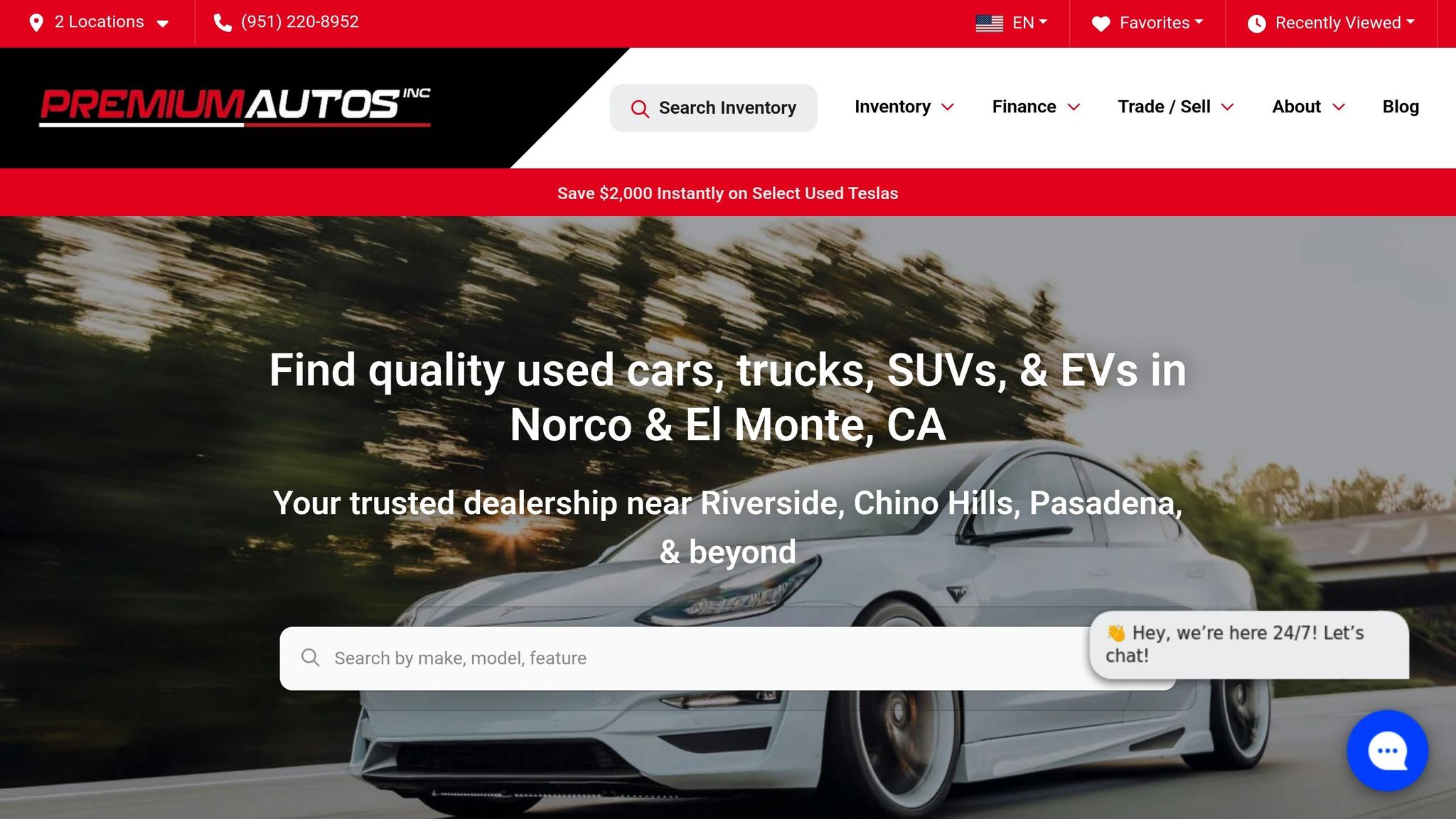
Premium Autos Inc provides detailed trade-in evaluations at their Norco and El Monte locations in California. Their process includes a free assessment that factors in your car's actual condition, maintenance history, and the current market.
You can start by using their online tool to input your car's details and get an initial estimate. This will give you a general idea of your vehicle's value.
For the most precise appraisal, visit their Norco or El Monte location for an in-person evaluation. Their trained appraisers thoroughly inspect your car, considering aspects that online tools can't measure - like the quality of the paint, interior condition, and mechanical performance.
Premium Autos Inc's evaluations are independent of any purchase, meaning you can get an appraisal even if you're not buying a car from them. This flexibility lets you use their offer as part of your overall comparison-shopping strategy.
Their appraisals take into account various factors, including local market conditions and inventory needs. With a focus on high-quality brands like Tesla, BMW, and Toyota, Premium Autos Inc often provides competitive offers for well-maintained vehicles from these manufacturers.
Whether you're closer to Norco or El Monte, Premium Autos Inc ensures consistent and thorough evaluations at both locations. Use their offer alongside others to get a clear picture of your car's market value. Having their appraisal in hand can strengthen your negotiating power and help you decide where to finalize your trade-in.
Negotiate Trade-In Separately from Your Purchase
When trading in your car, it's smart to negotiate the trade-in deal separately from your new purchase. This approach ensures you get the best possible value for both transactions. By keeping the two negotiations distinct, you can evaluate each deal on its own terms and avoid potential pitfalls.
Why does this matter? Combining trade-in and purchase negotiations can lead to inflated pricing. For instance, a dealer might raise the price of the new car to make a higher trade-in offer seem appealing. Or, they could offer a great deal on the new car while undervaluing your trade-in. Without separating these discussions, it’s difficult to know which part of the deal truly benefits you. Handling each transaction independently ensures clarity and helps you avoid losing out on hundreds - or even thousands - of dollars.
Avoid Bundled Deal Confusion
By isolating your trade-in from your new vehicle purchase, you stay in control of both deals. This separation eliminates the confusion that often comes with bundled pricing, which can obscure the true value of each transaction. When you negotiate each deal independently, you’ll have a clear understanding of your car’s trade-in worth and the actual cost of your new vehicle.
Use Competing Offers for Better Deals
One of the most effective strategies to maximize your trade-in value is to gather multiple offers. These competing offers give you leverage, allowing you to negotiate with confidence and push for better terms.
Start by using online tools and in-person appraisals to collect detailed trade-in estimates. Be prepared with essential documents like your vehicle title, loan payoff information, registration, and all sets of keys. Online tools are a great way to get baseline quotes, but scheduling in-person appraisals at two or more dealerships provides more accurate, binding offers since appraisers can evaluate your car’s actual condition.
When negotiating, present your competing offers with specific figures. Dealers are often willing to match or beat these offers to earn your business. If they don’t, you always have the option to walk away and explore better opportunities elsewhere.
To strengthen your position, use trusted online pricing guides like Kelley Blue Book, Edmunds, or NerdWallet’s used car value estimator. These tools help you determine a fair trade-in range based on factors such as mileage, condition, optional features, and location. With this research in hand, you’ll have a clear understanding of your car’s market value and be better equipped to negotiate a deal that works in your favor.
Handle Negative Equity Situations
Dealing with negative equity is a key step in getting the most out of your car's trade-in value. Negative equity can make trade-ins more challenging, but understanding your options can help you save money. This issue is more common than many realize, especially with newer cars that lose value quickly or when a large portion of the purchase price has been financed.
What Is Negative Equity
Negative equity happens when you owe more on your car loan than the car is worth. For instance, if your loan balance is $18,000 but your car’s trade-in value is only $15,000, you’re dealing with $3,000 in negative equity.
Several factors can lead to this situation. Rapid depreciation is a major contributor, especially in the first few years of ownership. New cars often lose 20% to 30% of their value within the first year alone. Financing with minimal down payments or opting for long loan terms increases the risk. On top of that, excessive wear and tear can decrease your car’s value faster than your loan balance drops.
To address negative equity, you first need to know how much you’re dealing with. Subtract your car’s current trade-in value from your remaining loan balance. Be sure to get the exact payoff amount from your lender, including any additional fees.
Once you have a clear picture of your negative equity, you can explore strategies to handle it wisely.
Options for Managing Negative Equity
Managing negative equity effectively can help protect your finances and trade-in value. There are several approaches, each with its own pros and cons, depending on your situation.
One option is to roll the negative equity into a new loan when trading in your vehicle. This allows you to move forward with the trade-in immediately. However, it increases your monthly payments and could put you at risk of negative equity again if the new loan amount exceeds the value of the new car. Be cautious about taking on too much additional debt.
Another choice is to pay the difference upfront. For instance, if you owe $3,000 more than your car’s trade-in value, you can pay that amount in cash to clear the debt. While this requires more money upfront, it prevents you from carrying the debt into a new loan and keeps your future monthly payments lower.
If your car is still in good condition and maintenance costs are manageable, waiting to trade in might be the best move. Continue making loan payments until your equity improves. This approach works well if your car remains reliable and affordable to maintain. Regularly check your equity position by comparing your car’s current trade-in value with your remaining loan balance.
You could also consider refinancing your current loan. If interest rates have dropped or your credit score has improved since you first financed the car, refinancing might lower your monthly payments. This can ease your financial burden while you wait for a better time to trade in.
When deciding how to handle negative equity, don’t forget to factor in the total cost of ownership for your current car - things like maintenance, insurance, and fuel. In some cases, upgrading to a more efficient or reliable vehicle might offset the cost of rolling negative equity into a new loan.
Ultimately, choose the strategy that best supports your financial situation and trade-in goals.
Conclusion: Key Steps to Maximize Your Trade-In Value
Getting the most out of your car's trade-in value boils down to being prepared, doing your homework, and negotiating wisely. By applying the strategies outlined here, you can potentially add hundreds of dollars to your trade-in offer.
Start by ensuring your car looks its best. A clean, well-maintained vehicle is more appealing to dealers and typically fetches a higher trade-in value. Take the time to clean your car thoroughly, remove all personal belongings, and tackle minor fixes like scratched paint, worn-out wipers, or burnt bulbs. These small efforts can make a noticeable difference.
Next, research your car's market value. Use trusted online tools and check local pricing trends to get a clear picture of what your car is worth. Gather all maintenance records to show that the vehicle has been well cared for - dealerships favor cars that don’t require much work before resale. Also, consider the impact of any modifications. Aftermarket changes often reduce trade-in value because they might not appeal to everyone or could cause warranty concerns. If possible, restore your car to its original state before the appraisal.
When it comes to negotiating, keep the trade-in separate from the purchase of a new car. As Chaparral Ford explains:
"If you're lumping together your used-car trade-in and your new-car purchase into a single deal, the car salesperson might try to inflate your new car's price to make up for a higher trade-in value. Or the dealer might give you a better deal on the new vehicle but short you on your trade-in vehicle's value. Negotiate them separately to make sure you get the best-possible trade-in value, or at least the price you've determined you need, plus the best price on your new-to-you vehicle."
Finally, shop around for multiple offers. For example, Premium Autos Inc provides straightforward trade-in evaluations, both online and in person, at their Norco and El Monte locations. Their transparent process helps you understand your car's actual value without the confusion of bundled deals.
FAQs
When is the best time to trade in my car to get the highest value?
The ideal moment to trade in your car depends on a mix of factors. Generally, you’ll get the best value when your car is in great shape, well-maintained, and free from any major problems. Taking care of regular maintenance and fixing minor issues can go a long way in boosting its trade-in value.
Timing also matters. Used car prices often peak during the first half of the year, especially in the spring when demand tends to rise. Another key factor is mileage - trading in before your car hits a high mileage milestone can help you avoid steep depreciation.
Not sure when to make the move? Use tools like Kelley Blue Book to check your car’s current market value or consult with industry experts to get a clearer picture.
What car modifications can lower my trade-in value?
Certain car modifications can hurt your trade-in value by making the car less attractive to potential buyers or raising questions about upkeep and reliability. For instance, custom wheels, lift kits, and aftermarket audio systems might not align with every buyer's taste, which could narrow the pool of interested parties. Likewise, non-factory paint jobs or wraps may turn off buyers who prefer the original factory finish.
Performance upgrades, such as engine modifications like ECU remapping or installing larger turbos, can also work against you. These tweaks often suggest increased wear and tear or higher maintenance costs, which might make dealerships less willing to pay top dollar. If getting the best trade-in value is your goal, sticking as close to the car's original factory condition as possible is the safest bet.
What should I do if I owe more on my car loan than my car is worth when trading it in?
If you’re dealing with negative equity - when you owe more on your car loan than the car’s trade-in value - you’ve got a couple of paths to explore. One option is to pay the difference out of pocket to fully settle the remaining loan balance. This is often the smartest move financially, especially if the gap between what you owe and the car’s value is small enough to manage.
Another route is rolling the negative equity into your new car loan. This lets you proceed with the trade-in, but it does come with trade-offs. Your new loan amount will be higher, which means larger monthly payments and more interest over the life of the loan. Take a close look at your budget and think about your long-term financial plans before deciding which option makes the most sense for you.