Gas Prices vs. EV Sales in Used Car Markets
Gas Prices vs. EV Sales in Used Car Markets
Rising gas prices are pushing more buyers toward used electric vehicles (EVs), reshaping the car market. Here's what you need to know:
- Used EV sales surged by 35% in 2025, driven by high fuel costs and demand for savings.
- Gas prices impact EV demand 4 to 6 times more than electricity prices, making EVs attractive during price spikes.
- Used EVs sell faster (34 days on average) than gas cars (43 days), showing strong demand.
- Buyers prioritize cost savings: EVs save $800–$1,000 annually on fuel and have lower maintenance costs.
- Lease returns are flooding the market, with 1.1 million EVs leased since 2023, boosting inventory and lowering prices.
- 56% of used EVs are priced under $30,000, making them more accessible than ever.
Southern California leads the charge with high gas prices, extensive charging networks, and incentives like HOV lane access for used plug-ins. With falling battery costs and growing supply, now is a great time to consider a used EV for long-term savings and convenience.
How Gas Prices Affect Consumer Buying Decisions
Recent Gas Price Changes
Gas prices have a direct impact on drivers' budgets, influencing their monthly expenses significantly. For instance, between February 2022 and March 2022, the average gas price in the U.S. spiked from $3.54 to $4.20 per gallon. This sharp increase didn't just hit wallets - it also led to a noticeable surge in consumer behavior. During this time, monthly searches for "Electric Vehicle" on CarMax nearly doubled. This trend highlights how rising fuel costs push consumers to explore alternatives, like EVs, as a way to manage their expenses.
Changes in What Consumers Want
As gas prices climb, so do changes in buyer priorities. Shoppers are now focusing more on total ownership costs, particularly fuel savings, rather than just the upfront purchase price. This shift is evident in trade-in data: sedans and coupes now make up 44% of vehicles traded in for EVs, surpassing SUVs for the first time.
Joel Bassam from Easterns Automotive captures this shift perfectly:
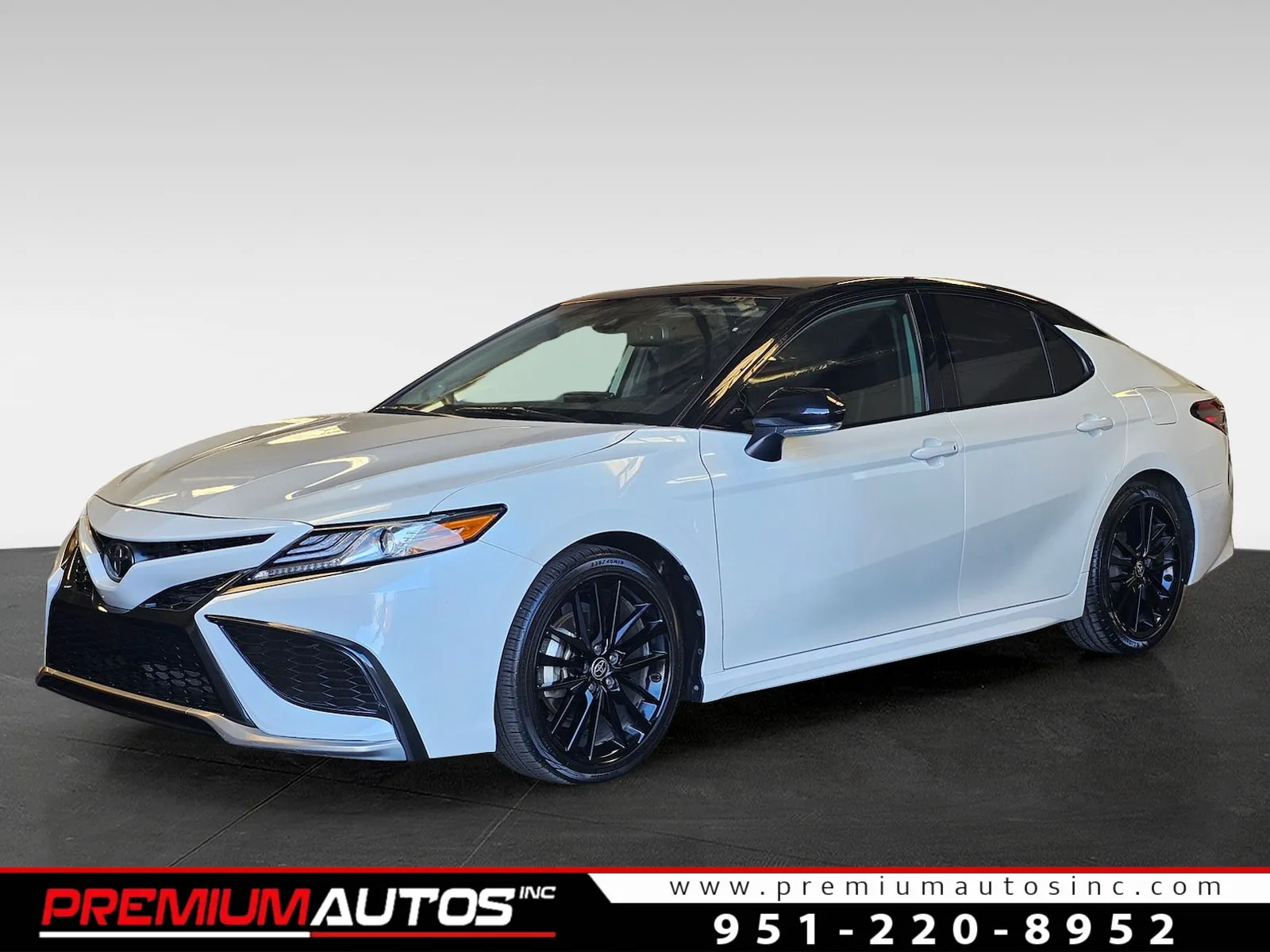
"It's hard to justify buying an ICE Camry versus a Polestar 2 if they're the same price and the same year, just based on features alone. When you sit in those two vehicles, they just don't feel like they're in the same price point."
Regional trends are also evolving. For example, in 2025, Oregon outpaced California by having the highest percentage of EV sales among national retailers. This shows how different areas are adapting to these shifts in consumer preferences.
sbb-itb-66f4901
Growth of the Used EV Market
What's Driving Used EV Demand
The used electric vehicle (EV) market experienced a massive boom in 2025, with sales climbing 35% compared to 2024. This growth isn’t just about fluctuating gas prices - it’s the result of several factors making EVs more appealing and accessible than ever.
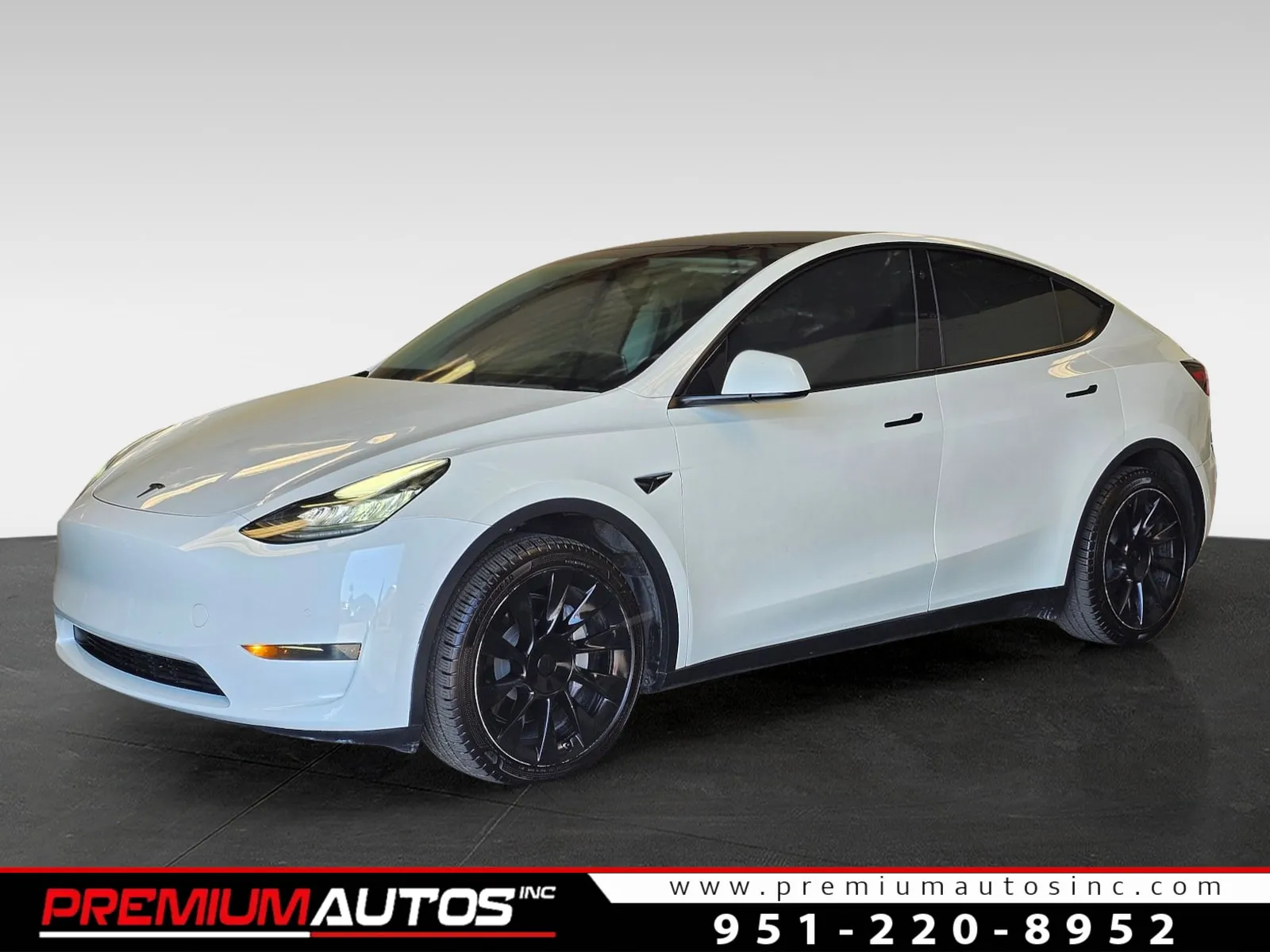
One major factor is the influx of lease returns. Since 2023, approximately 1.1 million EVs have been leased, and many of these vehicles are now hitting dealership lots. By 2026, the volume of returning leases is expected to increase by 230%. These vehicles, often just three years old, offer advanced technology at a fraction of their original price. For instance, a 2023 Tesla Model 3, which originally sold for $57,009, now averages just $24,447 on the used market.
Another driver is the rapid expansion of charging infrastructure. In 2025 alone, public fast-charging ports grew by 33%, adding 17,000 new stations. Tesla’s decision to open its Supercharger network to other brands in 2025 and early 2026 further reduced range anxiety for non-Tesla buyers. On top of that, advancements in battery technology, like the slow-degrading Lithium Iron Phosphate (LFP) batteries, have increased confidence in EV longevity. These newer batteries are expected to last 2-3 times longer than older nickel-based ones. Together, these developments not only increase the supply of used EVs but also make them a more attractive option for buyers.
Benefits of Buying a Used EV
These market shifts translate into clear benefits for consumers. Used EVs offer incredible value compared to similarly priced gas-powered cars. As of early 2026, 56% of used EVs are priced under $30,000, and 39% are available for less than $25,000. But the appeal goes far beyond just the price tag.
In the sub-$20,000 price range, used EVs tend to be two years newer and have 40,000 fewer miles than comparable gas-powered vehicles. For example, a 2023 Chevrolet Bolt EUV averages around $20,800, while a comparable Honda CR-V is priced in the high $20,000s to low $30,000s. As David Thomas from CDK Global explains:
"The value you get out of a used EV right now is extreme. The type of vehicle you're getting on a used lot is... near luxury at a similar price to a Honda Accord."
The financial perks don’t stop at the purchase price. EV owners who charge at home save $800-$1,000 annually on fuel costs compared to gas-powered vehicles. Maintenance costs are also significantly lower due to fewer moving parts and the absence of oil changes. Plus, most manufacturers offer 8-year or 100,000-mile warranties on their traction batteries, and modern batteries typically retain about 90% of their original capacity even after 10 years.
Used EVs Are the Best Deal Right Now with Alex Perdikis
Understanding the true cost of owning a used electric vehicle is essential for buyers looking to maximize their savings.
Gas Vehicles vs. Used EVs
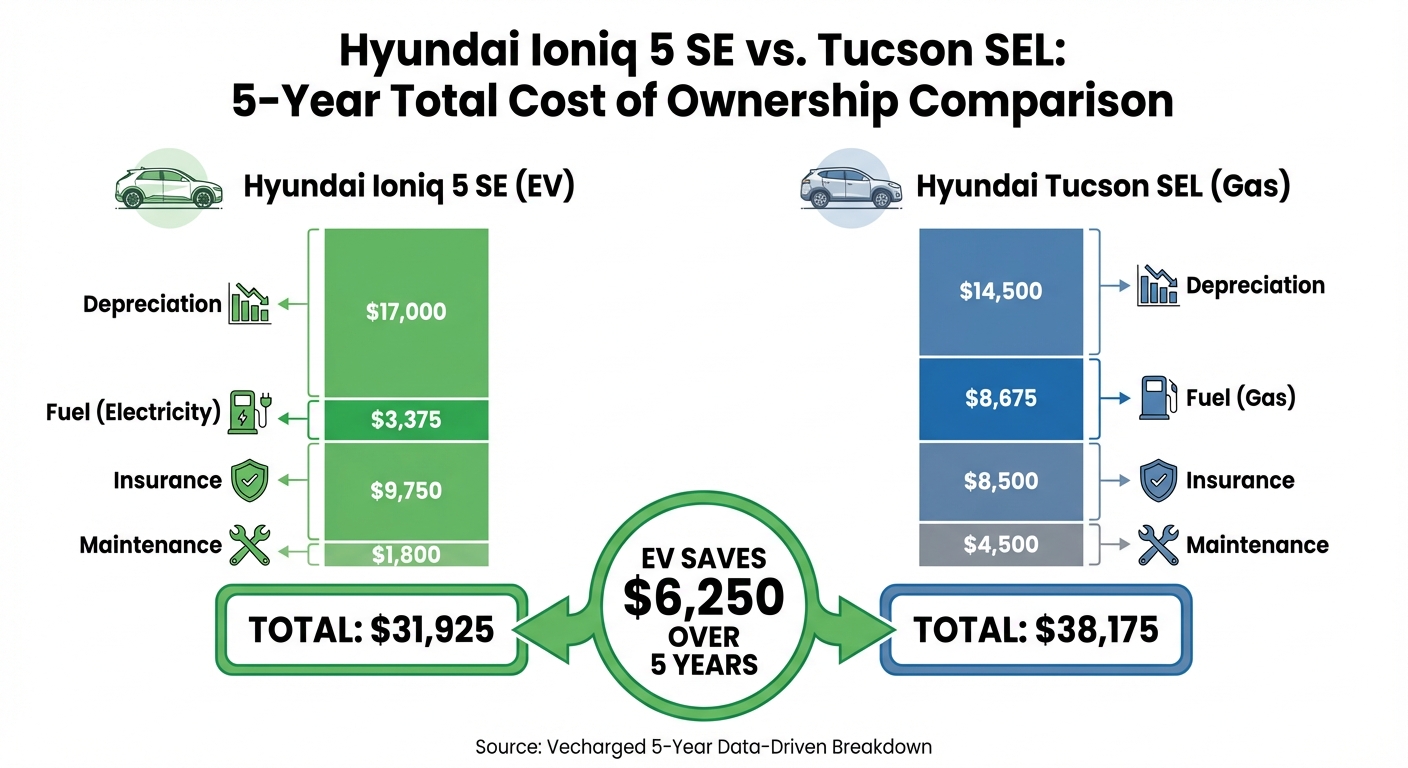
5-Year Cost Comparison: Electric vs Gas Vehicles
Cost and Efficiency Breakdown
While gas-powered cars often have a lower purchase price, used EVs tend to become more cost-effective in just 24 to 30 months, saving drivers between $6,000 and $10,000 over a five-year period.
These savings stem from several factors. For starters, charging at home significantly reduces fuel costs, equating to about $1.50–$2.90 per gallon of gas. Compare that to gas prices, which typically range from $3.00 to $4.00+ per gallon. Maintenance costs are another big win for EVs. Without the need for oil changes, spark plugs, or exhaust repairs, EV owners spend roughly $1,800 on maintenance over five years, compared to $4,500 for gas vehicles.
Here’s a side-by-side comparison of costs for two comparable models:
| Cost Category (5-Year) | Hyundai Ioniq 5 SE (EV) | Hyundai Tucson SEL (Gas) |
|---|---|---|
| Depreciation | $17,000 | $14,500 |
| Fuel (Electricity/Gas) | $3,375 | $8,675 |
| Insurance | $9,750 | $8,500 |
| Maintenance | $1,800 | $4,500 |
| Total 5-Year Cost | $31,925 | $38,175 |
Source: Vecharged 5-Year Data-Driven Breakdown
There are a few additional costs to consider. EV insurance premiums are typically $1,250 higher over five years, primarily due to specialized repair costs. A Level 2 home charging station installation adds another $500 to $1,500. Even with these extra expenses, the EV still comes out ahead by more than $6,000 in total costs. Beyond the financial benefits, shifting market dynamics further highlight the growing appeal of used EVs.
Market Demand Patterns
Consumer interest in used EVs is skyrocketing. On average, used EVs sell in just 34 days, compared to 43 days for gas vehicles, signaling a strong demand shift. In January 2026 alone, sales of used EVs surged by 21.2% year-over-year, with 31,503 units sold.
The price gap between used EVs and gas cars is also shrinking. In January 2026, the difference dropped from $2,591 to $1,376, making EVs even more competitive. In some cases, used EVs like the 2023 Chevrolet Bolt EUV, priced at $20,800, are even cheaper than comparable gas models like the 2023 Honda CR-V.
Ivan Drury, Director of Insights at Edmunds, sheds light on this trend:
"Three-year-old used EVs have been selling faster than gas vehicles for the past year... What's different now is that quicker turnover is happening across a broader mix of used EV models, not just a handful of early movers."
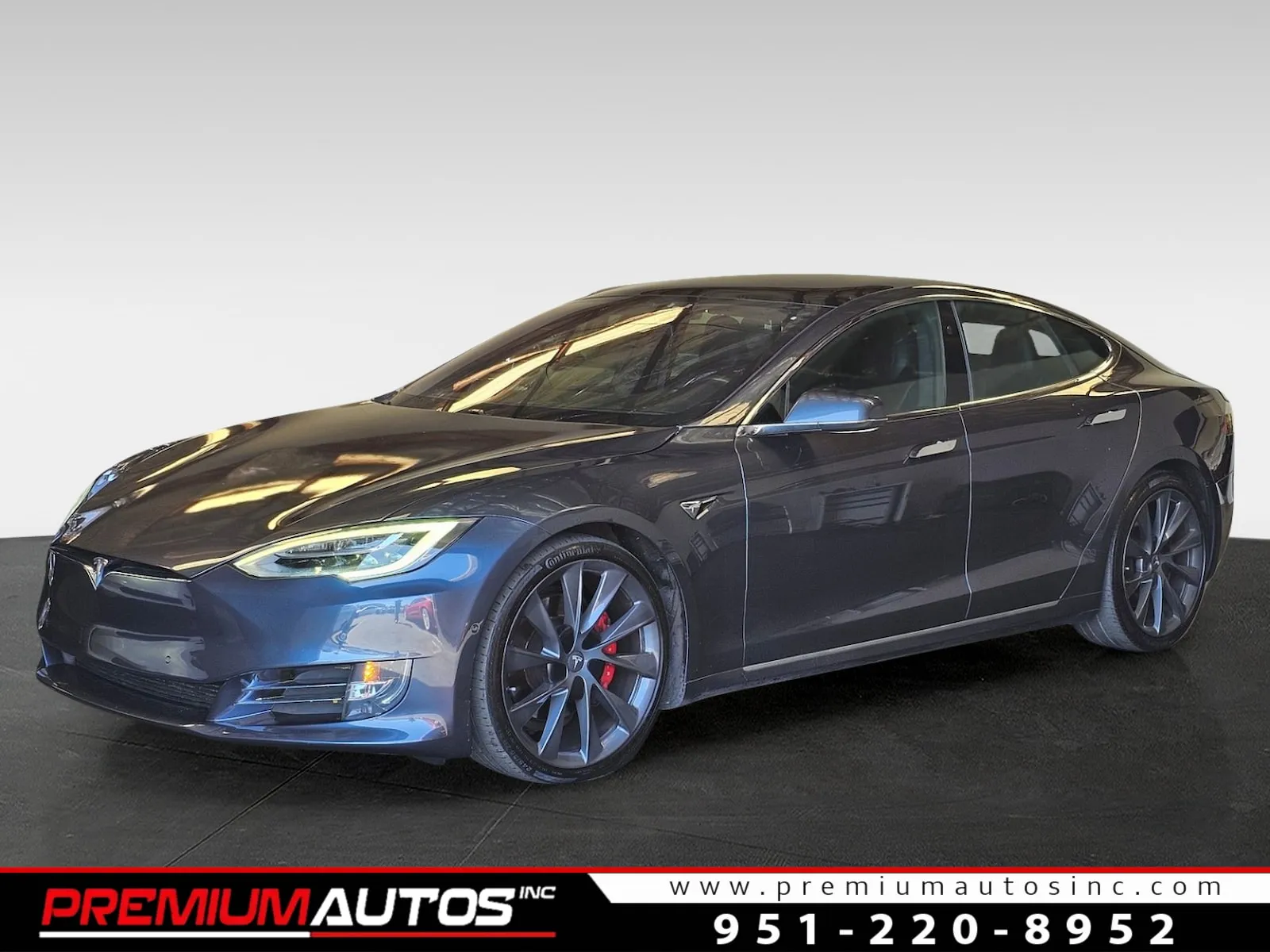
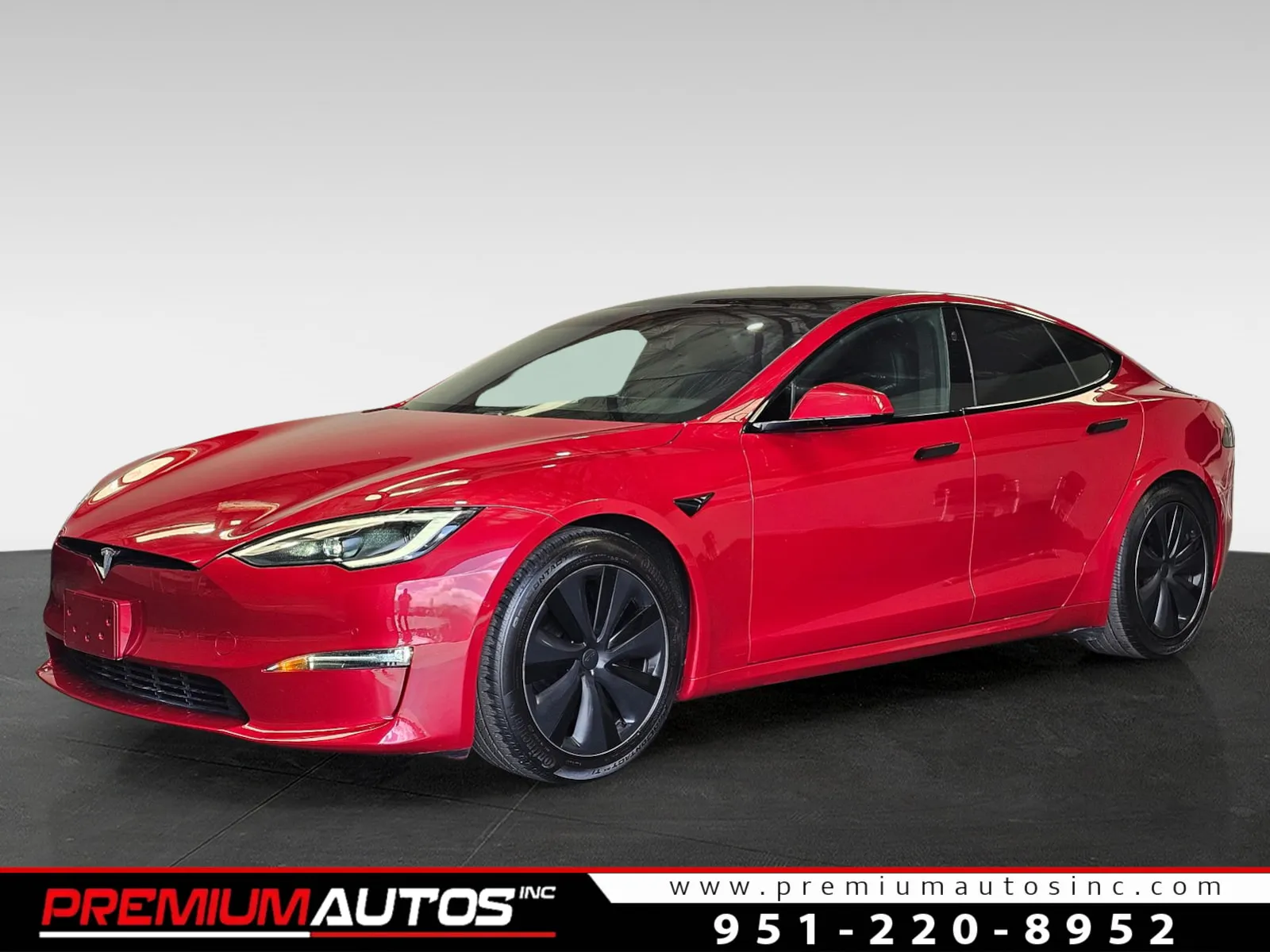
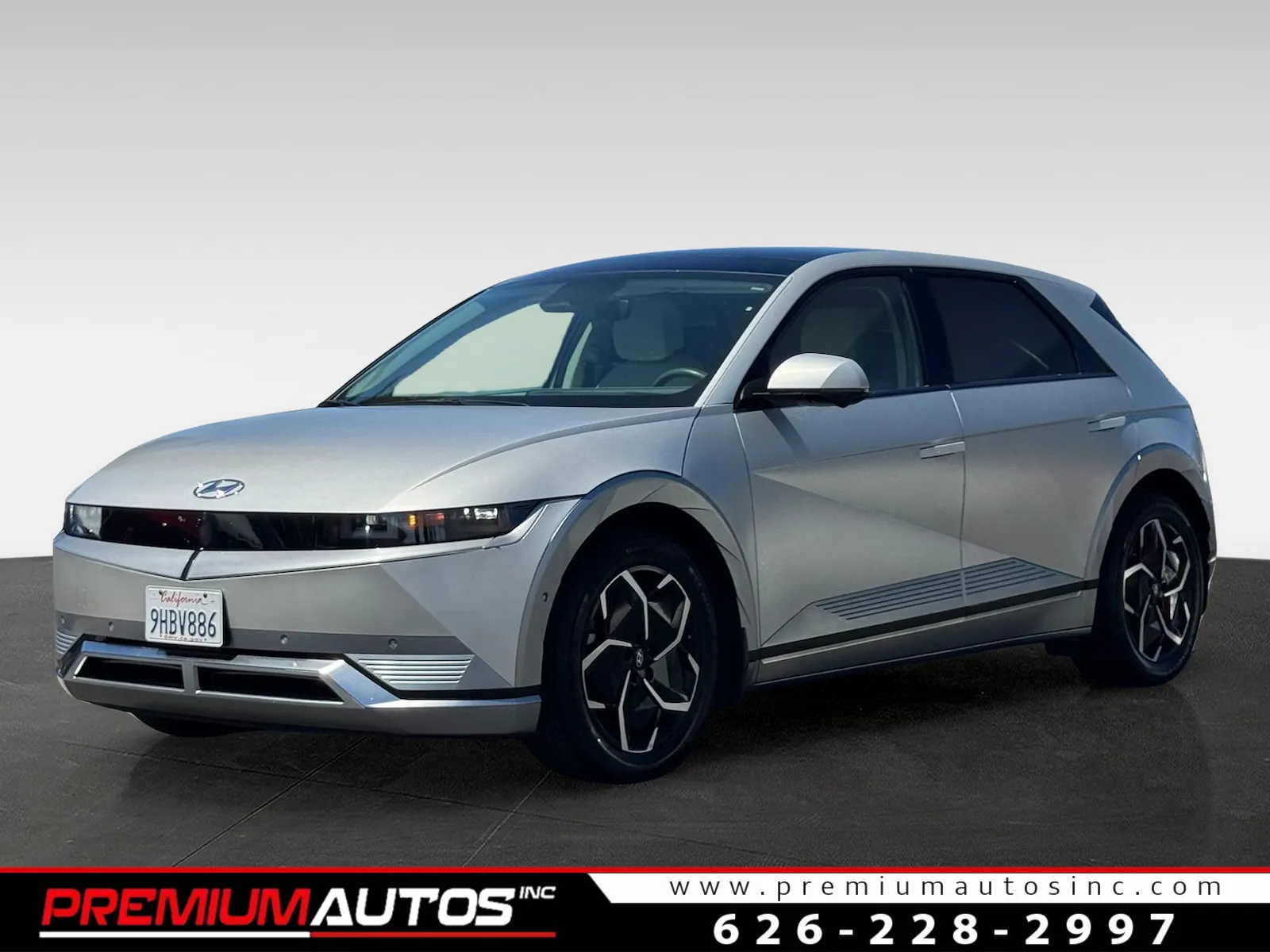
Some of the fastest-selling models in the used market are EVs. The Tesla Model S sells in just 22 days, the Model 3 in 24 days, and the Hyundai Ioniq 5 in 30 days. Despite these quick sales, inventory remains tight - used EVs make up only 1.6% to 2.1% of the total used vehicle market. This rapid turnover and growing consumer interest underscore the competitive edge of used EVs, even in a market where supply is limited.
Regional Differences in the Used EV Market
When it comes to used EV demand, regional dynamics reveal some interesting patterns, especially when factoring in gas prices and infrastructure availability.
Southern California Market Analysis
Southern California stands out as a leader in used EV sales, thanks to a mix of high gas prices, a well-developed charging network, and enticing local incentives and tax credits. One key factor driving this market is the steady stream of lease returns, which ensures a reliable supply of high-quality used EVs. In fact, 55% of the region's current inventory consists of models from 2023 or newer.
Another major draw for buyers is access to High-Occupancy Vehicle (HOV) lanes. California has stopped issuing new HOV lane stickers for single-occupant plug-in vehicles, making the used market the only way to get this coveted benefit. Phong Ly, CEO of iSeeCars.com, highlights this point:
"California has stopped giving out stickers for high-occupancy vehicle lane access for single occupants of plug-in vehicles. Really, the only way to get one is by buying a used plug-in."
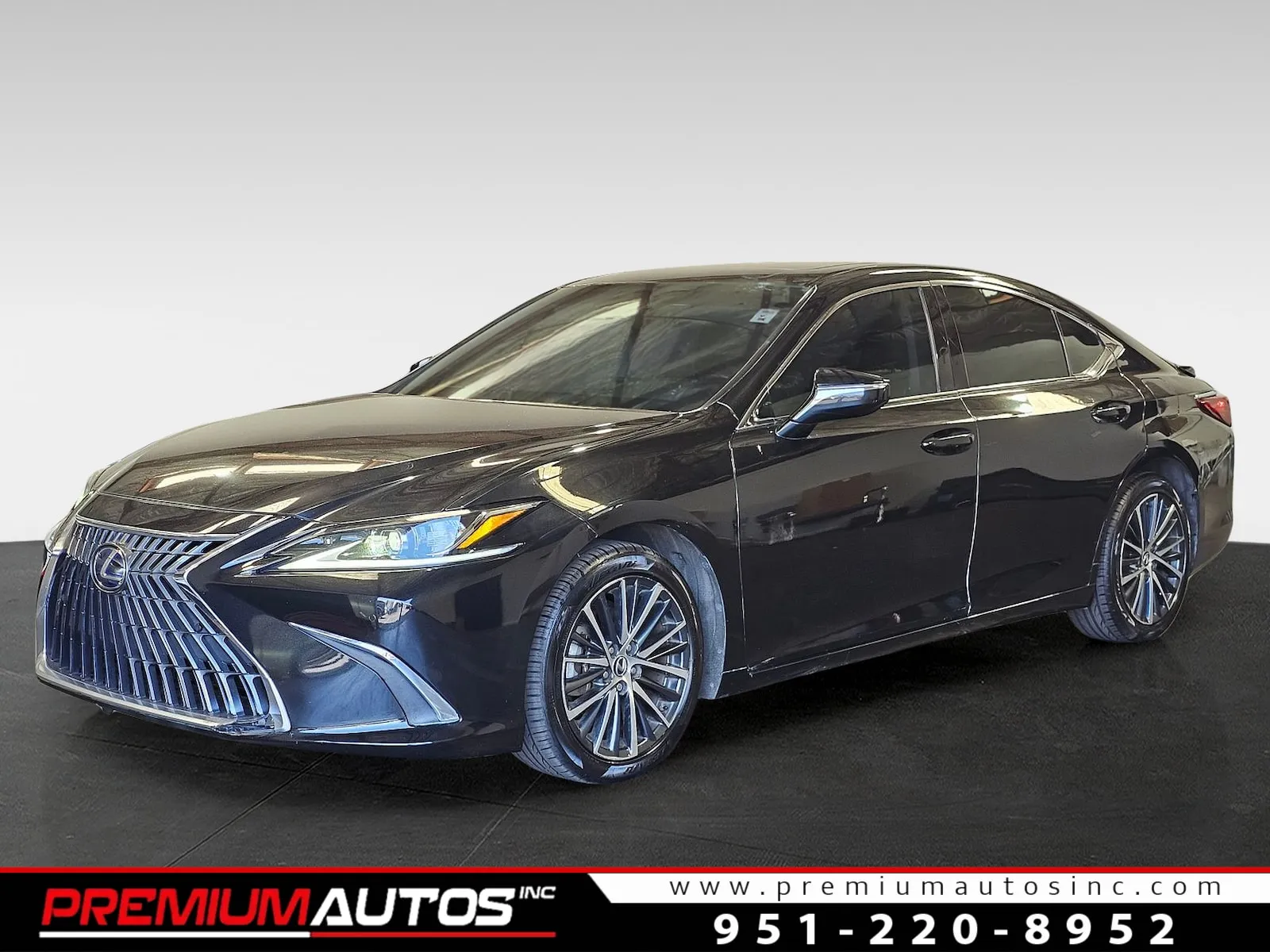
Additionally, fluctuations in gas prices have a much stronger impact on EV demand than changes in electricity costs - by a factor of four to six times. Local dealerships, like Premium Autos Inc in Norco and El Monte, are capitalizing on this demand by offering a wide array of pre-owned EVs, including popular brands like Tesla and BMW, catering to buyers who prioritize both savings and convenience.
Southern California’s trends are just one part of the story, as gas prices and EV demand vary significantly across the country.
Gas Prices and EV Sales by Region
Gas prices play a pivotal role in shaping regional demand for used EVs. In California, for example, high fuel costs drive faster sales. A three-year-old Tesla, for instance, sells much more quickly than comparable hybrid models. This trend isn’t limited to Tesla - eight of the top 20 fastest-selling three-year-old vehicles are now electric.
Interestingly, the distribution of used EVs doesn’t mirror that of new EVs. While new EVs are often concentrated in affluent neighborhoods, used EVs are reaching a broader range of buyers across various socioeconomic areas. Lower price points are making these vehicles more accessible, with 56% of used EV inventory now priced under $30,000.
This shift also poses challenges - and opportunities - for infrastructure development. As more used EVs make their way into diverse neighborhoods, charging networks will need to expand beyond the high-income areas that initially drove early EV adoption. This broader reach underscores the importance of adapting infrastructure to meet the needs of a growing and more varied EV market.
What to Expect: Gas Prices and the Used EV Market
Expected Gas Price and EV Adoption Trends
Gas prices are expected to drop by 6% nationwide in 2026. However, the West Coast may not see the same relief. The closure of the Phillips 66 Los Angeles refinery has reduced fuel production capacity in the region, leading to the possibility of higher or stagnant gas prices in areas like Southern California. This persistent fuel cost disparity is expected to push more consumers in the region toward used electric vehicles (EVs), creating distinct trends in the EV market.
The used EV market is undergoing a major shift. Lease returns are projected to surge by 230% in 2026, with off-lease EVs increasing from 330,000 in 2026 to 650,000 in 2027. This influx is expected to create a buyer's market, especially after federal tax credits expire on September 30, 2025. Eric Lyman, Vice President of Product at Black Book, describes this shift:
"A surge of off-lease EVs is putting pressure on used prices at the same time incentives and tax credits are disappearing. That combination is forcing a reset in EV economics."
As supply grows, used EV prices are forecasted to drop by $1,500 to $2,500 in 2026. These vehicles are already competitively priced, with some models just $900 more than comparable gas-powered cars. For example, the Tesla Model 3 now averages around $26,755. Battery pack costs are also falling - after a 20% drop in 2024 to $115 per kWh, they are expected to hit $80 per kWh by 2026, aligning EV costs with those of traditional gas vehicles.
Finding Used EVs at Premium Autos Inc

Southern California is at the forefront of these changes, and dealerships like Premium Autos Inc in Norco and El Monte are ready to meet the growing demand for used EVs. They offer a carefully selected inventory of pre-owned EVs from brands like Tesla and BMW, ensuring high standards of quality. With the surge in lease returns increasing available stock, buyers now have more options and better leverage in negotiations.
Premium Autos Inc also streamlines the car-buying experience. Their online inventory browsing, financing options, and trade-in evaluations make it easier for Southern California buyers to switch to EVs. For those grappling with high gas prices, the dealership provides access to inspected, certified pre-owned EVs that promise immediate savings on fuel and lower long-term maintenance costs.
Conclusion
The link between rising gas prices and the growing demand for used electric vehicles (EVs) is reshaping the automotive market as we move through 2026. Elevated fuel costs are steering buyers toward EVs, particularly in regions like Southern California, where gas prices remain stubbornly high. On average, used EVs sell faster - just 34 days compared to 43 days for gas vehicles - and they’re often priced lower than their gas-powered counterparts.
The financial benefits are hard to ignore. Charging at home can save drivers $800–$1,000 annually, and with 56% of used EVs priced under $30,000, they offer a compelling value. Additionally, the influx of off-lease inventory is giving buyers access to newer models with lower mileage and advanced features, often at prices that rival traditional gas sedans and SUVs. These economic advantages are driving a clear shift in the market.
For Southern California residents, Premium Autos Inc in Norco and El Monte provides a convenient way to make the switch. Their inventory includes inspected pre-owned EVs from top brands like Tesla and BMW. With flexible financing options, trade-in services, and online tools to compare models and prices, they make transitioning from gas to electric vehicles easier than ever.
Now is the time to act. With used EV prices likely to stabilize - or even increase - due to tariffs, locking in a deal today ensures you benefit from current low prices and abundant supply. Whether gas prices rise further or level out, the used EV market has solidified its position as a cost-effective and practical alternative to traditional gas-powered vehicles.
FAQs
How do I know a used EV’s battery is still in good shape?
To evaluate the battery health of a used EV, start by reviewing its battery health report. This report typically includes details like the State of Health (SoH) percentage, which indicates the remaining capacity and overall condition. Many automakers provide this data to help buyers assess the battery's lifespan.
You can also request a professional battery test from a dealership or use specialized diagnostic tools for a more detailed analysis. Finally, consider taking the EV for a test drive to observe its range and performance firsthand - this can reveal any potential issues with the battery's functionality.
What should I budget for home charging installation and electricity?
Installing a Level 2 home EV charger can range from $550 to over $3,000, depending on factors like whether your electrical panel needs an upgrade or if additional wiring is required. The charger itself typically costs between $500 and $900, while labor and permit fees can add $200 to $2,500 to the total.
On average, annual electricity costs for charging at home are about $675, though this can vary based on your location. Charging your EV at home is usually more affordable than using public charging stations and significantly less expensive than refueling a gas-powered vehicle.
When will used EV prices drop the most in 2026?
Used electric vehicle (EV) prices are projected to decline sharply in 2026. Why? A surge of off-lease EVs is expected to flood the market, increasing supply. This shift could create a buyer-friendly environment, with more affordable options for those looking to purchase an EV.