
Premium Autos blog
Cost of Charging an Electric Car: Real 2026 Prices
By Premium Autos · · 7 min read
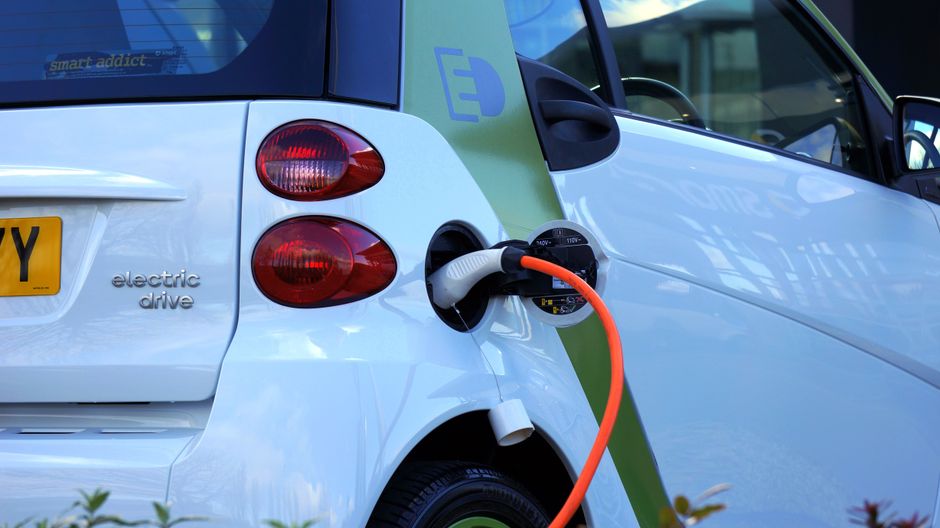
Here's the straight answer: charging an electric car at home costs between $8 and $25 per full charge, depending on your battery size and local electricity rates. For most EV owners in Southern California, you're looking at roughly $14 to $20 per month if you charge at home regularly. That's a fraction of what you'd spend filling up a gas tank.
But the real cost depends on a few specific factors. Let's break down exactly what you're paying for and how to estimate your own charging costs.
What Does a Full Home Charge Actually Cost?
Your charging cost starts with two numbers: your battery size (measured in kilowatt-hours, or kWh) and your local electricity rate (measured in cents per kWh).
Related: Tesla Charging Cost Per Mile vs Gas: Real Numbers
Related: Cost to Charge Electric Car: Real Numbers for 2026
Related: Electric Car Battery Replacement Cost in 2026
Here's how the math works:
- 60 kWh battery: Around $10.50 for a full charge (gives you roughly 200 miles of range)
- 70 kWh battery: Around $3.50 for a full charge
- 84 kWh battery: Around $14.83 for a full charge (using the U.S. average rate of 17.65 cents per kWh)
The wide range here matters. A single full charge could cost you anywhere from $1.84 to $4.55 depending on where you live and what time of day you charge.
Why? Because electricity rates vary wildly across California. If you're in an area with cheap off-peak rates, you could be paying less. If you're charging during peak hours in a high-cost region, you'll pay more.
Related: Where to Charge Your Electric Car: Complete 2026 Guide
Home Charger Installation: The One-Time Cost
Before you can enjoy cheap home charging, you need to install a charger. That's a one-time investment of $400 to $700 for the equipment and installation.
Once that's done, you're set. No monthly subscription. No per-use fees. Just plug in and charge.
The good news? That upfront cost pays for itself quickly. If you're currently driving a gas car, you're probably spending $200-300+ per month on fuel. Switching to an EV cuts that down to $14-20 per month. Do the math and you'll save thousands per year.
Monthly Charging Expenses: What to Budget
Planning your EV budget? Most home-charging EV owners see monthly electricity costs between $14 and $20. Some recent reports show the average creeping closer to $63 per month, but that's usually for heavier daily drivers or people charging during peak hours.
The key is understanding your driving habits. Do you commute 30 miles a day? Your monthly cost will be lower. Do you drive 100+ miles daily? You'll charge more often and your bill will reflect that.
If you're thinking about adding solar panels or charging during off-peak hours (late night or early morning), you can cut this even further. Some California utilities offer special EV rates that reward off-peak charging.
Public DC Fast Charging vs. Home Charging
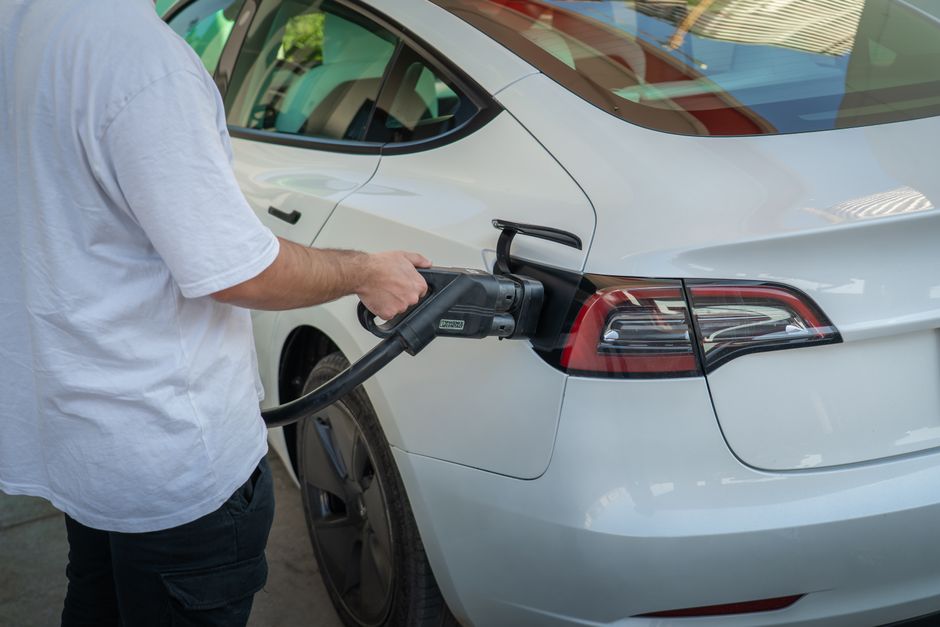
Home charging is almost always cheaper than using public fast-charging stations. Public stations run $0.20 to $0.50+ per kWh, which adds up fast on long road trips.
Real talk: you should use public chargers mainly for road trips and emergencies, not daily driving. Home charging is where the savings happen.
Related: Tesla Charging Cost vs Gas 2026: Full Breakdown & Savings
When you're looking at used EVs like the models available at Premium Autos Inc, make sure the vehicle has good range so you can rely on home charging for your daily routine.
Why Electricity Rate Matters Most
The single biggest factor in your charging cost is your local electricity rate. You can't control this, but you can understand it.
Call your local utility or check your electric bill. Your rate is usually shown as cents per kilowatt-hour (¢/kWh). The national average sits around 17.65¢/kWh, but California rates often run higher, typically between 18¢ and 22¢/kWh depending on your location and time of use.
Some utilities offer special "EV rates" with cheaper off-peak pricing (like 11 p.m. to 6 a.m.). If your utility has this, you could cut your charging costs nearly in half by scheduling your charging for off-peak hours.
Comparing EV Charging to Gasoline
Let's put this in perspective. A gallon of gas in California typically costs $3.50 to $4.50. A full EV charge that gives you 200-250 miles costs $8 to $15.
Do the math: you're spending roughly one-third what a gas driver pays, and you get similar or better range.
Over a year, that's the difference between $3,000+ on gas and $200-300 on electricity. Even if you factor in home charger installation, you're ahead in year one.
That's why so many Southern California drivers are switching. If you're considering a used Tesla or other EV, Premium Autos Inc has California's largest inventory of pre-owned EVs, many under $25,000, with transparent pricing and flexible financing.
Hidden Cost You Might Not Expect
Battery degradation is minimal over time, so don't stress about that. What you should think about: charging efficiency.
No charger is 100% efficient. You might lose 5-15% of the energy during the charging process depending on your charger type and car model. This is baked into the cost estimates above, but it's worth knowing.
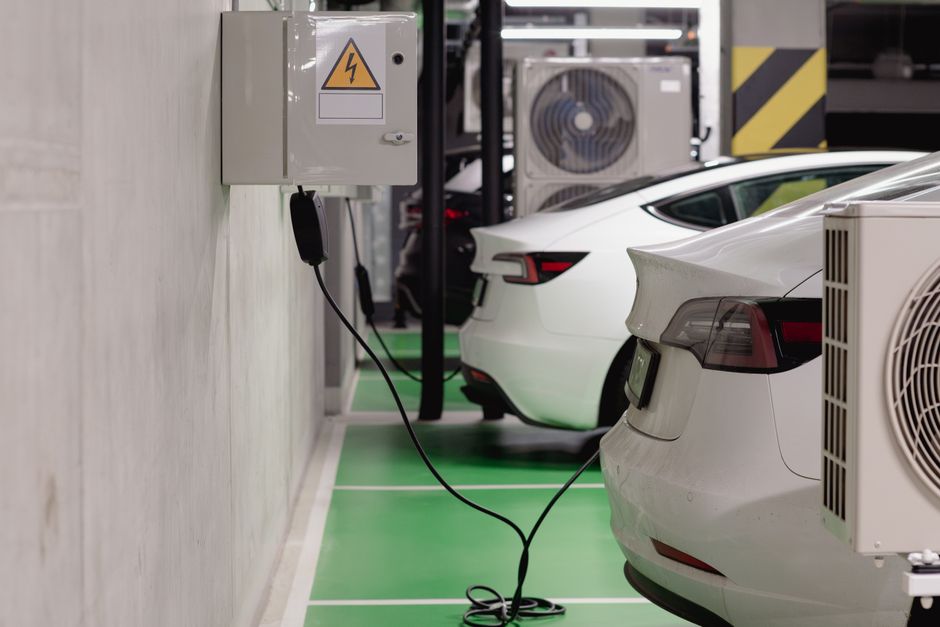
Also, charging speed matters. A Level 2 home charger (the standard 240V option) is cheaper to run than a DC fast charger. So if you have time to charge overnight, you save money and are easier on your battery.
Real Example: Your First Year of Charging
Let's say you buy a used Tesla with a 75 kWh battery. Your electricity rate is 19¢/kWh (typical for Southern California).
- Cost per full charge: 75 kWh x $0.19 = $14.25
- If you charge 3 times per week: $14.25 x 156 charges/year = $2,223/year
- Monthly average: $185/month
Compare that to a gas car getting 25 mpg. If you drive 12,000 miles per year at $4 per gallon, you're spending $1,920 on gas alone. Add maintenance, oil changes, and you're at $2,500+.
The EV is cheaper. Plus, there's no oil change, no transmission fluid, no spark plugs. Maintenance is dramatically lower.
Finding the Best EV Deal in Southern California
If you're serious about saving money with an EV, the purchase price matters just as much as charging costs. A used EV with lower upfront cost pays dividends immediately.
Premium Autos Inc specializes in affordable, pre-owned Teslas and electric vehicles across Norco and South El Monte, with many options under $25,000 and flexible financing available for all credit types. Every vehicle goes through a multi-point inspection to ensure you're getting a reliable EV that will deliver those low charging costs for years to come.
FAQ: Cost of Charging an Electric Car
How much does it cost to charge an electric car overnight at home?
Most overnight charges cost between $8 and $25, depending on your battery size and local electricity rates. A typical full charge in California costs around $14-18. Charging overnight often qualifies for off-peak rates, making it even cheaper.
Is charging an EV cheaper than buying gas?
Yes, significantly cheaper. A full EV charge costs roughly one-third of a gas fill-up but delivers similar or better range. Over a year, you'll spend $200-300 on electricity versus $3,000+ on gas, even after accounting for home charger installation.
Can I reduce my EV charging costs?
Absolutely. Check if your utility offers off-peak EV rates (usually late night). Charging during these hours can cut costs by 30-50%. Installing solar panels also helps. Avoid DC fast charging for daily use, as it costs 2-3x more than home charging.
What's the upfront cost to install a home EV charger?
Home charger equipment and installation typically costs $400-700 as a one-time investment. This pays for itself within months thanks to the daily savings on electricity versus gas. Some utilities and federal incentives may offset part of this cost.



