Regional EV Charging Networks: Southern California Overview
Southern California EV charging includes passenger-car stations, workplace and destination charging, and facilities designed for commercial trucks. This guide separates those uses so drivers shopping for a used Tesla or another EV can check which options fit their vehicle and routine.
What to Check Before Planning a Charging Stop
- Location and access: Start with the U.S. Department of Energy’s charging station locator, which shows available, publicly accessible stations by default. Confirm current access with the station operator before traveling.
- Vehicle compatibility: Check the connector, required adapter and the specific vehicle’s charging capability. A station’s maximum power rating is not a promised charging speed.
- Costs and timing: Check session pricing, parking restrictions and operating hours. Identify a backup station in case your first choice is unavailable.
- Passenger cars versus fleets: Do not assume that a truck depot, megawatt charger or battery-swapping project can serve a used Tesla.
The network and corridor examples below include dated announcements. Announced capacity and future expansion plans do not establish current station availability; use the linked operators to check the details for your trip.
BIG EV Truck Charging Station opens with 41 chargers! Greenlane Grand Opening!
Major Public EV Charging Networks in Southern California
Southern California is home to several major EV charging networks catering to both commercial fleets and individual drivers. These networks are designed to address the growing demand for electric vehicle infrastructure in the region, offering a range of services tailored to specific needs.
For shoppers considering a used Tesla without a private garage, network coverage is only part of the decision. Use our Southern California renter’s charging guide to plan apartment, workplace and backup charging before choosing a vehicle.
Greenlane Infrastructure
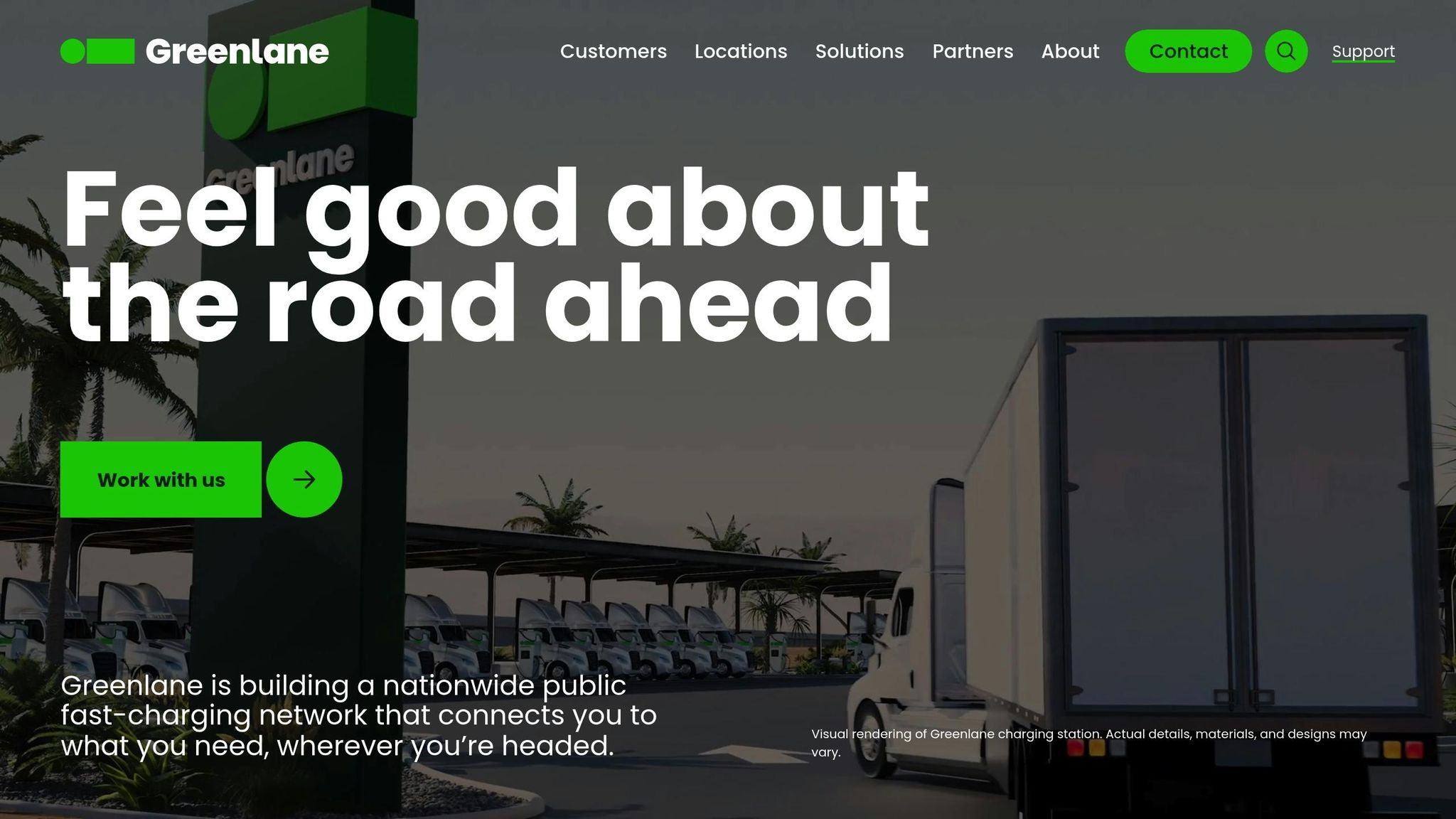
Greenlane’s Colton center is a commercial-truck charging site near I-10 and I-215. As checked September 12, 2026, its official location page lists 12 pull-through CCS chargers rated at 400 kW and 29 bobtail CCS chargers rated at 240 kW. These are equipment ratings, not guaranteed charging speeds for every vehicle. The operator also lists trailer parking, a lounge and restrooms.
For a used-Tesla shopper, proximity alone is not enough: confirm passenger-vehicle access, connector compatibility and any adapter requirements before including a truck-focused facility in a charging plan. The corridor section below explains how to distinguish operating sites from announced expansion.
Electrify America
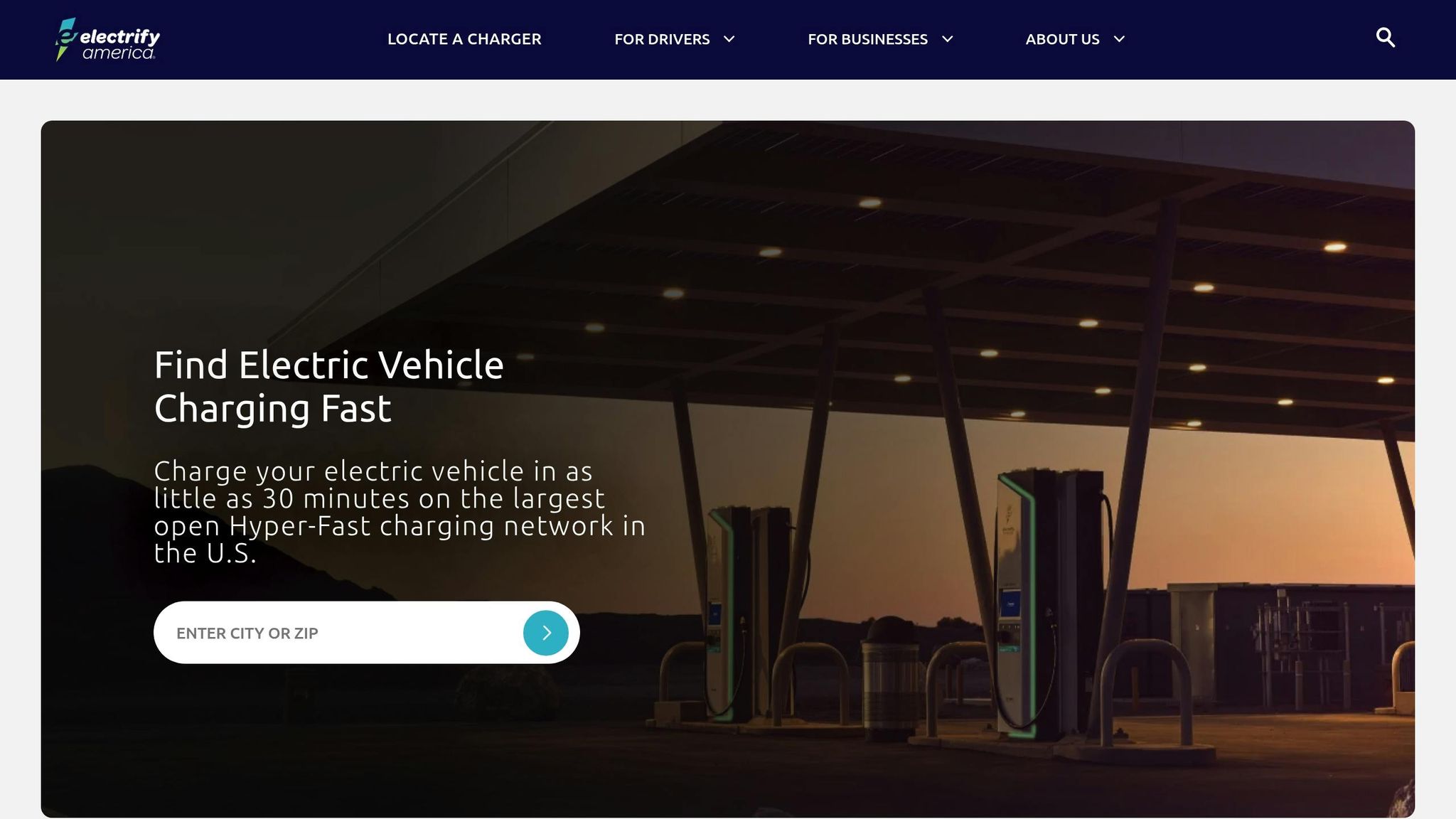
Use Electrify America’s station finder to search your Southern California destination and filter by connector type. The map distinguishes charging stations, commercial facilities and locations marked coming soon. Confirm the connector and operating location before planning a stop; a network-wide station count does not establish availability for your vehicle or route. Used-Tesla drivers should also check the vehicle and adapter compatibility guidance below.
Rove Charging Centers
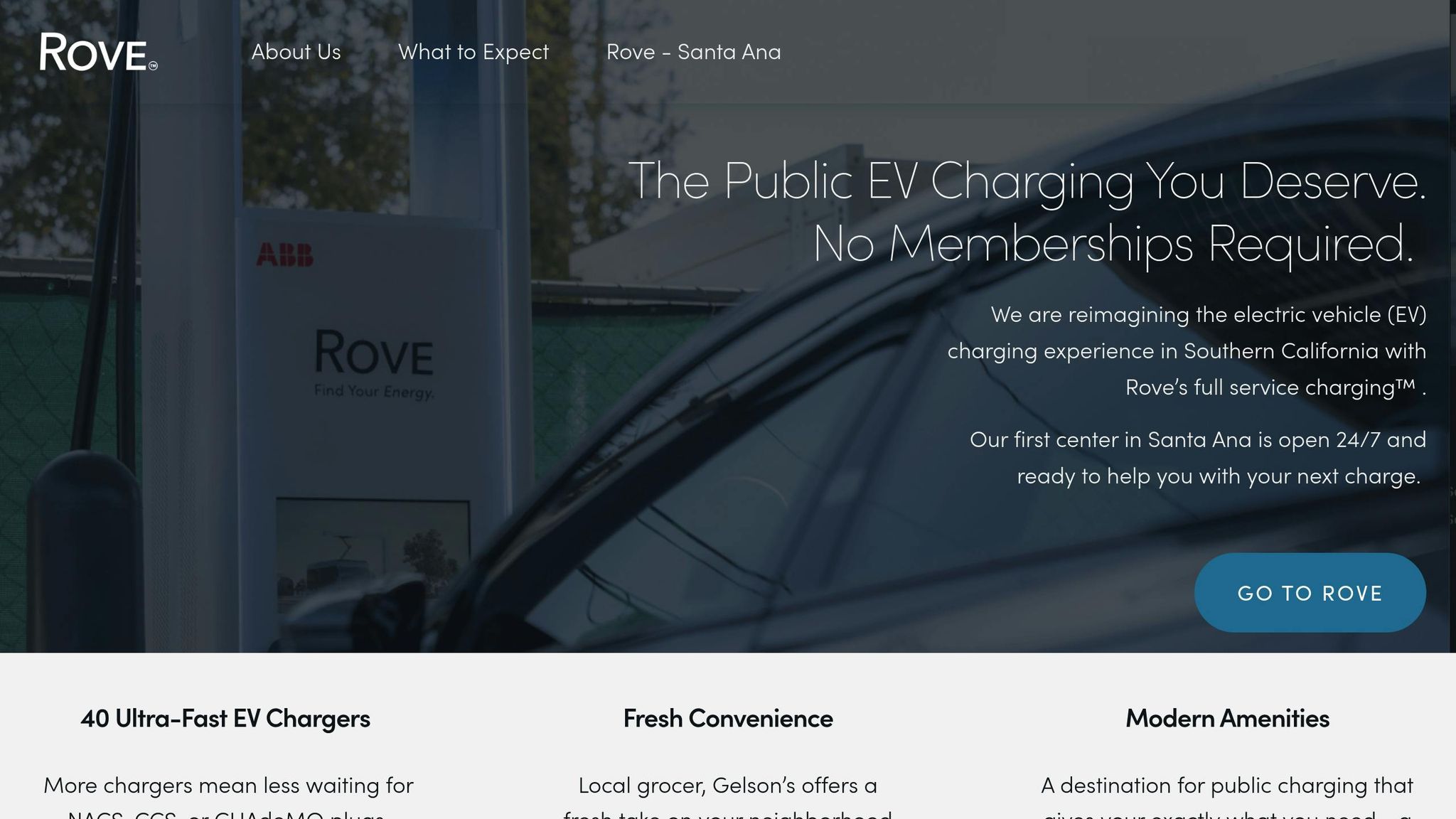
Rove’s Santa Ana charging center offers NACS, CCS and CHAdeMO connections. Charging prices vary by equipment and time of day; check the charger, Rove app or Tesla app, as applicable, before starting a session. Charging is available 24/7, but the lounge, market and car wash have separate hours. Verify those details on Rove’s Santa Ana location page.
The Santa Ana center is at 1008 E. 17th Street, near I-5. Rove lists a lounge, ReCharge by Gelson’s market, restrooms and Wi-Fi among its amenities. Check the linked location page for each amenity’s hours rather than assuming that all services are available whenever charging is open.
Rove lists operating centers in Santa Ana and Costa Mesa. Its Corona page remains marked “Coming Soon” as of September 11, 2026; do not plan a charging stop there until the operator confirms it has opened.
These networks collectively address different aspects of Southern California's EV market. From Greenlane’s focus on heavy-duty fleets and Electrify America’s highway coverage to Rove’s premium, full-service approach, the region is well-positioned to support the ongoing shift to electric vehicles.
Technical Aspects of EV Charging in Commercial Zones
Southern California's industrial and commercial areas require high-capacity EV charging solutions to support fleets and frequent use.
Charger Types, Compatibility and Charging Speed
A connector name alone does not tell you how quickly a particular used EV will charge or whether it can use a particular station. Tesla explains that Supercharger speeds vary by vehicle and site. NACS is the common name for the SAE J3400 charging standard, and some non-Tesla vehicles now have NACS ports.
For non-Tesla EVs, Supercharger access depends on the vehicle and site; a matching plug does not make every location available. Enter the vehicle details in the Tesla app to check compatible locations. See Tesla’s Supercharging compatibility guidance.
For a used Tesla using a third-party CCS1 charger, check the exact vehicle’s compatibility before buying an adapter or planning a route. Tesla’s CCS1 to NACS adapter guidance directs owners to check compatibility in the Tesla app and arrange a retrofit if required. The adapter is rated up to 250 kW, but that is not a promised charging speed: Tesla notes that actual rates can differ from a station’s advertised maximum and that most third-party stations cannot charge its vehicles at 250 kW.
Before buying, confirm the vehicle’s charging hardware, included adapters and the compatible stations along your usual Southern California routes. Keep a backup location in your charging plan rather than relying on an advertised peak power figure.
Grid Integration Challenges
Before installing high-power chargers, ask the utility and installer to assess available electrical capacity, any required upgrades and the applicable rate. Budget separately for installation and ongoing electricity costs; a single percentage increase is not a reliable estimate for every site.
A Northern and Central California example illustrates one approach to grid constraints. In an April 2025 announcement, PG&E described Flex Connect, which coordinates participating sites’ power demand with grid availability while longer-term upgrades proceed. The utility cited Tesla sites in Santa Nella and Upper Lake. These are examples outside Southern California, not a promise that the same program is available from a local utility.
The same announcement reported that PepsiCo’s Fresno facility gained charging capacity for its existing fleet of 50 electric semi-trucks, up from capacity for approximately 30. PG&E said the site could receive up to 4.5 MW most of the time, subject to grid availability, with the additional capacity available since December 2024. This describes the utility’s historical account, not confirmation of current site capacity or completion of later upgrades.
Battery storage can supplement the grid connection at a fast-charging site and reduce peak demand, but it is not a guarantee that grid upgrades can be avoided. The federal Battery Energy Storage for Electric Vehicle Charging Stations help sheet explains that benefits must be weighed against added equipment costs. Storage and the grid connection must be sized for expected charging demand; an undersized battery can run low and sharply reduce charging power.
Charging costs depend on the site’s utility rate, metering arrangement and charging schedule. Southern California Edison’s business EV rate overview explains that existing-meter service may include time-of-use energy and demand charges, while separately metered EV charging has dedicated rate options. Review the applicable tariff and operating schedule with the utility before estimating costs or savings.
In September 2024, the CPUC established energization targets for California’s three large investor-owned utilities, covering new and upgraded electrical service including EV charging projects. These targets are not a guaranteed completion date for a particular station. Confirm project requirements and the current schedule with the serving utility.
Key EV Corridor Developments in Southern California
Southern California is making major strides in integrating EV charging stations into its freight and commuter hubs. With its highways serving as critical arteries for transportation, the region is transforming its infrastructure to meet the demands of both personal and commercial electric vehicles.
I-10 and I-15 Corridor Expansions
Greenlane’s Colton hub opened in April 2025 near Interstates 10 and 215. Its opening announcement reported 41 chargers serving commercial electric trucks. For current equipment and access details, check Greenlane’s Colton location page; commercial-truck facilities should not be assumed to provide suitable access for every passenger EV.
Greenlane’s March 2024 corridor announcement outlined planned commercial charging locations in Colton, Barstow and Baker. That announcement describes the project’s planning stage, not confirmation that every proposed site has opened.
Check Greenlane’s location directory when planning a commercial-truck route. As checked September 12, 2026, its navigation marks Barstow and Baker as coming soon; announced expansion is not confirmation that a site is operating. The Colton location page lists 24-hour access at 1650 Fairway Drive near I-10/I-215. Confirm current equipment, access requirements and vehicle compatibility directly with Greenlane before traveling.
Port of Long Beach and Los Angeles Initiatives

Forum Mobility’s January 2025 FM Harbor announcement described a Port of Long Beach truck-charging depot with 9 MW of power and 44 charging dispensers. The company said the facility could serve more than 200 electric drayage trucks daily. These are dated operator specifications and announced service capability, not verified current utilization or confirmation of passenger-car access. Used-Tesla drivers should choose stations that explicitly support their vehicle and public access.
In its May 2025 spending-plan announcement, the Port of Los Angeles described support for truck purchases and charging infrastructure through June 2028. The announcement included a regional project funding eight charging sites with 207 chargers for battery-electric trucks. This is a dated funding account, not confirmation that every charger is operating today or available to passenger Teslas. Check individual operators for current access.
These advancements in highway and port infrastructure are propelling California toward a cleaner transportation future. In its March 2025 announcement, the California Energy Commission reported 178,549 public and shared-private EV chargers in California for 2024, compared with an estimated 120,000 gasoline nozzles within the state. These counts describe infrastructure, not equal charging speed, public access or vehicle throughput. See the CEC announcement.
Future Trends and New Technologies in EV Charging
Southern California's EV charging infrastructure is evolving rapidly, driven by the region's growing EV corridors and grid advancements. These developments are tailored to meet local challenges, such as heavy freight traffic and grid capacity issues, while propelling California toward its ambitious zero-emission goals.
Megawatt Charging Systems (MCS)
Megawatt Charging Systems (MCS) target heavy-duty vehicles with large batteries. CharIN’s MCS overview describes the system’s commercial-vehicle focus and technical requirements. A system-level power limit is not a guaranteed charging rate at an individual site. Fleet operators should confirm the truck’s compatibility and the station’s equipment before estimating charging time.
In a May 2024 announcement, ChargePoint described MCS support for commercial-vehicle charging and interoperability testing. The announcement distinguished initial charging capability from planned future output. It does not establish that a particular Southern California location offers that equipment today or that a passenger Tesla can use it.
In its May 2024 opening announcement, WattEV described its Bakersfield truck depot as having 16 dual-cord 360 kW chargers, 15 single-cord 240 kW CCS chargers and three 1,200 kW MCS chargers, alongside a solar array and battery storage. These are the operator’s launch specifications for a commercial-truck facility, not a promise of passenger-EV compatibility. Check current access and equipment with WattEV before planning a stop.
Greenlane’s April 2025 Colton opening announcement describes cable trenching designed to support future equipment expansion and megawatt-charging upgrades as fleet demand grows. Upgrade readiness is not confirmation that MCS equipment is installed or available today. Check the operator’s current site specifications and the truck’s compatibility before planning to use megawatt charging.
In its May 2024 Denker depot announcement, Prologis and Performance Team described a commercial-truck charging facility near the Ports of Los Angeles and Long Beach with up to 9 MW of total charging capacity and the ability to charge 96 trucks simultaneously. The announcement described a microgrid combining generators with battery storage to provide power while grid upgrades were pending. These are historical facility specifications, not a current ranking of the region’s largest sites or a promised charging rate for an individual vehicle. The release concerns commercial trucks; it does not establish public passenger-Tesla access. Confirm current access and compatibility with the operator.
Battery swapping is another approach being deployed in specific vehicle programs; its availability and compatibility must be checked separately.
Battery Swapping: Check Vehicle and Network Eligibility
Battery swapping is a separate vehicle-and-infrastructure system, not a universal alternative to plugging in any EV. In June 2025, FIAT described a Madrid car-sharing deployment using Fiat 500e vehicles equipped with Ample’s modular batteries. The manufacturer reported swaps in under five minutes for those specially equipped vehicles. See the FIAT and Ample project announcement.
That example does not establish compatibility with a used Tesla or access to a Southern California swapping station. Before relying on a swapping service, confirm the exact vehicle, battery system, operating locations, customer eligibility and current fees directly with the provider. Do not assume a universal swap price or a guaranteed improvement in battery lifespan.
For used-Tesla shopping in Norco, South El Monte and surrounding communities, build your plan around verified charging options. Tesla’s charging guide describes charging where you park, Superchargers, Destination Charging and third-party stations. Check your vehicle’s equipment and adapter requirements before relying on a location.
Conclusion: Plan Charging Around Your Vehicle and Routine
For a used-EV buyer in Southern California, the useful question is not simply how many chargers exist statewide. It is whether compatible charging is available where you park and along the routes you actually drive. Check station access, connector requirements, pricing and a backup location before relying on a charging stop. Commercial-truck depots and announced projects are not substitutes for confirmed passenger-car charging.
Tesla’s charging guidance covers charging where you park, Superchargers, Destination Charging and third-party stations. Tesla recommends its in-vehicle Trip Planner for longer journeys to help plan Supercharger stops and charging time. Check the equipment and adapters required for the specific vehicle you are considering.
If you are shopping in Norco, South El Monte or nearby communities, browse Premium Autos’ used Tesla inventory and compare each vehicle with your daily driving and charging needs. Ask about the specific vehicle’s condition, included charging equipment and available documentation before purchase. Choose a charging plan that works for your routine rather than relying on statewide growth figures or an advertised maximum charging speed.
FAQs
What challenges does Southern California face in expanding EV charging stations, and what steps are being taken to solve them?
Southern California is grappling with several hurdles as it works to expand its EV charging network. Among the biggest challenges are delays in connecting new charging stations to the electrical grid and the often time-consuming permitting processes, both of which can significantly slow down progress. On top of that, outdated local planning codes can make it harder to designate specific sites for EV charging stations, creating additional roadblocks.
California has funded charging expansion through several programs. For historical context, the CEC’s December 2022 clean-transportation investment plan totaled $2.9 billion and was projected to add 90,000 EV chargers statewide, beyond approximately 80,000 already installed at the time. The plan also covered hydrogen refueling and other transportation investments. These were announced funding plans and projections, not a count of completed stations or confirmation that a particular grant is available today. Consult the original CEC announcement for the scope and date of these figures.
How do Megawatt Charging Systems (MCS) and battery swapping technologies improve the efficiency of EV fleets in Southern California?
MCS systems are intended for high-power charging of compatible heavy-duty vehicles. The time saved depends on the vehicle, battery and installed charging equipment; a maximum technical rating alone does not establish the duration of a charging stop. Confirm the truck and site specifications when planning a fleet route.
Battery swapping can shorten an energy stop for vehicles equipped for a participating swapping system. It is not interchangeable with ordinary plug-in charging. Southern California fleet operators should verify compatible vehicles, local station access, service terms and costs before including swapping in their operations. A pilot in another market does not establish local availability.
How do Southern California's ports and highways impact the growth of the region's EV charging network?
Southern California's extensive network of highways and its bustling ports, like the Port of Los Angeles and the Port of Long Beach, play a central role in shaping the region's electric vehicle (EV) charging landscape. These hubs are vital for transportation and logistics, making them high-traffic zones where the need for accessible EV charging stations is especially evident. This is particularly true in industrial and commercial areas, where fleet vehicles and long-distance travelers are constantly on the move.
Focusing on expanding EV charging infrastructure along these key corridors not only encourages the shift to electric vehicles but also helps tackle air pollution by cutting emissions in some of the nation’s busiest transit areas.