
Premium Autos blog
How Tesla Trade-Ins Work Before You Buy
By Premium Autos · · 6 min read
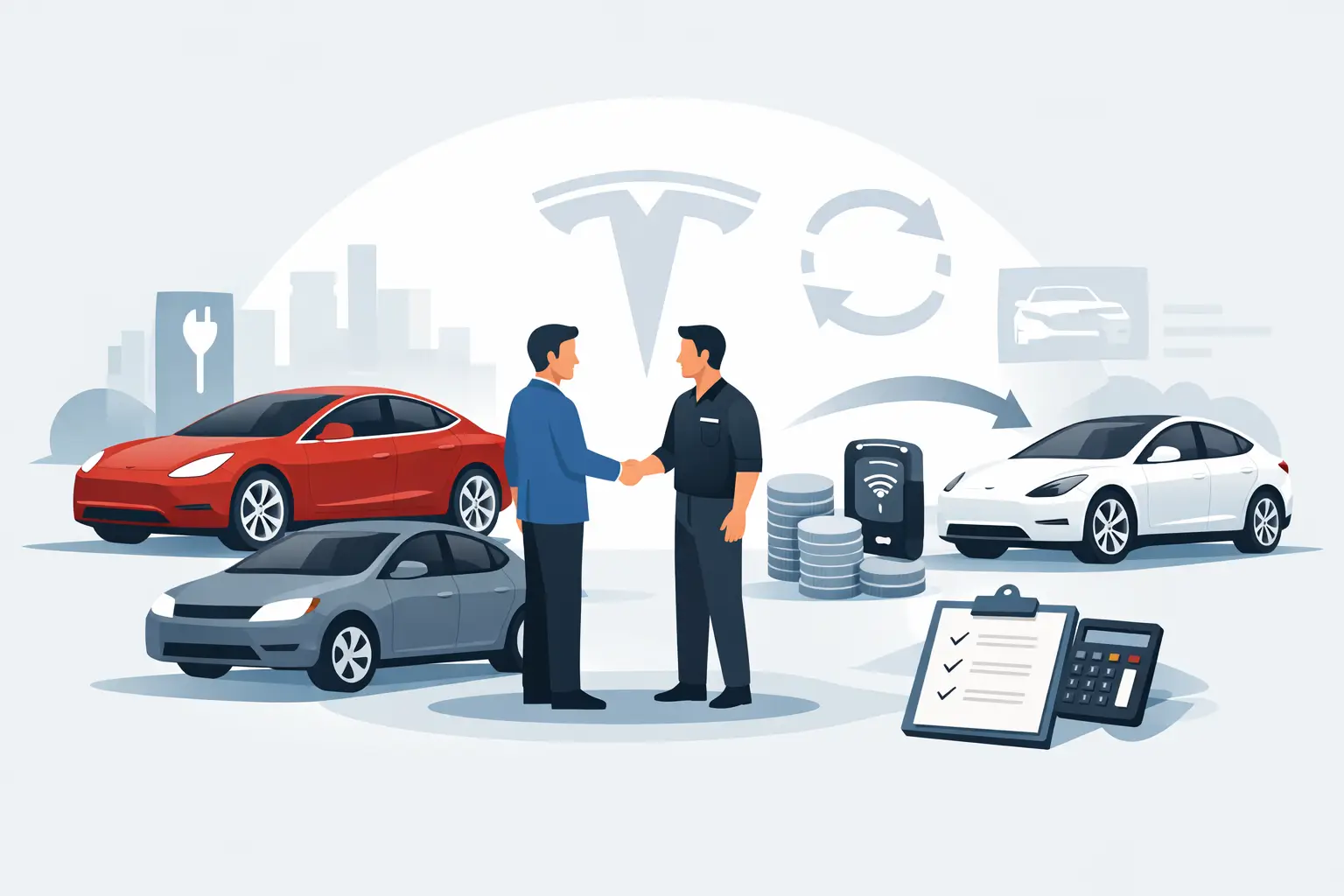
If you are trying to figure out how Tesla trade-ins work, the biggest surprise is usually this: the process is fast, but the value is not always the best fit for every seller. That matters if you are replacing your current vehicle with another Tesla, switching into a used EV, or trying to lower your monthly payment without wasting time.
Tesla built its trade-in system to be simple. You answer a few questions about your current vehicle, submit photos or condition details, and receive an offer if the car qualifies. For some buyers, that speed is the whole appeal. For others, especially shoppers who want to squeeze every dollar out of their current car, the convenience can come with a trade-off.
How Tesla trade-ins work step by step
Tesla handles trade-ins as part of the buying process. When you start ordering a vehicle, you can enter your current car information, including VIN, mileage, condition, title status, and whether there is an outstanding loan. Tesla then uses market data and vehicle details to generate an offer.
If your vehicle is accepted, that trade value is typically applied toward your purchase. If you still owe money on your current loan, Tesla can factor in the payoff amount and roll the remaining equity or negative equity into the deal, depending on the numbers. The process is designed to reduce back-and-forth. You are not usually negotiating in the old-school dealership sense.
That is the good news for shoppers who want a cleaner transaction. The catch is that Tesla's offer can change if the vehicle condition is different from what was reported, if mileage increases beyond expectations, or if market pricing shifts before delivery. So while the system feels straightforward, it is still a conditional valuation until the final handoff.
What Tesla looks at when valuing your trade-in
Like any serious buyer, Tesla is looking at the basics first: year, make, model, trim, mileage, accident history, title status, and overall condition. Cosmetic damage, tire wear, warning lights, cracked glass, and interior wear can all affect the offer.
Tesla also looks at how easy the vehicle is to resell. A clean-title vehicle with reasonable mileage and strong market demand will usually get a stronger number than a vehicle with prior damage, heavy wear, or a niche trim level that sits longer on the market. If you are trading in a Tesla, battery health perception, software features, wheel size, and configuration can influence value too, even if shoppers do not always realize it.
This is where expectations can get off track. Owners often price their car mentally based on online listings, but retail asking prices are not the same as trade-in values. A trade offer reflects reconditioning costs, transport, market risk, and profit margin. That does not make the offer unfair. It just means convenience has a price.
Does Tesla take cars that are not Teslas?
Yes, in many cases Tesla accepts non-Tesla trade-ins. That includes mainstream sedans, trucks, SUVs, and luxury vehicles. But not every vehicle qualifies. Age, condition, mileage, title history, and marketability all play a role.
If Tesla does not want the vehicle, you may not receive an offer at all. That can happen with older cars, branded-title vehicles, or units that fall outside what Tesla wants to process. If that happens, you will need a separate sale or trade plan.
Tesla trade-in vs dealership trade-in
This is the comparison most buyers should make before signing anything. Tesla trade-ins are usually strongest on convenience. You can keep the transaction in one lane, avoid posting your car privately, and move from old car to new car with less friction.
A dealership trade-in, especially at an independent dealer that actively buys used EVs and late-model vehicles, can sometimes be more flexible. A dealer may be more willing to appraise unique inventory, work through an existing loan, or structure the numbers around the replacement vehicle you actually want. That matters if you are not buying brand-new, if your credit situation needs more options, or if your trade-in is a major part of making the deal work.
There is also a practical difference in inventory. Tesla mainly supports the purchase path for Tesla vehicles. A used vehicle dealership can evaluate your trade while also giving you more choices across used Tesla models and other clean-title cars, trucks, and SUVs. For Southern California shoppers who want pricing flexibility and financing options, that can be a better lane than forcing the entire process through one manufacturer.
When Tesla's trade-in process makes the most sense
Tesla's process makes sense when your priority is speed, your vehicle is in solid condition, and the offer is close enough to market value that the convenience feels worth it. It also works well for buyers who do not want to negotiate much and just want to complete a direct swap.
If your current vehicle has positive equity and the offer is competitive, it can be a very easy transaction. For busy commuters and first-time EV buyers, less hassle has real value.
When another trade-in option may be better
If your vehicle is worth more than Tesla is offering, or if you need more financing flexibility, it is smart to compare. The same goes if your current loan payoff is tight, your credit profile needs lender options, or you are shopping used instead of new.
This is where a specialist used EV dealer can help. At Premium Autos Inc, for example, shoppers looking at a used Model 3, Model Y, Model S, or Model X can trade in a current vehicle and often get a more tailored appraisal path than they would through a factory-order system. That can make a real difference in down payment, monthly payment, and approval odds.
What if you still owe money on your car?
This is one of the most common concerns, and it is usually manageable. If your car is worth more than the payoff, you have positive equity. That amount can go toward your next purchase. If you owe more than the car is worth, that is negative equity, and it may be added to the next loan if the lender approves it.
The key is not guessing. You need the actual payoff from your lender and a real appraisal, not an estimate from memory. A few thousand dollars of negative equity can change the deal more than most buyers expect. It can raise your monthly payment, affect lender approval, or limit which vehicles make financial sense.
That does not mean you should wait forever. It just means you should run the numbers honestly before locking in a purchase plan.
How to get the strongest trade-in value
Condition still matters, even in a digital appraisal process. Clean the vehicle, remove personal items, fix small cosmetic issues if they are inexpensive, and be accurate about wear and tear. A bad surprise during final inspection can reduce the offer or slow the transaction.
It also helps to have your paperwork ready. Registration, payoff information, title details, extra keys, and service records all make the process easier. If you have a Tesla, include anything that affects value perception, such as wheel upgrades or notable features, but keep expectations realistic. Not every owner-added expense returns dollar for dollar.
Most important, compare at least two real offers. If you only check Tesla's number, you do not know whether it is competitive. If you compare it with an appraisal from a used EV specialist or a dealership that actively wants your type of car, you can make a decision based on value instead of convenience alone.
Common misunderstandings about how Tesla trade-ins work
A lot of buyers assume Tesla always pays more for Teslas. That is not guaranteed. Brand alignment helps, but market timing, condition, and resale strategy matter more than the badge on the hood.
Another misunderstanding is that an online estimate is final. It usually is not. It is an offer based on the information provided, and it can change after verification. Buyers also assume private-party value is the right benchmark for a trade. It is not. A private sale can bring more money, but it takes more time, more risk, and more effort.
The smartest approach is simple: use Tesla's trade-in as one option, not the only option. If the offer is strong, great. If it is light, compare it with a dealership that understands EVs, financing, and real-world trade structure.
A trade-in should make your next purchase easier, not more confusing. When the numbers are clear and the process is handled well, you can move into your next vehicle with less stress and a lot more confidence.
Browse used Teslas for sale at our Norco and South El Monte stores.



