
Premium Autos blog
Electric Car vs Gas Savings: What’s Real?
By Premium Autos · · 6 min read
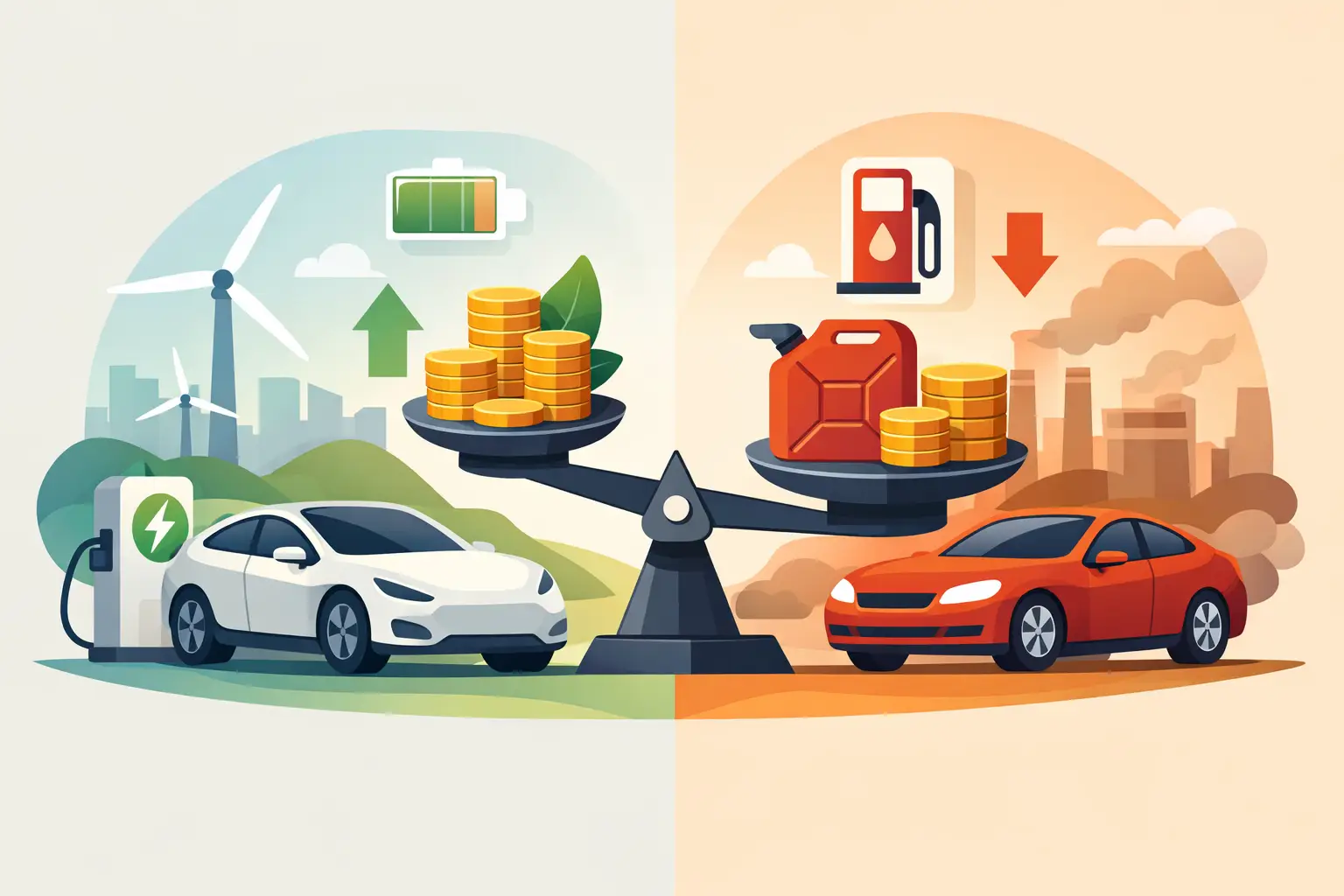
If you drive Southern California miles every week, the electric car vs gas savings question is not theory - it hits your wallet every month. Between fuel prices, long commutes, rising maintenance costs, and the price of newer tech, choosing the right vehicle can mean saving thousands over the next few years or spending more than you expected.
For most daily drivers, an electric vehicle can deliver real savings. But not every EV automatically beats every gas car, and not every buyer should switch based on fuel costs alone. The smart move is looking at the full picture: purchase price, charging costs, insurance, maintenance, driving habits, and how long you plan to keep the car.
Electric car vs gas savings starts with energy cost
The biggest reason people look at EVs is simple: electricity usually costs less per mile than gasoline. If you compare a typical gas vehicle getting around 28 to 32 mpg with an electric vehicle that gets roughly 3 to 4 miles per kWh, the math often favors the EV, especially for heavy commuters.
In California, gas prices tend to stay high enough that the gap gets your attention fast. If you drive 15,000 miles a year, a gas vehicle might burn through several thousand dollars in fuel depending on MPG and local prices. An EV charged mostly at home can often cut that expense significantly. Even when electricity rates are not cheap, the cost per mile usually stays lower than a comparable gas model.
That said, charging habits matter. Home charging is where most EV owners see the strongest savings. If you rely heavily on public fast charging, your cost advantage can shrink. It may still beat gas, but the difference is not always dramatic. Buyers who can charge overnight at home are usually in the best position.
The savings are not just about gas
Fuel is only part of the story. Maintenance is where many EV owners keep saving after the purchase.
Gas vehicles have more wear items and more routine service. Oil changes, spark plugs, transmission service, belts, engine air filters, and more complicated drivetrains all add up over time. Electric vehicles do not need many of those services. They still need tires, brakes, cabin air filters, and general inspections, but the list is shorter.
Brake wear can also be lower in many EVs because regenerative braking helps slow the vehicle without relying as heavily on the brake pads. Over a few years, that can make a real difference.
This does not mean EVs are maintenance-free. Tires can wear faster on some electric models because of vehicle weight and instant torque. Repairs can also be expensive if something major goes wrong outside warranty. But on regular day-to-day upkeep, EVs generally have the edge.
Upfront price can change the equation
Here is where electric car vs gas savings gets more nuanced. If an electric vehicle costs much more to buy than a similar gas car, it can take years to recover that difference through lower running costs.
That is one reason used EVs have become such a strong value play. A pre-owned electric vehicle, especially one that has already taken its biggest depreciation hit, can make the savings math work much faster. Instead of paying a premium for a brand-new model, buyers can step into newer technology, lower fuel costs, and reduced maintenance at a more competitive purchase price.
For many shoppers, this is the real sweet spot. A well-priced used EV can narrow the gap enough that the ongoing savings start showing up sooner, not five or six years down the road.
When a gas car may still make more sense
There are cases where a gas vehicle is still the better buy.
If you drive very little, the fuel savings from an EV may not be large enough to offset a higher monthly payment or a more expensive insurance premium. Someone who only drives a few thousand miles a year will not feel the same cost difference as a commuter driving from the Inland Empire into Los Angeles every weekday.
Gas can also make more sense for buyers who cannot charge conveniently. Apartment living, limited access to overnight charging, or dependence on crowded public chargers can reduce both savings and convenience. In that case, the question is not just cost. It is whether the ownership experience fits your routine.
Long-distance drivers should also think carefully. EV road trips are easier than they used to be, but some buyers still prefer the speed and flexibility of filling up at a gas station. If your weekly pattern includes unpredictable high-mileage travel in areas with less charging access, a gas vehicle may still be the simpler option.
Insurance and registration matter too
A lot of buyers compare only gas and charging costs, then get surprised by other ownership expenses. Insurance can vary a lot by vehicle type, repair costs, driver profile, and ZIP code. Some electric vehicles carry higher premiums than similar gas cars, particularly if parts and repairs are more specialized.
Registration can also affect overall cost depending on the state and vehicle value. If you are buying a higher-priced EV, some of the monthly fuel savings may be partially offset elsewhere.
This is why the best comparison is not EV versus gas in the abstract. It is specific vehicle versus specific vehicle, with your insurance quote, your commute, and your charging setup included in the math.
How Southern California drivers should think about savings
For many drivers across Los Angeles County, Riverside County, and the Inland Empire, EV ownership lines up well with real-world use. Commutes are long, gas is expensive, and stop-and-go traffic tends to favor electric efficiency. If you can charge at home, the savings picture often improves quickly.
This is especially true for buyers replacing premium gas vehicles. If you are comparing an electric sedan or SUV to a luxury gas model that requires premium fuel and higher maintenance, the EV can pull ahead faster than expected.
Used Teslas are a good example. Buyers often focus on the badge and tech first, but the ownership math is what keeps many of them interested. Lower fueling costs, less routine maintenance, and strong daily-driver practicality can make the total cost more attractive than people assume.
At Premium Autos Inc, that is why so many shoppers looking at used Teslas are not just chasing features. They are trying to get into a more efficient vehicle without paying new-car pricing.
A simple way to compare electric car vs gas savings
Start with your current monthly fuel spend. If you are filling up once or twice a week in Southern California, you likely already know the number is not small.
Then estimate what charging would cost at home for the same miles driven. Add in the maintenance difference over a year, especially if your current or future gas vehicle is due for regular service. After that, compare the monthly payment and insurance for the exact vehicles you are considering.
This gives you a much clearer answer than broad averages from national studies. Some buyers will find an EV saves them money almost immediately. Others may need a lower purchase price or more annual miles before the savings become obvious.
The break-even point is different for everyone, but the process should be straightforward. Look at what you spend now, what you would spend with the alternative, and how long you plan to keep the vehicle.
The real answer: savings depend on the vehicle and the buyer
Electric vehicles are not always cheaper in every situation, and gas vehicles are not always the budget choice just because the sticker price looks lower. The winner depends on how much you drive, where you charge, what you pay upfront, and which model you choose.
For high-mileage commuters, buyers with home charging, and shoppers considering a well-priced used EV, the savings can be substantial. For low-mileage drivers or buyers without reliable charging access, a gas car may still be the better fit.
That is why smart car shopping is less about hype and more about matching the vehicle to your life. If the numbers work in your favor, an EV can do more than lower your fuel bill - it can make your entire ownership experience cheaper, simpler, and easier to live with every day.
Before you decide, run the math with your real commute and real monthly costs. The right answer is the one that saves you money without adding headaches.



