
Premium Autos blog
Used Tesla Ownership Cost Guide for Buyers
By Premium Autos · · 6 min read
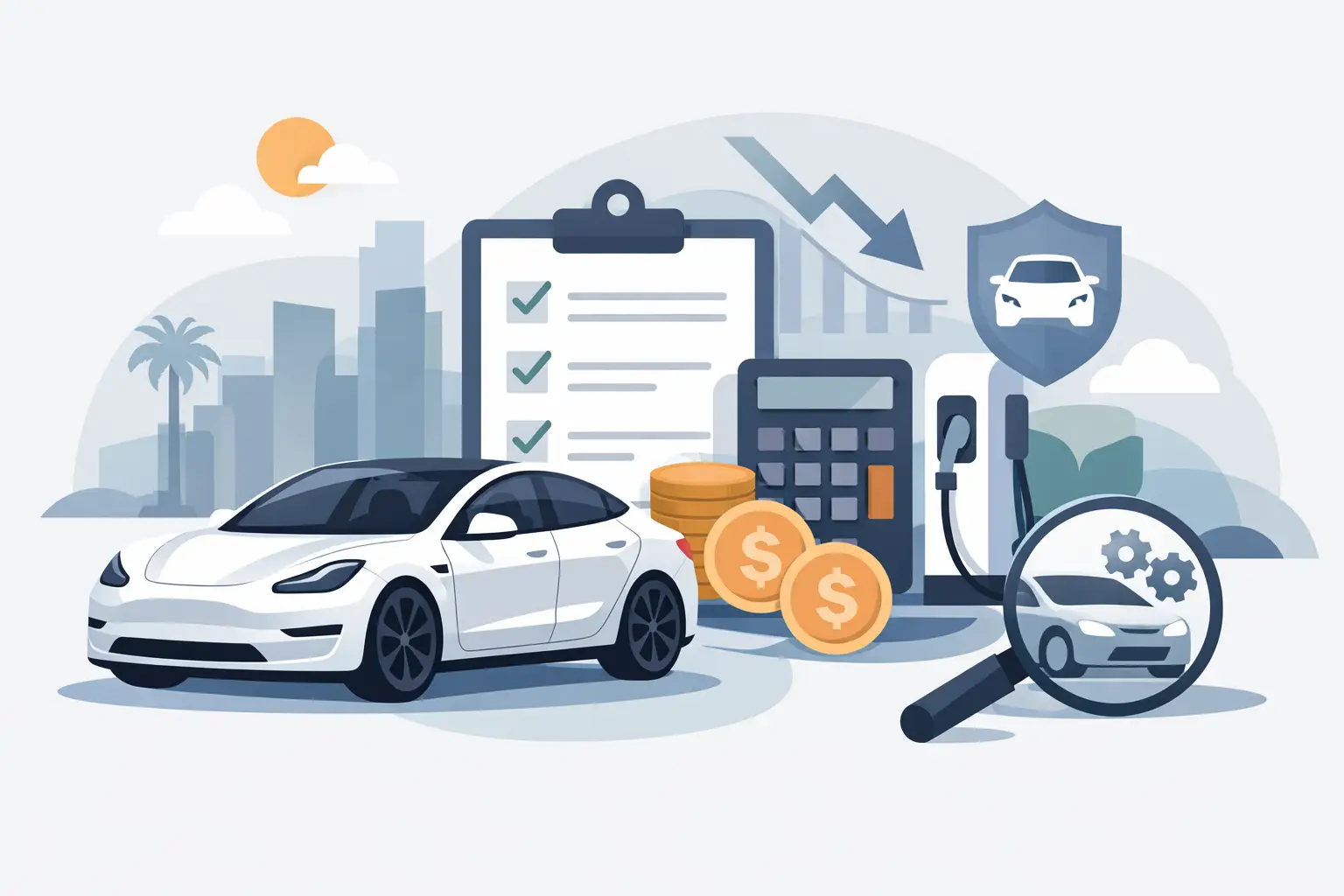
A used Tesla can cost far less to run than a gas vehicle, but the purchase price is only the first number that matters. This used Tesla ownership cost guide breaks down the expenses Southern California buyers should plan for before choosing a Model 3, Model Y, Model S, or Model X.
The good news is straightforward: there are no oil changes, no gas station stops, and fewer routine mechanical service items. The trade-off is that insurance, tires, charging access, financing terms, and repair history can move your real monthly cost more than many first-time EV buyers expect. A smart purchase starts with a clean-title vehicle, a clear history report, and a budget that looks beyond the payment.
Used Tesla Ownership Cost Guide: What You Will Actually Pay
Your total cost of ownership has two sides: predictable monthly expenses and occasional costs that depend on the specific vehicle. A lower-priced Model 3 may be the most affordable Tesla to own, while a larger Model X can bring higher insurance premiums, tire costs, and repair exposure. Model year, mileage, battery configuration, driving habits, and where you charge all matter.
For many commuters, electricity is the biggest day-to-day savings. If you currently spend $250 to $400 per month on gasoline, charging a Tesla at home can often cost substantially less. That savings narrows if you rely heavily on public fast charging, especially during peak pricing periods.
Electricity and charging costs
Home charging is usually the best-value way to own a Tesla. Your cost depends on your local utility rate and how many miles you drive. Southern California electricity prices can vary by time of use, so charging overnight or during lower-rate periods may make a noticeable difference.
As a simple example, a Tesla using roughly 28 kWh per 100 miles and electricity priced at $0.25 per kWh costs about $7 per 100 miles. Drive 1,000 miles per month and that is roughly $70 in electricity. At $0.40 per kWh, the same driving rises to about $112. Public fast charging is convenient for road trips and apartment living, but it generally costs more than charging at home.
If you own a house, budget for a home charging setup if one is not already installed. A basic outlet may work for low-mileage drivers, but a Level 2 charger provides faster, more practical overnight charging. Installation costs vary based on your electrical panel, distance to the garage, permits, and whether an upgrade is needed. Ask for a local quote rather than assuming every installation will cost the same.
Insurance can be the surprise expense
Insurance is one of the most variable parts of used Tesla ownership. Some buyers pay rates comparable to a newer gas sedan or SUV. Others see a higher quote because Teslas are expensive to repair after a collision, use advanced cameras and sensors, or fall into a higher-value vehicle category.
Get insurance quotes before finalizing your purchase, not after. Use the exact VIN when possible, and compare coverage limits, deductibles, rental coverage, and repair-shop options. A lower premium is not always the better deal if it leaves you exposed after an accident.
Your rate may be influenced by your ZIP code, driving record, annual mileage, age, coverage history, and the model you select. A Model 3 may be less expensive to insure than a Model S or Model X, but there is no universal rule. Quote the vehicle you are actually considering.
Maintenance Is Low, but Tires Are Not
Tesla ownership removes many familiar service bills. There are no engine oil changes, spark plugs, exhaust repairs, transmission fluid services, or routine emissions checks. That is a real advantage for commuters who want newer technology without a long maintenance checklist.
Still, an EV is not maintenance-free. Tires, cabin air filters, wiper blades, brake fluid checks, wheel alignments, and air-conditioning service remain part of ownership. Regenerative braking can reduce brake-pad wear, but it does not eliminate the need to inspect brakes, especially on vehicles driven near the coast or in areas where corrosion can develop.
Tires deserve special attention. Teslas are heavy and deliver instant torque, which can wear tires faster when drivers accelerate aggressively. Performance wheels and larger tire sizes can be more expensive to replace. Before you buy, inspect tread depth, check for uneven wear, and confirm the cost of the correct replacement tires. A great deal can become less attractive if it needs a full set of premium tires immediately.
Repairs and bodywork require planning
A clean-title used Tesla with documented care is usually the better foundation for predictable ownership. Review the vehicle history carefully and look for signs of prior collision repair, inconsistent panel gaps, tire damage, warning lights, water intrusion, or incomplete repairs.
Tesla collision work can be costly because body panels, cameras, sensors, and calibration may be involved. Availability of qualified repair facilities has improved, but repair time and parts availability can still vary. Comprehensive and collision coverage are worth considering, particularly if you finance the vehicle or cannot comfortably absorb a major loss.
This is also why a thorough pre-purchase inspection matters. Test the screen, cameras, power features, climate control, charging operation, door handles, suspension feel, and tire condition. A dealership specializing in used Teslas, such as Premium Autos Inc, can help buyers compare vehicle condition and equipment across multiple models rather than treating every Tesla as the same.
Battery Health, Warranty, and Long-Term Value
The battery is the component buyers ask about most, and rightly so. Battery capacity gradually declines with age and use, but degradation is not usually a sudden cliff. Many used Teslas still provide strong daily range. The question is whether the remaining range fits your commute, charging routine, and road-trip expectations.
Do not shop based only on the original advertised range. Review the vehicle's current indicated range, account for weather and highway driving, and leave a comfortable buffer for your typical day. A buyer with a 25-mile commute has very different needs from someone driving 150 miles daily across Los Angeles, Orange County, and the Inland Empire.
Tesla battery and drive-unit warranties vary by model, trim, model year, mileage, and original delivery date. Confirm the remaining warranty directly for the specific vehicle. Also verify whether any features you care about are included with the car, such as driver-assistance packages, premium connectivity status, or charging hardware. Vehicle equipment can differ even among similar-looking listings.
A used EV may qualify for a federal used clean vehicle tax credit if both the buyer and vehicle meet the program requirements. Eligibility can depend on sale price, income, dealer participation, vehicle age, and other rules. Treat a potential credit as a benefit to verify, not money to assume in your budget.
Financing, Registration, and the Monthly Payment Trap
A low payment does not automatically mean low ownership cost. Loan term, interest rate, down payment, insurance, and charging all belong in the same monthly calculation. Extending a loan can reduce the payment but increase total interest paid. It can also create negative equity if you need to trade the vehicle early.
Start with a realistic down payment and request financing terms you can compare side by side. Focus on the out-the-door price, annual percentage rate, loan length, total of payments, and any optional products. Buyers with challenged credit should still review the full agreement carefully. Flexible approval options are valuable, but clarity matters just as much as approval speed.
In California, registration, taxes, and fees should be included in your purchase planning. If you are trading in a vehicle with an existing loan, confirm the payoff amount and make sure the numbers are addressed before you sign. A transparent deal shows how the trade, balance, taxes, and financing work together.
Choose the Tesla That Fits Your Driving Life
For cost-conscious shoppers, the Model 3 is often the easiest entry point because it is efficient, widely available, and practical for commuting. The Model Y adds cargo space and SUV-style flexibility for families, but may cost more to buy, insure, and equip with tires. The Model S and Model X offer premium performance and features, yet their complexity can raise the stakes on out-of-warranty repairs.
The right choice depends on more than the badge or acceleration number. Think about where you park, whether you can charge at home, how often you carry passengers, how far you drive, and how much room your budget has for insurance and unexpected maintenance. A well-priced Tesla that fits your routine is usually a better value than a more expensive model purchased for features you rarely use.
Before you commit, price the insurance, estimate charging from your actual mileage, inspect the tires and vehicle history, and compare financing on the full out-the-door amount. That small amount of homework puts you in position to enjoy the quiet commute, quick acceleration, and lower fuel spend without getting surprised by the costs that come after delivery.
Browse used Teslas for sale at our Norco and South El Monte stores.



