
Premium Autos blog
Tesla vs BMW i4: Which Used EV Wins?
By Premium Autos · · 6 min read
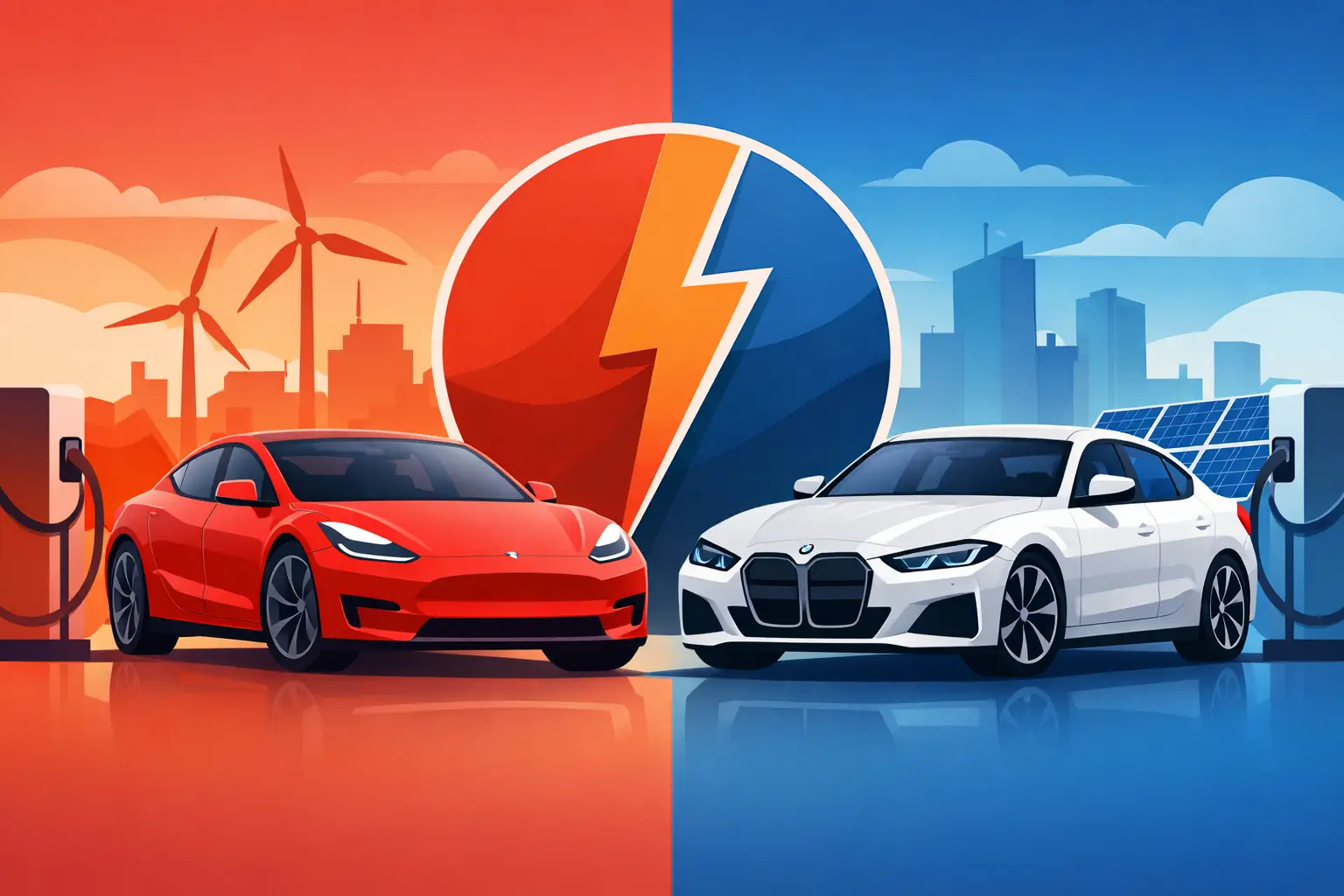
If you're stuck on Tesla vs BMW i4, you're asking the right question. These are two of the strongest used EV options for Southern California drivers who want real range, daily comfort, modern tech, and pricing that makes more sense than buying new. The better pick depends on how you drive, how you charge, and what kind of ownership experience matters most once the excitement wears off.
Tesla vs BMW i4 for real-world buyers
On paper, this matchup looks simple. Tesla usually wins on charging access, software, and efficiency. The BMW i4 answers with a more traditional luxury feel, a quieter cabin, and driving manners that feel familiar if you're coming from a gas-powered premium sedan.
That difference matters more in the used market. A used EV is not just about the badge or the 0-60 time. It's about value, battery confidence, insurance costs, charging convenience, and how easily the car fits into your routine from Monday morning traffic to weekend errands.
For many shoppers, the Tesla side of this comparison usually means the Model 3. The BMW side means the i4 eDrive35, eDrive40, or M50. These cars overlap in price and purpose, but they do not feel the same behind the wheel.
Performance and driving feel
Tesla has built its reputation on quick acceleration, and even the more basic versions feel fast. A Model 3 Long Range delivers strong passing power and instant response that makes freeway merges effortless. If you value that punchy EV feel, Tesla still sets the tone.
The BMW i4 is no slouch, especially in M50 form, but the bigger story is how it delivers speed. The steering, suspension tuning, and general road feel are more polished in a traditional German luxury-sedan way. It feels planted, composed, and a little more mature. If Tesla feels tech-forward and eager, the i4 feels refined and settled.
That means your preference may come down to personality. If you want the sharper EV-style hit of acceleration and a more minimalist experience, Tesla has the edge. If you want an EV that still feels like a premium sport sedan first, the i4 makes a strong case.
Range and efficiency
Range is where Tesla continues to attract practical buyers. In many trims, the Model 3 delivers excellent efficiency, which means more miles from a smaller battery and less range anxiety during a busy week. That matters if you're commuting across Riverside County, LA County, or making frequent freeway runs.
The BMW i4 also offers competitive range, especially in eDrive40 form, but it tends to be a bit less efficient than a comparable Tesla. That's not a deal breaker for every buyer. If you charge at home and your commute is predictable, the difference may not affect your day-to-day life much.
Still, efficiency has a long-term value. Better efficiency can mean fewer charging stops, lower charging costs, and a little more flexibility when you do not start the day with a full battery. For drivers who rack up serious mileage, Tesla usually wins this category.
Charging is a bigger deal than many buyers expect
This is one of the clearest Tesla advantages. The Supercharger network remains a major reason buyers choose Tesla, especially if they do not have perfectly convenient home charging or if they drive long distances often. The charging experience is usually easier, more predictable, and better integrated into the car's navigation.
The BMW i4 uses the broader public charging ecosystem. That gives you options, but the experience can be less consistent depending on the station, app, payment setup, and charger reliability. In Southern California, public charging access is better than in many parts of the country, but Tesla still has the cleaner ownership experience here.
If you mostly charge at home, this gap narrows. If you live in an apartment, rely on workplace charging, or take road trips often, it gets wider fast.
Interior quality and comfort
The BMW i4 feels more premium inside. Materials, seat comfort, cabin isolation, and overall finish are closer to what many luxury buyers expect. If you're sensitive to road noise, seat support, or the quality of interior touchpoints, the i4 tends to leave a better first impression.
Tesla takes a different route. The cabin is minimal, clean, and modern, but not everyone loves the stripped-down approach. Some shoppers appreciate the simple design and large center screen. Others miss physical controls and prefer a more conventional dashboard layout.
For a daily commuter, both work well. For buyers who want the cabin to feel rich and substantial, BMW has the advantage. For buyers who want a futuristic layout and fewer visual distractions, Tesla will still feel fresh.
Tech and user experience
Tesla remains one of the easiest EVs to understand from a software standpoint. The interface is fast, the app integration is strong, and over-the-air updates are a real benefit. Features like route planning around charging are especially useful for first-time EV buyers who want less guesswork.
BMW offers solid tech, but it can feel more layered. Some drivers will prefer that because it keeps familiar controls in place. Others will find Tesla simpler to live with once they adjust to the screen-heavy layout.
This is also where used shopping requires nuance. A Tesla's software-first design tends to age well because updates can keep the experience feeling current. A BMW i4 still has a modern interface, but the appeal is less about constant digital evolution and more about balanced luxury and usability.
Used pricing and value
Used pricing can shift fast, especially with EVs, incentives, and regional demand. In general, Tesla's used market is deep, which is good news for buyers. More inventory usually means more trim choices, more mileage options, and a better chance of finding the right payment.
The BMW i4 can be a smart buy used, but availability is often tighter. That can affect both pricing and selection. If you are shopping with a specific monthly budget, Tesla often gives you more flexibility because there are simply more used examples on the market.
This is where a clean-title, well-presented used vehicle matters. A lower price is only a win if the car's condition, history, and battery performance line up with the deal. For many buyers, especially those financing, getting the right structure matters as much as the sticker price.
Ownership costs and what buyers forget to ask
Insurance can vary more than shoppers expect. Tesla insurance premiums can be high depending on your location, driving history, and model. BMW can also be expensive to insure, especially higher-performance trims like the M50. Before choosing based on payment alone, it makes sense to compare total monthly cost.
Tires are another factor. Fast EVs wear tires faster than many gas sedans, and both Tesla and BMW can go through rubber quickly if driven hard. Maintenance is generally low compared with gas vehicles, but consumables still matter.
Then there is repair experience. Tesla's service model is different from BMW's dealer-based service network, and preferences vary. Some buyers like Tesla's direct approach. Others feel more comfortable with the familiarity of a traditional luxury brand service experience.
Which one should you actually buy?
If your priorities are charging convenience, strong efficiency, wide used-market selection, and a modern tech-forward ownership experience, Tesla is the smarter buy for most shoppers. That's especially true for commuters, first-time EV buyers, and anyone who wants the easiest transition into electric driving.
If your priorities are interior quality, ride comfort, luxury feel, and a more familiar premium-sedan personality, the BMW i4 may fit you better. It is a strong option for buyers who want an EV but are not interested in reshaping their entire driving experience around Tesla's design philosophy.
Tesla vs BMW i4: the best fit for Southern California
For Southern California driving, Tesla often has the practical edge. Traffic, freeway commuting, and regional road trips all highlight the benefits of range efficiency and Supercharger access. That is one reason so many used EV shoppers start with Tesla and stay there.
That said, the BMW i4 is not the wrong choice. For the right driver, it feels more upscale, more familiar, and more comfortable every single day. If your charging plan is solid and you value cabin quality over charging network advantage, it can absolutely be worth it.
At Premium Autos Inc, we see this decision come down to lifestyle more than specs. The best used EV is the one that fits your budget, your charging reality, and your commute without creating friction after the purchase. Shop the numbers, check the condition, and be honest about how you will actually use the car. That is how you end up with an EV you still love six months later.
Browse used Teslas for sale at our Norco and South El Monte stores.



