
Premium Autos blog
Is Buying a Used Tesla Safe? Yes - If You Check This
By Premium Autos · · 6 min read
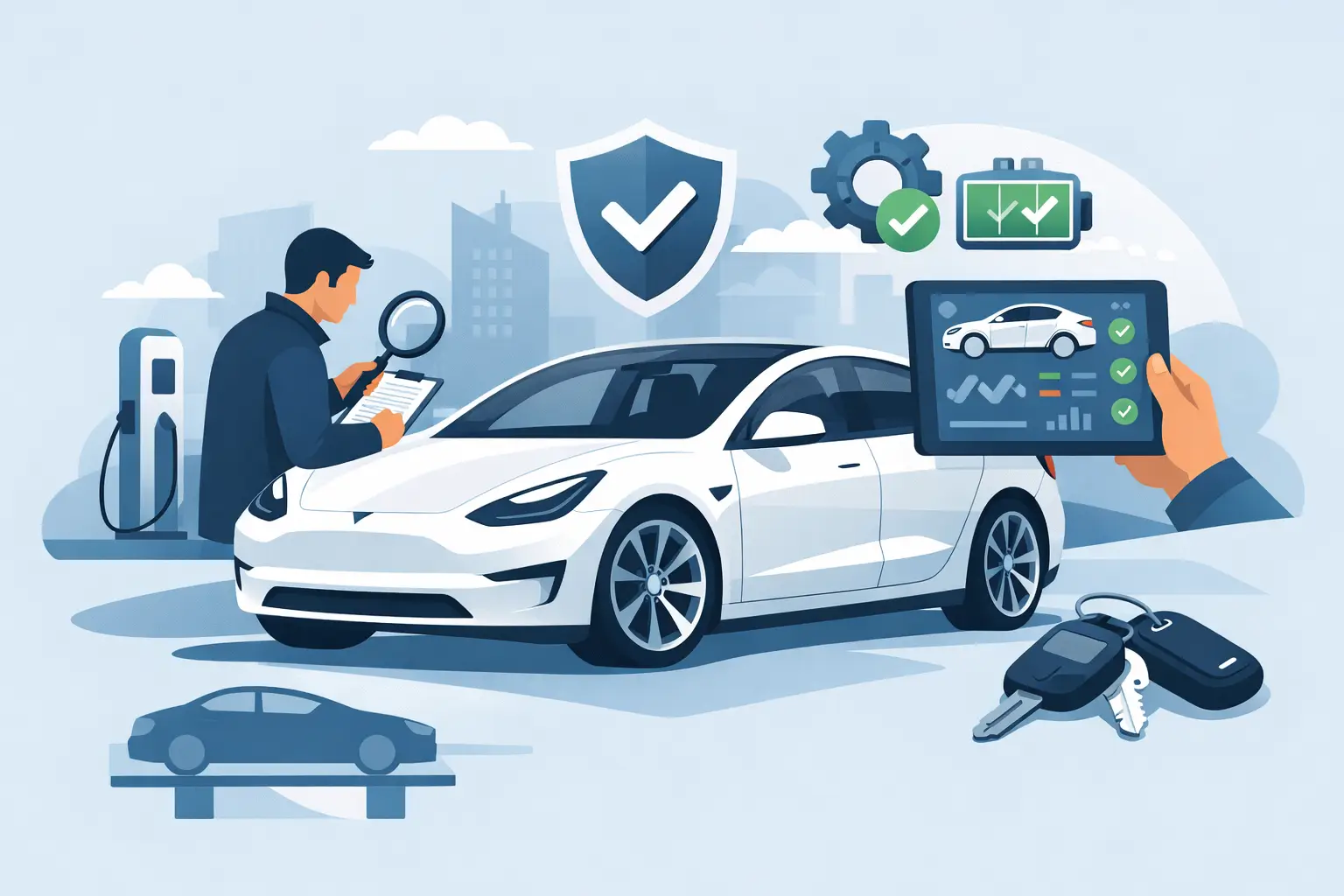
A low-mile Tesla with a sharp price can look like an easy win - right up until you start wondering what happened before it hit the listing. That’s the real question behind is buying a used Tesla safe. For most shoppers, the answer is yes, but only if you treat it like a Tesla purchase, not just a generic used-car deal.
That distinction matters. A used Tesla brings the same basics as any used vehicle - history, condition, title status, tires, brakes, and prior damage - but it also adds battery condition, charging habits, software features, driver-assist hardware, and repair quality. If you know what to check, a used Tesla can be one of the smartest ways to get into an EV without paying new-car pricing.
Is buying a used Tesla safe for everyday drivers?
In practical terms, yes. A used Tesla can be a safe and dependable daily driver for commuting across Southern California, school drop-offs, weekend trips, and everything in between. Tesla’s core safety reputation is strong, and many buyers are drawn to the brand because they want modern tech, strong crash performance, and lower fuel and maintenance costs.
But “safe” has two meanings here. First, there’s physical safety - whether the vehicle has been properly repaired, maintained, and kept in solid mechanical condition. Second, there’s financial safety - whether you’re buying a clean-title vehicle at a fair price with clear history and no ugly surprises after delivery. A car can feel great on a test drive and still be a risky buy if the title is branded, prior repairs were poorly done, or key features don’t work the way you expect.
That’s why the best used Tesla buyers are not just looking for a good monthly payment. They’re looking for proof.
What makes a used Tesla safe or risky?
The biggest green flag is a clean title with transparent history. That tells you the car has not been branded salvage, rebuilt, or flood-damaged. Clean-title status does not mean perfect, but it gives you a stronger starting point and protects resale value far better than a branded title car.
The second major factor is repair quality. Teslas are different from older gas vehicles because body repairs, sensors, cameras, battery shielding, and software calibration all matter. Even a minor-looking accident can turn into a bigger concern if repairs were rushed or performed without proper standards. Panel gaps alone do not tell the whole story. You want to know whether the vehicle was repaired correctly and whether all safety-related systems are functioning as they should.
Battery health is another big piece of the puzzle, but it is often misunderstood. Many first-time EV shoppers worry that a used Tesla battery is a ticking time bomb. In most cases, that fear is overblown. Some battery degradation over time is normal. What matters is whether the car delivers expected range for its age and mileage and whether there are signs of abnormal charging or battery-related warning messages.
Then there’s software and feature access. Some buyers assume every Tesla includes the same functionality, but that is not always true. Features like Full Self-Driving capability, Enhanced Autopilot, premium connectivity, acceleration boosts, and even certain interface behaviors may vary by vehicle. That’s not necessarily a safety issue, but it becomes one if you buy based on assumptions instead of confirmed equipment.
The used Tesla checklist that actually matters
If you want a straightforward answer to is buying a used Tesla safe, this is where the answer gets earned. Start with the title. If it is not clean, think carefully before moving forward. A lower price can be tempting, but branded-title EVs often carry more uncertainty, more financing limitations, and weaker long-term value.
Next, review the vehicle history report closely. Look for accident records, ownership history, service entries, and any signs the car moved through auction channels after serious damage. History reports are helpful, but they are not perfect, so combine them with a thorough in-person inspection.
Pay attention to the battery range shown at a high state of charge and compare it to realistic expectations for that model year and trim. A little degradation is normal. Extreme loss or inconsistent behavior deserves more scrutiny. Also check charging performance, warning lights, and whether the car accepts AC and DC fast charging normally.
Look at the exterior like a Tesla buyer, not just a used-car shopper. Check for mismatched paint, uneven panel alignment, unusual tire wear, cracked glass, moisture in lights, or signs of previous body work. Inside the cabin, make sure the touchscreen responds properly, cameras display clearly, climate control works, and seat functions, windows, locks, and charging ports operate as expected.
Finally, confirm what the vehicle actually includes. Do not rely on a listing headline. Verify wheels, interior configuration, seating, Autopilot hardware, charging accessories, and any included software features before you sign anything.
Battery health matters, but not in the way most buyers think
A lot of shoppers fixate on one question: how long will the battery last? It’s fair to ask, but the better question is whether the car still meets your real-world needs. If your daily commute is 30 to 60 miles and you can charge at home, a used Tesla with some normal battery degradation may still be an excellent fit.
Range loss is not the same as failure. Most used Teslas continue to serve drivers well for years, especially when they’ve been driven and charged normally. The risk goes up when the car’s history is unclear, the battery shows unusual symptoms, or you are buying from a source that cannot clearly answer basic questions.
For many buyers, the safer move is not chasing the absolute cheapest Tesla. It’s buying one with documented history, a clean title, and enough range buffer for your lifestyle. That gives you value without turning the purchase into a gamble.
Why seller transparency changes everything
A used Tesla can be safe on paper and still feel risky if the seller is vague, rushed, or hard to pin down. That’s often where buyers get burned. If you ask about title status, prior damage, financing, battery performance, or included features, you should get direct answers.
Transparency also matters because EV shoppers often need more education than traditional gas-car buyers. A strong seller should be able to explain charging basics, ownership costs, range expectations, feature differences between trims, and what makes one used Tesla a better fit than another. If every answer sounds like a dodge, that’s your sign to slow down.
This is where working with a used EV specialist can make the process far safer and easier. Dealers that regularly stock Teslas tend to understand the details better, present cleaner information, and help buyers avoid common mistakes. For Southern California shoppers who want selection, clean-title inventory, and a faster purchase path, that experience matters.
Financing, insurance, and ownership costs are part of safety too
A safe car deal is not just about the vehicle itself. It is also about whether the total ownership picture works for your budget. A Tesla that stretches your payment too far, drives up your insurance unexpectedly, or leaves no room for home charging setup can stop feeling like a smart buy pretty quickly.
The good news is that used Tesla ownership can still make strong financial sense. Lower fuel costs, reduced routine maintenance, and better value versus new pricing are a big part of the appeal. But shoppers should still check insurance quotes, charging access, and loan terms before finalizing the deal.
That’s especially true for buyers with challenged credit or limited EV experience. A dealership that offers soft-pull prequalification, lender options, and clear numbers can reduce a lot of uncertainty before you commit.
So, is buying a used Tesla safe?
Yes - if you buy carefully. A used Tesla is not automatically risky, and it is not automatically safe just because it looks clean and drives well. The safest buys usually share the same traits: clean title, verifiable history, proper repair quality, healthy battery performance, confirmed features, and a seller who is upfront from the start.
For many drivers, that makes a used Tesla one of the best ways to step into EV ownership with modern tech and real value. If you stay focused on condition, transparency, and total cost, you can shop with confidence instead of guesswork.
The smartest used Tesla purchase is usually not the flashiest listing or the cheapest one on the screen. It’s the car with the fewest question marks.
Browse used Teslas for sale at our Norco and South El Monte stores.



