
Premium Autos blog
How to Buy Used EV Without Costly Mistakes
By Premium Autos · · 6 min read
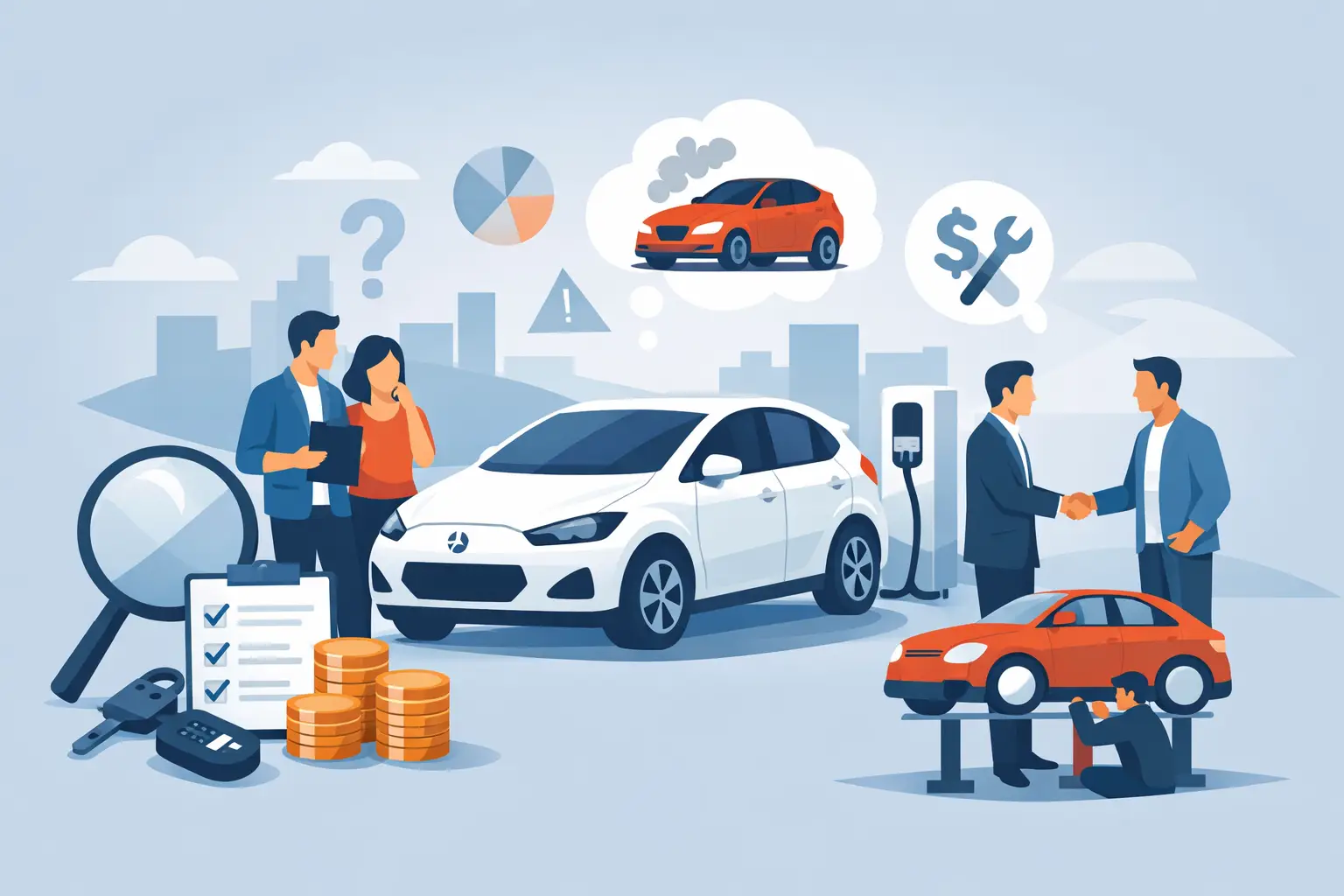
That low sticker price can be a great deal - or a sign you are about to inherit someone else’s battery, charging, or title problem. If you are figuring out how to buy used EV options with confidence, the goal is not just finding the cheapest car. It is finding the right electric vehicle with the right history, the right range, and terms that still make sense a year from now.
Used EV shopping moves a little differently than shopping for a gas car. Mileage still matters, but battery condition matters more. Trim level matters, but charging speed, software features, and title status can matter even more. If you know what to check before you buy, you can get newer tech, lower operating costs, and serious value without paying new-car prices.
How to Buy Used EV the Smart Way
Start with your real driving life, not the badge on the hood. A lot of buyers lock in on a Tesla Model 3, Model Y, Chevy Bolt, Hyundai Kona Electric, or Ford Mustang Mach-E before they think about commute distance, home charging, and monthly budget. That is backwards.
If your round-trip commute is 40 miles, you do not need the longest-range EV on the market. If you take frequent weekend trips across Southern California, charging speed may matter more than one extra interior feature package. If you live in an apartment and depend on public charging, the wrong EV can get frustrating fast.
The best used EV is the one that fits your routine without stretching your budget. That means balancing purchase price, insurance, registration, financing, charging access, and expected battery performance.
Know your minimum range before you shop
A smart rule is to shop for more range than you think you need. Battery capacity declines gradually over time, and real-world range changes with speed, weather, hills, cargo, and climate control use. If you need 150 miles regularly, shopping for a used EV rated near 220 to 280 miles gives you more breathing room.
This is especially important for first-time EV buyers. Manufacturer range estimates are useful, but they are not guarantees. A used EV with an older battery and lots of highway driving history may not feel the same as a brand-new one on paper.
Check charging compatibility early
Before you fall in love with a vehicle, find out how it charges. Ask whether it uses Level 1, Level 2, and DC fast charging, and how fast it can actually charge in real conditions. Some older EVs can technically fast charge, but much slower than newer models.
For Tesla shoppers, charging access is often one of the biggest advantages. For non-Tesla models, charging convenience depends more on network availability in your area and on your daily routes. Either way, home charging is usually the easiest ownership experience, so think hard about where the car will charge overnight.
What to inspect on a used EV before you buy
A clean-looking EV is not always a strong-value EV. The inspection process needs to go beyond paint, tires, and interior wear. With electric vehicles, the battery system, charging hardware, software condition, and title status deserve just as much attention.
Battery health is the big one. You are not just asking whether the car turns on and drives well. You are asking how much of its original capacity remains and whether there are signs of abnormal degradation. Some models make this easier to estimate than others, but you should still ask about current displayed range at a normal state of charge, service history, and any battery-related repairs.
You should also review the vehicle history report carefully. A used EV with a clean title is generally a safer path than a salvage or rebuilt unit, especially if you want easier financing, stronger resale value, and fewer insurance headaches. Flood history, major collision damage, or unresolved battery-system repairs can turn a deal into an expensive mistake.
Battery questions that matter
Ask direct questions. Has the battery pack ever been replaced or repaired? Is there any remaining factory battery warranty? Have there been charging issues, warning lights, or unusual drops in range? If the seller cannot answer clearly, that is a sign to slow down.
On a test drive, pay attention to the basics. Does the range estimate drop unusually fast? Does regenerative braking feel normal? Does the car charge properly when plugged in? EVs are quieter than gas vehicles, which makes small rattles, suspension issues, and tire noise easier to notice.
Do not ignore tires, brakes, and software
Used EVs tend to be heavier and deliver instant torque, which can wear tires faster than some buyers expect. Replacing a set of EV-rated tires is not a small expense, so check tread depth and tire brand. Brakes may show less wear because of regenerative braking, but they still need inspection.
Software also matters more in EVs than in many traditional vehicles. Features can vary by model year, package, and update history. That includes driver-assist systems, charging preconditioning, route planning, and infotainment performance. Make sure the features you expect are actually present and functioning.
Pricing, financing, and trade-in strategy
If you want to know how to buy used EV without overpaying, compare more than sale prices. Look at title status, mileage, battery range, accident history, trim, wheel size, charging capability, and warranty coverage. Two similar-looking EVs can be priced thousands apart for good reasons.
This is where dealership quality matters. A lower advertised number does not help much if the vehicle has title issues, limited history, hidden cosmetic damage, or financing that falls apart when you sit down to sign. A strong used EV dealer should be able to explain pricing clearly, provide vehicle history access, and walk you through available financing without wasting your time.
If you have a trade-in, use it strategically. Your current vehicle can reduce taxes in some cases, lower the amount financed, and make monthly payments easier to manage. Even if you still owe money on your trade, many dealerships can help structure that transaction so you are not trying to coordinate everything on your own.
Financing a used EV with real-world credit situations
A lot of buyers assume EV financing is only easy if they have top-tier credit. That is not true. Approval depends on the full picture - credit profile, income, down payment, vehicle age, lender guidelines, and debt load. Some buyers with challenged credit still qualify for workable options, especially when the dealership has multiple lender relationships.
The smart move is to get prequalified early, preferably with a soft-pull option when available. That gives you a realistic payment range before you get attached to the wrong vehicle. It also saves time if you are shopping remotely or comparing inventory across more than one location.
Where many buyers get it wrong
The biggest mistake is buying based only on monthly payment. A lower payment on the wrong car is still the wrong deal. Stretching the term too far, ignoring battery condition, or overlooking title history can cost you more than choosing a slightly higher payment on a cleaner, better-equipped vehicle.
Another common mistake is overestimating charging convenience. Public charging can work, but it is not equally easy for every driver. If you cannot charge at home or at work, be honest about whether the model you want fits your routine.
Some shoppers also wait too long when they find the right unit. Clean-title used EVs with strong range, good history, and aggressive pricing do not always sit around. If the numbers work, the condition checks out, and the financing is lined up, hesitation can mean starting your search over again.
A better way to shop for a used EV
The easiest purchase is usually the one with fewer unknowns. Shop with a dealer that understands EV inventory, can answer battery and charging questions clearly, and makes the transaction simple from trade-in to financing to reservation. That matters even more if you are buying your first Tesla or switching from a gas vehicle for the first time.
At Premium Autos Inc, that is exactly where the value shows up. Strong used EV selection, clean-title focus, transparent history access, and flexible financing options take a lot of friction out of the process. For Southern California buyers, that can mean spending less time guessing and more time driving home in the right car.
A used EV should feel like a smart upgrade, not a gamble. Ask better questions, verify the details that matter, and choose the vehicle that fits your life on Monday morning - not just the one that looked good in a listing Saturday night.



